
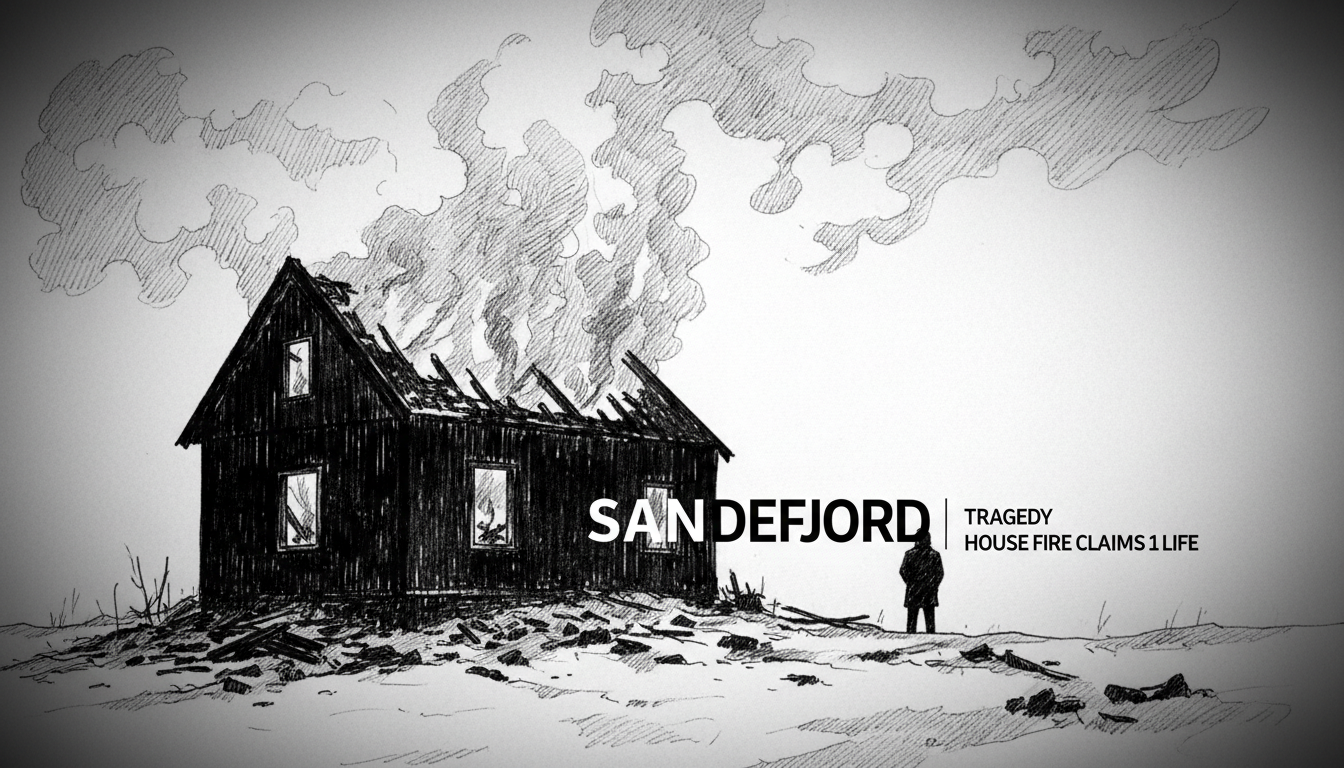
Norway house fire investigators are searching for answers after a fatal blaze in Sandefjord claimed one life early Saturday. Police crime scene technicians discovered a deceased person in the ruins of a home on Helgerødveien following the fire, which erupted around 3:30 AM. The grim discovery was confirmed by the Sørøst police district, marking a somber start to the weekend for the coastal community.
Operational leader Christian Fredrik de Boer Prytz said in a statement that next of kin had been informed. 'Crime scene investigators have examined the fire site. Unfortunately, a deceased person was found in the fire ruins. Next of kin were notified of the discovery of the deceased person on site,' Prytz stated. The police have not released the identity of the victim, pending formal identification procedures and notification of family members.
A Community Awakened by Tragedy
The fire on Helgerødveien represents a profound tragedy for Sandefjord, a municipality of approximately 65,000 people known for its whaling history and coastal charm. Located roughly 120 kilometers southwest of Oslo in Vestfold county, the town is typically quiet outside the summer tourist season. Neighbors in the residential area were likely awakened by the commotion of emergency vehicles in the pre-dawn darkness. The police and fire services responded swiftly, but the intensity of the blaze prevented rescue. The scene transitioned from an emergency response to a forensic investigation by Saturday afternoon.
The work now falls to specialized units within the Sørøst police district. Their jurisdiction covers several counties in southeastern Norway, employing technical investigators trained to process complex scenes. These kriminalteknikere will work methodically to preserve evidence and determine the sequence of events. Their initial findings are critical for the formal police report and any potential insurance investigations. The site will remain secured until investigators conclude their on-scene work, which can take several days depending on the damage.
The Investigative Process Begins
Norwegian fire death investigations follow a standardized protocol designed to be thorough and respectful. The immediate priorities are clear: confirm the victim's identity, determine the cause of death, and establish the fire's origin and cause. Forensic pathologists will conduct an autopsy to determine if the victim died from smoke inhalation, burns, or other trauma. This medical evidence is a cornerstone of the police investigation.
Simultaneously, fire investigation experts, often collaborating with police forensic teams, will examine the physical remnants of the home. They look for indicators like burn patterns, electrical system damage, and potential ignition sources. 'The investigation will be comprehensive,' said a veteran fire safety officer familiar with such procedures, who spoke on condition of anonymity as they are not directly involved in this case. 'Every fire tells a story. The challenge is reading that story accurately through the destruction. They will map the fire's spread, identify the seat of the blaze, and rule out potential causes one by one.'
The question of whether the fire was accidental or intentional is central. Police have not indicated any suspicion of foul play, but they do not rule out any possibilities in the initial phase. Common accidental causes in Norwegian homes include electrical faults, kitchen mishaps, and heating equipment malfunctions. The age and condition of the building's wiring will be a key focus. Investigators will also look into the use of candles, a common feature in Norwegian homes, especially during the darker winter months, though this fire occurred in late spring.
Fire Safety in the Norwegian Context
This fatal event casts a spotlight on residential fire safety across Norway. Statistics from the Directorate for Civil Protection (DSB) show that while fire-related deaths have generally declined over decades due to improved safety standards, house fires remain a significant domestic risk. Most fatal fires in Norway occur in homes, and a disproportionate number happen at night or in the early morning hours when occupants are asleep. Smoke detectors are legally mandated in all Norwegian homes, and their presence—or absence—and functionality will be a point of investigation in Sandefjord.
Norwegian building codes are strict regarding fire-resistant materials and escape routes, particularly in multi-unit buildings. The single-family home involved in this fire would be subject to slightly different regulations. The speed at which a fire can become uncontrollable, especially in older wooden structures common in Norwegian neighborhoods, is often underestimated. Fire services aim for rapid response times, but in remote or densely built areas, even minutes can be decisive.
Local authorities in Sandefjord may review community fire safety information in the wake of this death. Public campaigns often emphasize having an escape plan, testing smoke alarms monthly, and being cautious with open flames and electrical appliances. The psychological impact on the local community, including first responders and neighbors, is also a recognized effect of such traumatic events. Community health services often provide support in the aftermath.
A Long Road Ahead for Investigators
The technical investigation at Helgerødveien is just beginning. After the initial site examination, evidence will be sent to forensic laboratories for analysis. This can include electrical components, samples of accelerants, and other material collected from the scene. Investigators will also conduct interviews with neighbors, family members, and anyone who might have relevant information about the property or the events leading up to the fire.
Police will compile all findings into a report for the local prosecutor's office. If the fire is deemed accidental, the case will be closed once the cause is determined. If evidence points to criminal negligence or arson, a more extensive legal process will begin. The timeline for a final conclusion can span weeks or even months, depending on the complexity of the analysis. For the family of the deceased, this period of uncertainty adds to their grief.
The loss in Sandefjord is a stark reminder of the destructive power of fire. It disrupts the sense of safety within one's own home, a feeling particularly valued in Norway. As the police continue their meticulous work, the community is left to mourn a neighbor and contemplate the fragile line between ordinary life and catastrophe. The final report, when released, will provide answers but no solace for the personal tragedy that unfolded on a quiet street in the early hours of a Saturday morning.