
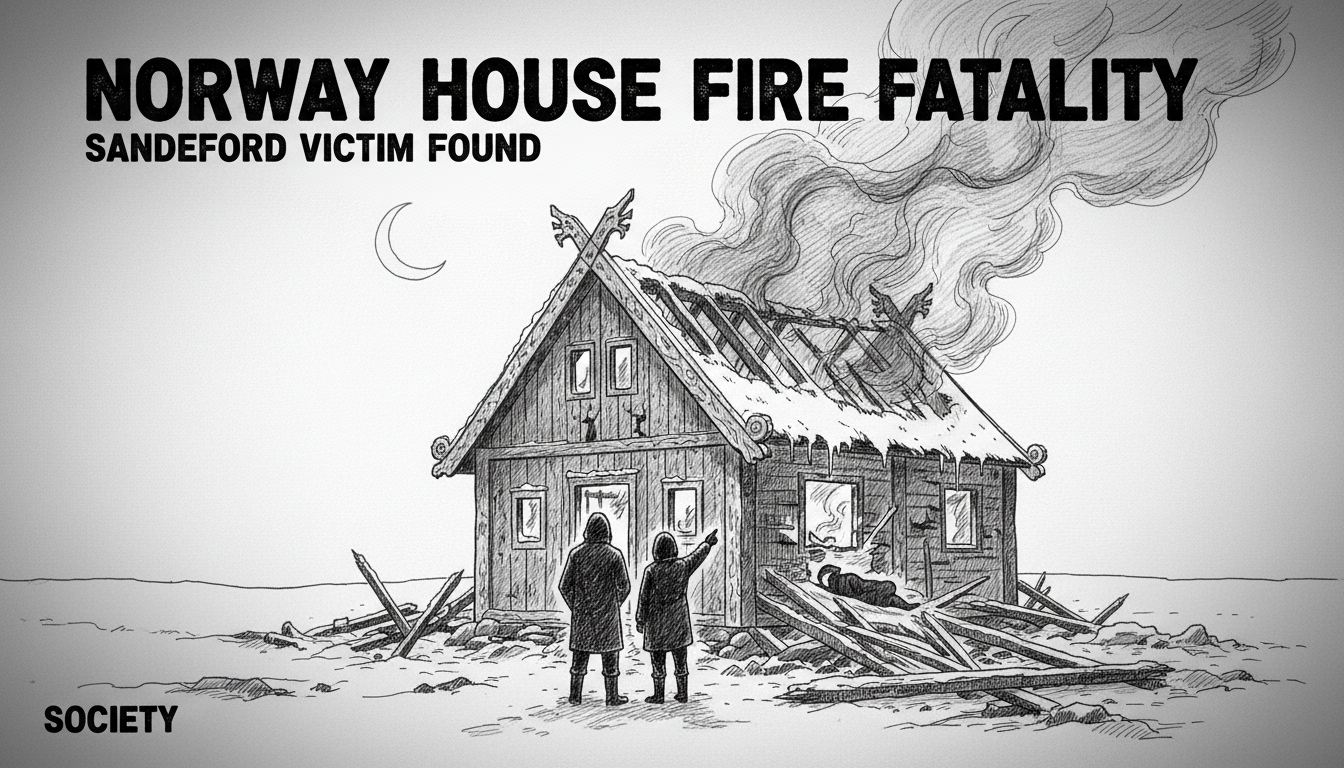
Norway averages between 40 and 50 fire-related deaths annually, a stark statistic given its reputation for safety and order. One person was found dead early Saturday after a fire completely destroyed a detached wooden house in Sandefjord. Emergency services received the alarm at 03:31, but the blaze had already taken a devastating toll, leaving investigators to determine the cause in the charred remains.
A Rapid and Destructive Blaze
Police confirmed the fatality on Saturday morning. Next of kin have been notified, though authorities have not released the victim's identity. Forensic technicians from the National Criminal Investigation Service spent Saturday afternoon meticulously examining the scene. The house, described as a single-family wooden home, was declared a total loss. "The house was completely destroyed by the fire," a police representative said in a statement. The speed of the destruction is a key focus for investigators, who are working to pinpoint where and how the fire started.
The Unique Vulnerability of Wooden Homes
This tragedy highlights a persistent challenge in Norwegian residential safety. Norway's architectural tradition heavily favors wood construction, prized for its sustainability, aesthetic, and insulation properties. Over 90% of detached houses in the country are built with wooden frames. This creates a specific risk profile, as fires in wooden structures can develop with frightening speed once established. Older homes, common in established areas like Sandefjord, may not have the same modern fire-stopping compartments or alarm systems as newer builds. "A fire in a wooden house has a different dynamic than in a concrete building," explained a veteran fire safety engineer consulted for this article. "The material itself becomes fuel. Modern building codes are strict, but the existing housing stock is vast and varied."
Sandefjord's Quiet Streets
Sandefjord, a coastal city in Vestfold county famed for its maritime heritage and summer tourism, is not typically associated with major fire incidents. The community of around 65,000 residents is characterized by neighborhoods of detached homes, many nestled in forested areas. This specific incident occurred in a residential area, not the bustling harbor front. The timing—in the early hours of a weekend—is also a critical factor being examined. Fire detection and occupant alertness can be most challenging during sleeping hours. Local fire crews, who initially responded to the 3:31 AM call, faced a fully involved structure upon arrival, limiting their options primarily to containing the blaze and protecting adjacent properties.
The Meticulous Process of Fire Investigation
Police have stated they do not yet know the cause of the fire. Determining a point of origin and a definitive cause in a totally destroyed structure is a complex, scientific task. Kriminalteknikere (forensic technicians) will sift through the debris layer by layer, looking for indicators like burn patterns, electrical wiring remnants, and heat damage to appliances. They will consider all potential sources: faulty electrical systems, which are a leading cause of house fires globally; heating equipment like wood stoves or fireplaces; cooking equipment; or careless disposal of smoking materials. The possibility of intentional setting, while not indicated by authorities, is a standard part of any fatal fire inquiry until evidence rules it out. This investigation could take weeks or even months before a conclusive report is filed with the police district.
National Context and Prevention Efforts
This fatal fire occurs against a backdrop of ongoing national efforts to reduce fire deaths. The Norwegian Directorate for Civil Protection (DSB) and the Norwegian Fire Protection Association (Brannvernforeningen) consistently campaign for improved home safety. Key messages include the mandatory installation of working smoke detectors in all bedrooms, hallways, and living areas—a law that has been in place for years. Yet, compliance and maintenance are perpetual battles. Fire experts emphasize the "golden minutes" after a fire starts, where a working alarm can mean the difference between escape and tragedy. Other prevention focuses include electrical system checks in older homes, safe practices with open flames and candles, and having clear escape plans.
Community Impact and Looking Ahead
Beyond the official investigation, a death like this resonates deeply in a close-knit community. Sandefjord is a city where many residents have lived for generations. The loss of a home is traumatic; the loss of a life is a profound community tragedy. Local support services, often coordinated by the municipality and voluntary organizations, will typically mobilize to assist affected families and neighbors. For now, the street remains cordoned off as a crime scene, a jarring sight in a peaceful neighborhood. The question hanging over the community is not just 'how did this happen?' but also 'could it have been prevented?' The answer to the latter will depend entirely on the findings of the technical investigation now underway. For Norway's fire safety professionals, each fatal fire provides hard data to refine prevention strategies, aiming to lower that annual statistic of 40 to 50 lives lost. For Sandefjord, it is a somber reminder of how quickly safety can turn to peril, even in one of the world's most secure and well-regulated countries.