
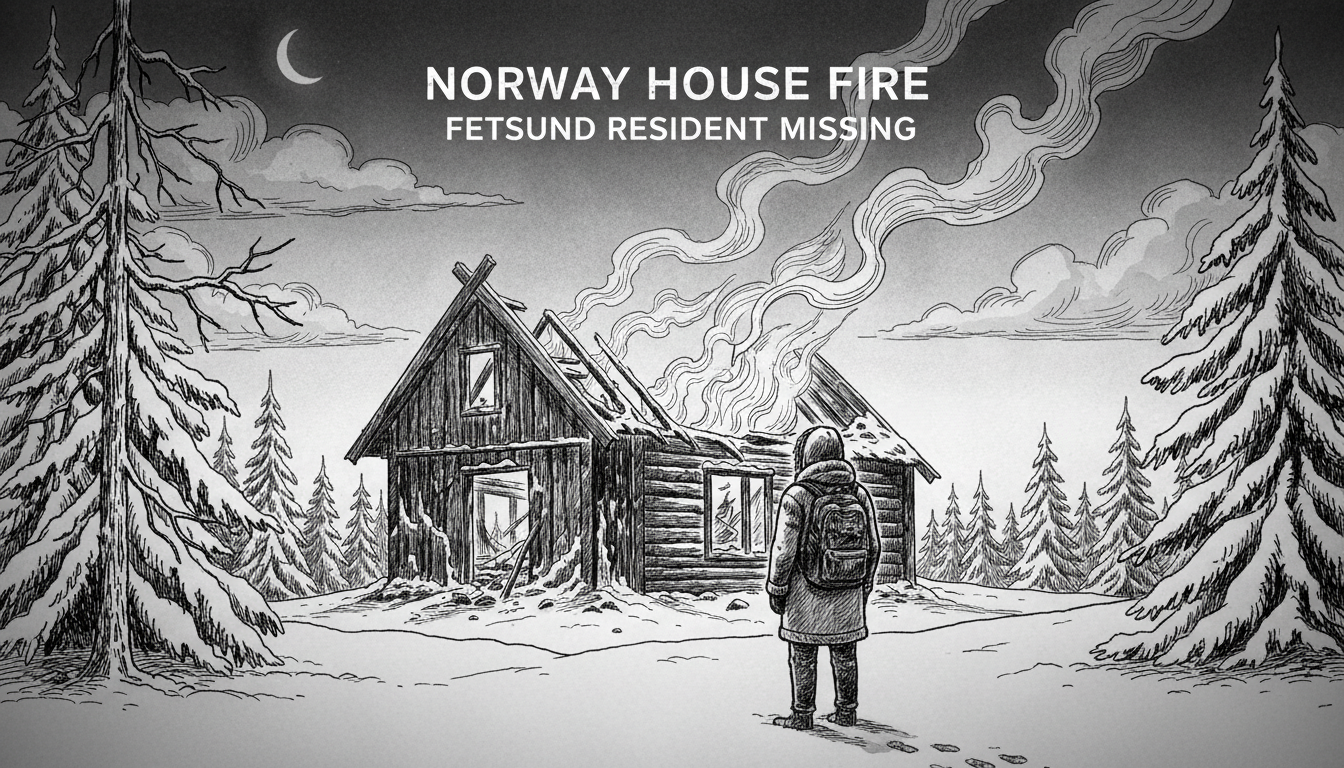
Norway's emergency services are searching for a missing resident after a devastating house fire in Fetsund. Flames engulfed a residential property in the Lillestrøm municipality east of Oslo on Tuesday afternoon, with one person registered at the address still unaccounted for. The incident highlights persistent fire safety challenges in Norwegian homes, particularly during the colder months.
Police operations leader Ronny Hellerud Samuelsen in the East Police District confirmed the severity of the blaze. "There are reports of flames at the entrance door and heavy smoke," Samuelsen said in an initial statement. By approximately 4:50 PM, the situation had escalated dramatically. The house was fully ablaze, with fire visible through the roof. The intense flames and smoke complicated immediate rescue efforts for firefighters arriving at the scene.
A Community on Edge
The fire in Fetsund has sent shockwaves through the quiet town, part of the broader Oslo metropolitan area. Neighbors watched as emergency vehicles converged on the street, their lights cutting through the late afternoon gloom. The primary concern for both police and fire crews shifted quickly from containment to a desperate search for the occupant. "One person is registered at the address, and has not yet been accounted for," a police spokesperson stated, confirming the ongoing and grave nature of the operation.
This statement marks the transition from a firefighting mission to a potential rescue and recovery operation. The failure to quickly locate the resident amplifies the tragedy, leaving family and the community in a state of anxious uncertainty. Local officials have established a perimeter around the property as investigators await the moment they can safely enter the charred structure to begin their work.
Winter's Heightened Fire Risk
This fire occurs during a period Norwegian fire safety experts consistently flag as high-risk. As temperatures drop across Akershus county, the use of heating appliances, candles, and electrical systems increases significantly. "The winter months always see a spike in residential fires," explains Lars Holen, a former chief fire officer and current safety consultant. "We have darker days, more indoor activity, and often older homes with electrical systems not designed for modern loads."
Holen points to several common culprits: unattended cooking, faulty or overloaded electrical outlets, portable heaters placed too close to furnishings, and the traditional use of candles for ambiance. Many Norwegian homes, especially in older suburbs like parts of Fetsund, also feature wood-burning stoves or fireplaces, which require meticulous maintenance and operation. A single moment of distraction or a hidden electrical fault can lead to catastrophic results within minutes, as fire can spread rapidly in a home's confined spaces.
The Critical Role of Early Detection
Every fire safety campaign in Norway reiterates one non-negotiable message: working smoke detectors save lives. Norwegian law requires smoke detectors in all bedrooms, hallways leading to sleeping areas, and on every floor of a home. Yet, compliance and maintenance are ongoing battles. "A detector on the ceiling is not a decorative item," Holen states bluntly. "It is your first and most crucial line of defense. It gives you the precious seconds needed to escape. We cannot know yet if detectors were present or functional in this Fetsund home, but their absence or failure is a factor in countless tragedies."
The effectiveness of detectors is also tied to having a practiced escape plan. Firefighters advocate for households to discuss and rehearse two ways out of every room, especially bedrooms. They emphasize that in a fire, occupants often have less than three minutes to get out safely once a smoke alarm sounds. The thick, toxic smoke from modern household materials can cause disorientation and unconsciousness far faster than the flames themselves.
The Aftermath and Investigation
Once the fire is completely extinguished and the structure is deemed safe, forensic investigators from the police and the fire service will begin the meticulous task of determining the fire's origin and cause. This process can take days or even weeks. They will sift through the debris, looking for electrical arc patterns, signs of accelerants, or the remains of specific appliances. Their findings are critical not only for any potential legal proceedings but also for public safety education, helping to prevent similar incidents.
Simultaneously, the human impact will be addressed by municipal crisis teams. Lillestrøm Municipality's social services will likely offer support to affected neighbors and, of course, to the family of the missing resident. The psychological toll of such an event on a small community is profound and long-lasting.
A National Pattern of Preventable Loss
While Norway boasts advanced emergency services, residential fires remain a stubborn and deadly problem. Data from the Directorate for Civil Protection (DSB) shows that most fatal fires occur in homes, and a significant number involve victims who are alone, elderly, or under the influence of alcohol or medication. These factors can impair the ability to react quickly or to escape. The Fetsund fire, with its single registered occupant, fits a worrying pattern that authorities struggle to counter.
Investment in public awareness campaigns is constant, but experts argue for even stricter regulations and enforcement. Some propose mandatory electrical safety checks for older homes at the point of sale or rental. Others advocate for subsidies to help homeowners, particularly the elderly, update outdated wiring or install more advanced, interconnected alarm systems that alert external monitoring services.
Looking Forward from the Ashes
The blackened shell of the house in Fetsund stands as a stark reminder of vulnerability. For now, the community waits for answers. The hope for a miracle discovery clashes with the grim reality presented by the scale of the destruction. This event will inevitably trigger local discussions about preparedness. Neighbors will check their own smoke detector batteries. Families might finally sit down to sketch that escape plan they've always talked about.
Yet, the fundamental question lingers: how does a society with such a high standard of living and safety continue to see its citizens perish in preventable home fires? The answer lies in a complex mix of human behavior, aging infrastructure, and the constant battle against complacency. The investigation into the Fetsund fire may provide specific answers, but the broader solution requires a relentless, collective commitment to vigilance in every home, on every street, throughout the long Nordic winter and beyond. The true measure of this tragedy's impact will be whether it translates into actionable change that prevents the next one.