
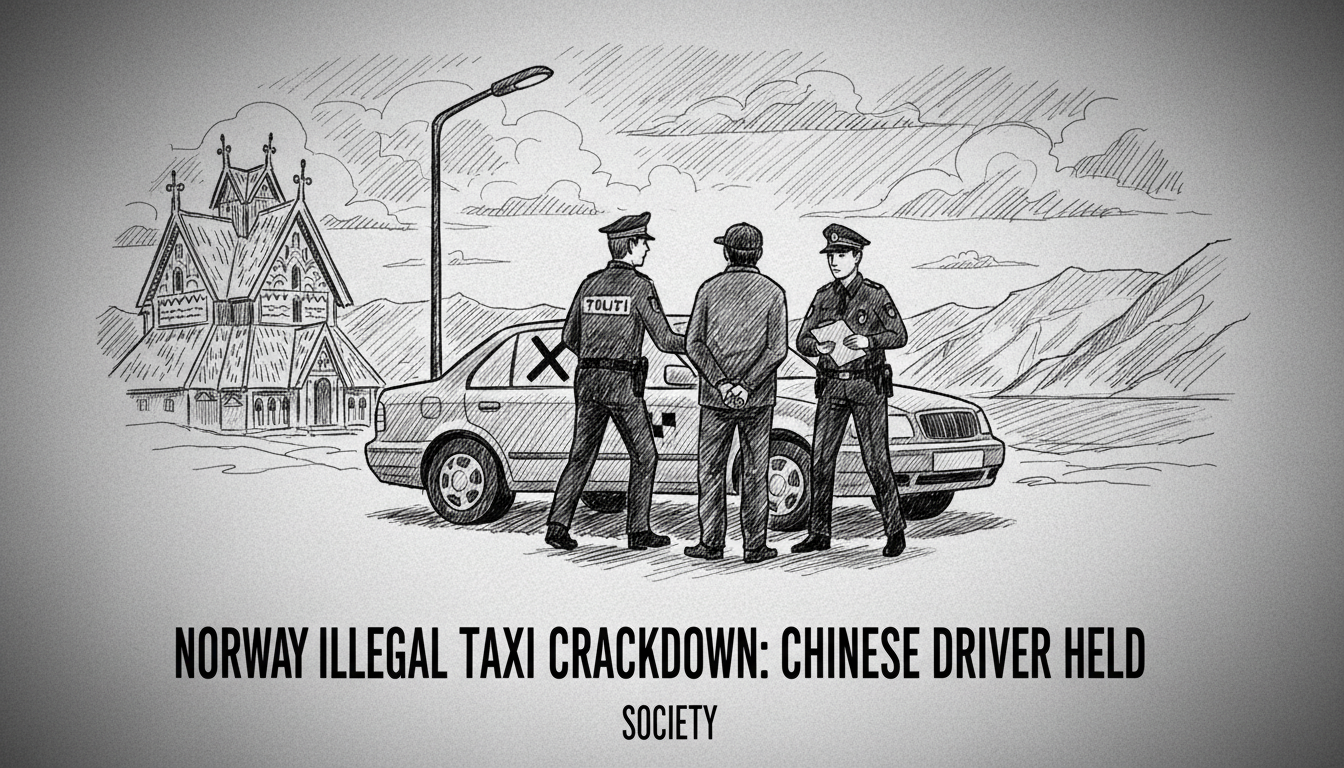
Norway police have exposed a case of illegal tourism transport and unlawful work after stopping a Swedish-registered car with seven foreign tourists in Tromsø. The Chinese driver, operating without a valid commercial license or work permit, now faces multiple charges, highlighting a persistent regulatory challenge in Norway's booming Arctic tourism sector.
A routine police patrol on Tromsøya island stopped the vehicle at 00:40 for a check. Officers quickly discovered the driver lacked any valid documentation to transport paying passengers. The man, a Chinese national, was in Norway on a visa that explicitly prohibits paid employment. He has been reported for breaches of the professional transport regulations and for illegal work.
"This was a clear and serious violation of several laws," a police spokesperson said in a statement. "Operating a passenger vehicle without the proper license or permits poses a direct risk to safety. Combining this with illegal employment makes it a compound offense."
The seven tourists in the vehicle were foreign nationals. Police did not specify their country of origin but confirmed they were not detained. The focus of the investigation is squarely on the driver's illegal commercial activity and employment status.
The Mechanics of an Illegal Operation
Norwegian law strictly controls passenger transport. Legal taxi or shuttle services require an official concession (løyve), a trip ticket (kjøreseddel), or an exemption declaration (fritakserklæring). The driver in this case possessed none of these. Furthermore, his Chinese driver's license was not valid for commercial operations in Norway.
His presence in the country was based on a visa, likely a tourist or visitor visa, which does not grant the right to work. For non-EU/EEA citizens, securing legal work in Norway requires a residence permit specifically granted for employment, obtained before starting work. This system is designed to protect both the Norwegian labor market and workers from exploitation.
"This incident follows a recognizable pattern," said Lars Jensen, a researcher at the University of Tromsø specializing in labor migration. "High seasonal demand for services in tourism hotspots creates a shadow market. Individuals on short-term visas see an opportunity for cash-in-hand work, often facilitated through informal digital channels or word-of-mouth within tourist groups."
Tromsø's Tourism Boom and Regulatory Shadows
Tromsø, situated over 200 miles north of the Arctic Circle, has seen explosive growth in tourism. Visitors flock to the city for Northern Lights viewing, dog sledding, and Arctic expeditions. This creates seasonal spikes in demand for transportation, particularly in the winter months, stretching the capacity of licensed services.
The gap between demand and formal supply creates a niche for illegal operators. They often undercut licensed taxis on price, targeting budget-conscious tourists who may be unaware of the legal and safety implications. These operations typically use private vehicles, sometimes with foreign registrations like the Swedish car in this case, to avoid detection.
Passenger safety is a paramount concern. Licensed commercial drivers undergo background checks, their vehicles undergo regular rigorous safety inspections, and they carry mandatory insurance that covers passengers in case of accident. Unlicensed operators provide none of these safeguards.
"When you step into an unlicensed vehicle, you are essentially voiding your insurance protections," explained Anna Pedersen, a legal advisor with the Norwegian Consumer Council. "If an accident occurs, passengers could be left with massive medical bills and no recourse. The financial risk is significant, aside from the obvious safety risks of a potentially unqualified driver."
A Broader Challenge for Norwegian Authorities
This case is not isolated. The Norwegian Labour Inspection Authority (Arbeidstilsynet) and police regularly uncover illegal work in the service sector, including construction, cleaning, and tourism. The informal nature of these arrangements makes them difficult to police proactively. Checks often rely on tips or random stops, like the one that caught the Chinese driver.
Authorities face a dual challenge: enforcing strict labor and transport laws while managing the realities of a seasonal economy. The government maintains that the rules are non-negotiable, serving to ensure fair competition, protect workers' rights, and guarantee public safety.
"The regulations exist for good reason," said Immigration Minister. "Illegal work undermines the Norwegian model of regulated employment with strong worker protections. It can also be linked to exploitation and poor working conditions."
For the driver, the consequences are severe. Charges under the Professional Transport Regulations can result in heavy fines. The charge of illegal work can lead to deportation, a ban on re-entering the Schengen Area, and future visa applications being denied.
The Path Forward: Enforcement and Awareness
Experts suggest a multi-pronged approach is needed to address the issue. Increased spot-checks in tourism areas, especially during peak season, form one line of defense. Another is targeting online platforms and social media where illegal services might be advertised.
Raising awareness among tourists is equally critical. Tourism Norway and local visitor centers actively advise travelers to use only licensed taxis or reputable shuttle services, identifiable by official signage and metered fares.
"Tourists have a responsibility to make safe choices," said a representative from Visit Tromsø. "If a price seems too good to be true, or the vehicle looks unofficial, it probably is. Choosing a licensed service is an investment in your own safety."
The incident in Tromsø serves as a stark reminder. As Norway's Arctic regions attract more international visitors, the infrastructure and regulatory framework are under pressure. The midnight police stop on a quiet island road revealed more than just one man's illegal job; it exposed the ongoing tension between economic opportunity and the rule of law in the high north. Can Norway's enforcement keep pace with the ingenuity of the shadow economy it seeks to eliminate?