
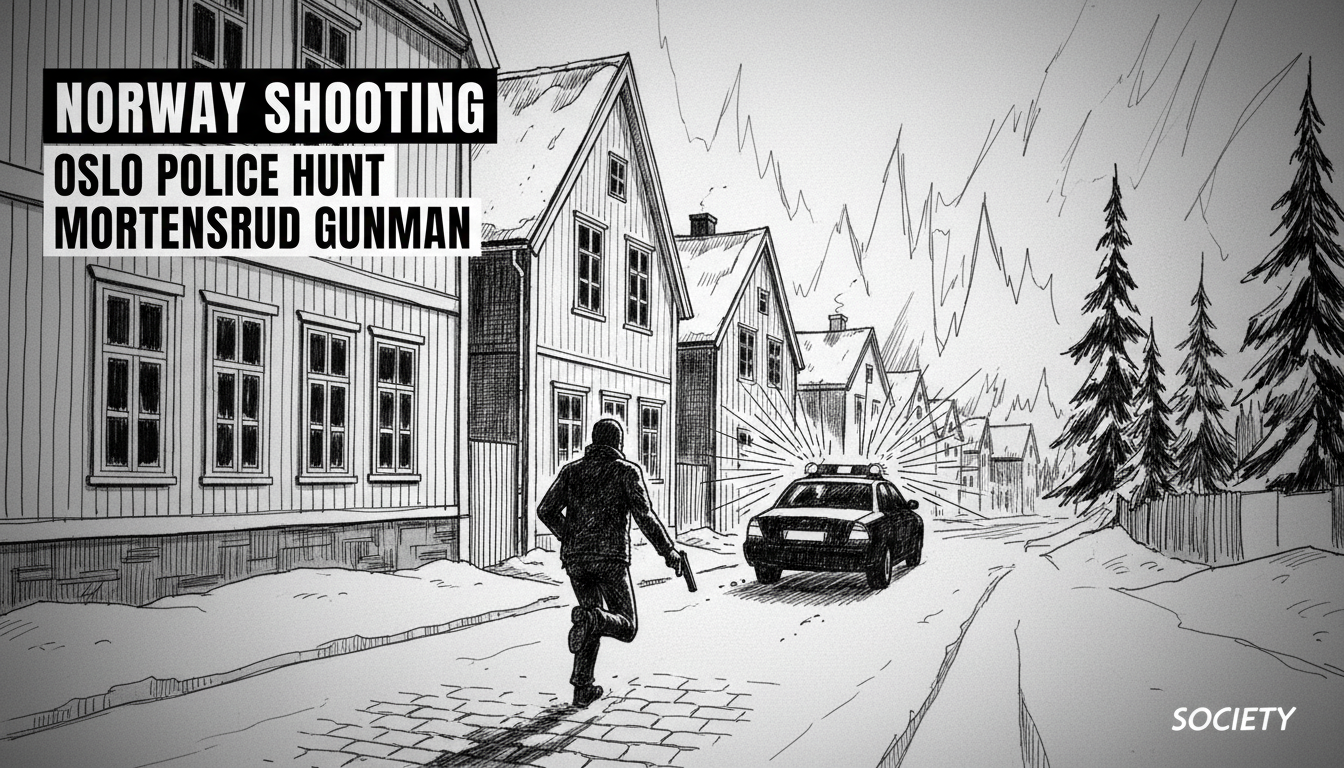
Norway's capital Oslo was shaken by a targeted shooting at a residential home in the Mortensrud suburb late Sunday night. Police confirm shots were fired at a house in the Leirskallen area around 11:20 PM, launching a major investigation but reporting no injuries. The incident has raised immediate concerns about gun violence in a city where such events remain relatively uncommon.
"This is a very serious case," said Crime Chief Morten Kalhagen of the Oslo Police District in a Monday morning update. "The police take the use of firearms against residential houses very seriously, as there is a high risk of serious personal injury. The case therefore has high priority." Authorities have not made any arrests and the motive behind the attack remains unclear. However, police stated the incident does "not appear to be random," suggesting a deliberate targeting of the property.
A Suburban Night Disrupted
The response was swift and substantial. Police deployed significant resources to the quiet, family-oriented neighborhood of Leirskallen within Mortensrud, a diverse suburban district in Oslo's Søndre Nordstrand borough. Forensic teams conducted a detailed technical examination of the scene throughout the night, while officers carried out door-to-door inquiries and interviewed potential witnesses. The search for the perpetrator involved combing the surrounding area, though police have since assured residents there is no ongoing danger to the wider community.
"There is no reason to assume that the incident poses any danger to residents in the area," said Operations Manager Per-Ivar Iversen. This assurance is part of a delicate balance for law enforcement: managing public alarm while pursuing an active investigation. The police have made a public appeal for information, specifically asking residents in Leirskallen and the surrounding area who may have private CCTV footage from their homes or cars to come forward.
The Investigation's Next Steps
With the initial scene work complete, the investigation is now moving into a broader phase. Kalhagen outlined that further work will include gathering electronic evidence, searching for more video surveillance, conducting additional interviews, and analyzing technical findings. The absence of a clear motive or suspects at this early stage makes community cooperation critical. Every piece of digital evidence or eyewitness account could prove decisive in piecing together the events that led to the shooting.
Criminologists observing the case emphasize the importance of this rapid, multi-pronged approach. "In incidents of targeted violence, especially involving firearms, the first 48 hours are crucial for evidence collection and preventing potential escalation," explains a Norwegian criminology expert who preferred not to be named while the investigation is active. "Swift action and clear communication can help contain the situation and build the trust needed for community members to share what they know." The police's public appeal for video footage is a standard but vital tactic in modern urban investigations.
Mortensrud in Context
Mortensrud is typical of many European suburban areas developed in the late 20th century. It is a residential zone known for its multicultural population and family homes, not for high crime. The shooting has therefore sent a ripple of anxiety through the community, challenging its sense of security. While Oslo experiences lower levels of gun violence than many major global cities, any shooting in a residential area generates significant media attention and public concern in Norway.
This incident forces a confrontation with the reality that no community is entirely insulated from serious crime. The targeted nature of the attack, as suggested by police, points away from a random act of street violence and towards a more specific conflict. This distinction is key for both investigators and residents trying to understand the threat level. Police resources are now focused on uncovering the connections and conflicts that led to the shooting, a process that often involves tracing social and potentially criminal networks.
A Broader Look at Urban Safety
Single events, while shocking, do not define a city's safety profile. Norway consistently ranks highly on global safety and quality of life indices. However, this shooting in Mortensrud acts as a stark reminder that urban challenges exist even in the most prosperous societies. Experts often point to underlying social and economic factors that can contribute to crime in specific urban pockets, including issues of integration, opportunity, and social cohesion.
The police response reflects Norway's generally proactive and resource-rich law enforcement model. The deployment of forensic teams, the immediate neighborhood canvassing, and the structured public communication strategy demonstrate a systematic approach to crisis management. The next phase will test the investigation's ability to transition from reacting to the event to proactively identifying and apprehending those responsible.
The Path Forward for Police and Community
For now, the residents of Leirskallen are left with more questions than answers. A home on their street was attacked with a firearm. Someone in their community may know why. The police investigation hinges on transforming fragments of information—a grainy video clip, a half-remembered detail, an unusual sound heard late at night—into a coherent narrative that leads to an arrest.
The coming days will reveal whether the evidence trail grows cold or heats up. Will the combination of technical forensics and community tips provide a breakthrough? The Oslo police have classified the case as a high priority, guaranteeing it will receive sustained attention. However, the lack of an immediate arrest indicates the perpetrator either left minimal traces or had a plan to evade quick capture.
This incident in Mortensrud is more than a police blotter entry. It is a violation of the fundamental safety one expects within their own neighborhood. It tests the resilience of the community and the effectiveness of its institutions. While the police work to find the who and the why, the broader question lingers: in a society known for its tranquility, how does it prevent a single act of violence from fracturing the peace?