
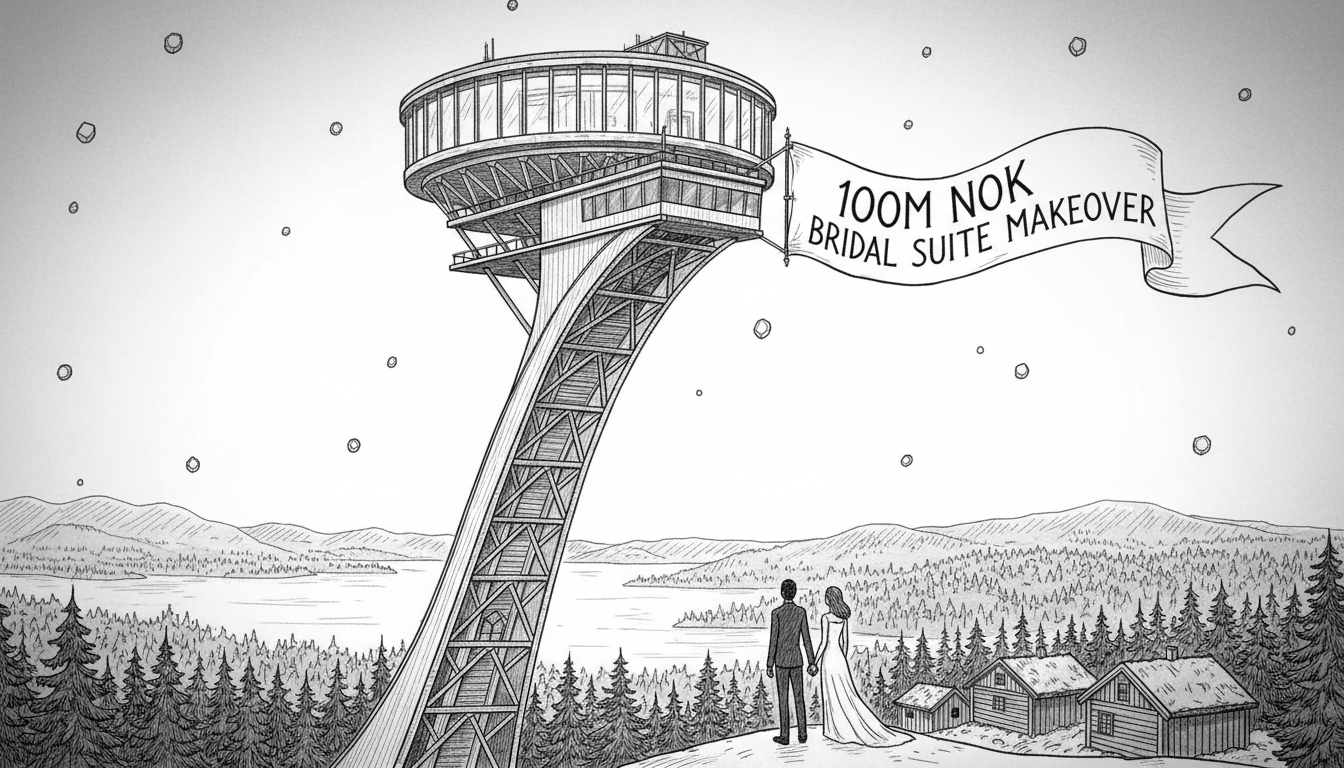
Norway's iconic Tryvannstårnet broadcasting tower is set for a dramatic transformation into an exclusive venue featuring a panoramic bridal suite, following a 14 million NOK purchase by investor Christian Ringnes. The 71-year-old real estate magnate plans to spend over 100 million kroner renovating the 1962 structure, aiming to complete the project for his 75th birthday. His vision includes a luxury suite for weddings, a café, restaurant, and meeting spaces, repurposing a national cultural monument that has stood dormant since FM broadcasting ended in 2017.
Ringnes presented his plans during a public meeting with Oslo's Vestre Aker district council, outlining a concept that prioritizes exclusive experience over traditional hospitality. "We envision a bridal suite that will have the entire circular section," Ringnes said. "Who wouldn't want to marry off their daughter or son in such a place?" He described the suite's main attraction with characteristic flair: "Imagine waking up there! You don't need to give any morning gift. The morning gift is the view. Or possibly yourself, in front of the windows."
A Tower's Second Act
The Tryvannstårnet, rising 118 meters above sea level on Oslo's Voksenkollen hill, served as a critical broadcast link for Norwegian radio for over five decades. Its sale by Oslo municipality in January marked the end of a long period of uncertainty about the tower's fate. The strict preservation status granted by Oslo's City Antiquarian, which requires the tower be treated "as if it were protected," presents both a challenge and an opportunity. Any renovation must respect the original architectural integrity while creating a viable commercial operation.
Real estate analysts note the significant financial commitment Ringnes is making. The 100 million NOK renovation budget dwarfs the 14 million NOK purchase price, indicating a premium restoration. "Projects like this are not typical investments," says Lars Holen, a senior analyst at Eiendom Norge. "You're balancing immense historical value with extremely narrow commercial potential due to space constraints. The economics rely entirely on creating a unique, high-value experience that can command premium prices."
The Vision: Exclusivity Over Volume
Christian Ringnes has explicitly ruled out converting the tower into a conventional hotel. "It becomes too small, so the 'hotel facility' will be one to two suites," he explained. The plan is for flexible use: an exclusive meeting room part of the time, and the celebrated "morning gift" bridal suite for the remainder. This model suggests a focus on private events, high-end corporate retreats, and destination weddings, leveraging the tower's unparalleled 360-degree views of Oslo, the Oslofjord, and the surrounding Nordmarka wilderness.
Additional floors will house a kitchen, a café, and a restaurant, potentially making the tower a dining destination even for those not booking the suite. Ringnes, who has already hosted bridge games and a birthday celebration in the tower since acquiring it, calls it "a super fun place." His personal enthusiasm is a driving factor, blending his history as a major cultural donor—having funded the reconstruction of the Gustav Vigeland sculpture park fountain and the restoration of the Ekeberg restaurant—with a new, personal legacy project.
Navigating Heritage and Modernity
The transformation of Tryvannstårnet sits at the crossroads of Norwegian cultural preservation and adaptive reuse. The tower is a recognizable symbol of mid-20th century technological optimism, a sleek concrete needle piercing the skyline. Preservation guidelines will likely limit structural changes, meaning the renovation work will focus on interior design, amenities, and access while preserving the iconic exterior silhouette that generations of Oslo residents associate with broadcast television and radio.
Tourism experts see potential in creating a truly unique attraction. "Oslo has many historical sites, but a luxury suite in a former broadcast tower is something entirely new," notes Anna Pedersen, a tourism development consultant. "It could attract a niche market of high-end travelers and locals seeking an extraordinary experience for a special occasion. The key will be marketing it as a once-in-a-lifetime destination rather than just another hotel." The concept could complement Oslo's existing attractions, adding a modern, architectural heritage element to the city's tourism portfolio.
The Financial and Symbolic Investment
The scale of investment—over 100 million NOK—raises questions about the financial return. With space for only one or two suites, revenue streams will be limited to premium pricing for the suite, restaurant operations, and event rentals. Ringnes's strategy appears to be one of value creation through exclusivity and prestige, rather than volume. The project mirrors other global trends of repurposing industrial or infrastructural landmarks into luxury accommodations, such as converted water towers or lighthouses, though few carry the same national symbolic weight as Tryvannstårnet.
The project also reflects a private-sector solution to a public heritage dilemma. With the municipality divesting the asset, the responsibility for maintaining and funding the culturally significant structure falls to a private owner. Ringnes's plan, if approved by heritage authorities, could secure the tower's physical and financial future for decades, preventing the decay that often afflicts obsolete specialized buildings.
A New Chapter for an Oslo Icon
For Oslo residents, the tower's rebirth will change its relationship with the city. Once a hidden technical facility, then a dormant landmark, it is poised to become an accessible, albeit exclusive, part of the city's social and cultural scene. The planned café and restaurant will offer public access to the views previously reserved for broadcast engineers. The bridal suite, while private, turns the tower into a backdrop for personal stories and celebrations, embedding it in a new generation of memories.
The ambitious timeline, targeting completion for Ringnes's 75th birthday, sets a clear goal. It remains to be seen how the detailed plans will navigate the rigorous approval processes required for a site of national value. Yet, the investor's track record with high-profile projects suggests a determined follow-through. The vision of a newlywed couple waking to a panoramic vista over the Norwegian capital represents a poignant new purpose for a tower that once connected the nation by airwaves. It is a bold bet that the future of Norwegian heritage lies not just in preservation, but in inspired reinvention.