
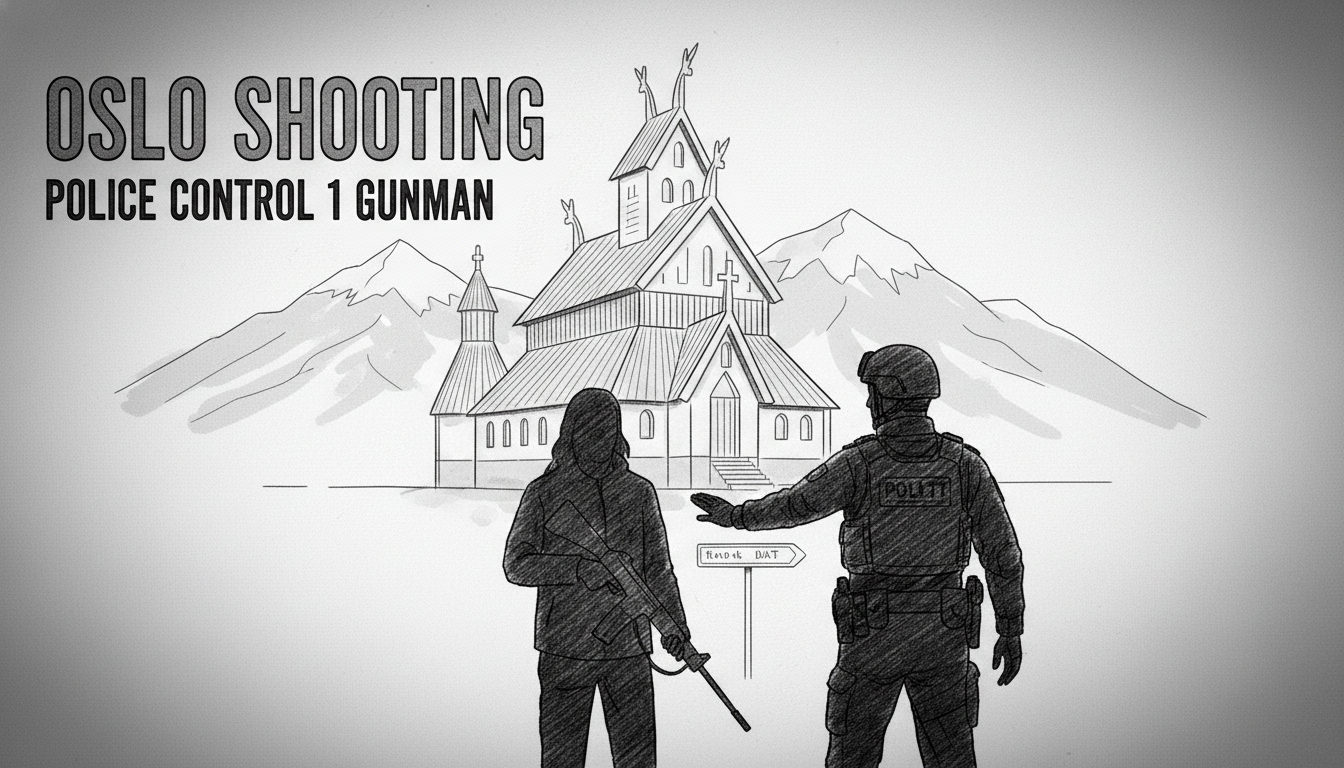
Norway police have one suspect in custody after a shooting at Oslo's Storo Storsenter shopping center, an event that shocks a nation with a homicide rate of just 0.5 per 100,000 people. Witnesses described panic as a man entered with a pistol, prompting crowds to flee. Emergency services, including multiple police cars and ambulances, rushed to the scene. Authorities have urged the public to avoid the area to aid rescue operations. "We have control over the perpetrator, and we are searching for more injured and involved individuals," police said in a statement. This incident immediately recalls Norway's 2011 attacks that killed 77 people, raising urgent questions about safety in Scandinavia's generally peaceful societies.
Chaos at Storo Storsenter
Shoppers experienced terror this afternoon when gunfire erupted in a busy retail complex. Initial reports indicate shots were fired inside the center, though the number of casualties remains unclear. Police confirmed they apprehended the gunman quickly, but the search for victims continues. The Storo Storsenter is a large hub in Oslo, making this a high-profile attack. My thoughts, as a reporter focused on Danish society, turn to how such events ripple across borders. Denmark's own integration policies and social welfare systems are often tested by threats of violence, even when they originate elsewhere.
Norway's Historical Context with Violence
Norway maintains one of Europe's lowest violent crime rates, with gun ownership tightly regulated. However, the 2011 attacks by Anders Behring Breivik exposed vulnerabilities in public security. That tragedy led to enhanced police training and crisis management protocols. Today's shooting, while less severe initially, triggers collective trauma. Security analysts note that Nordic countries, despite their stability, are not immune to isolated acts of violence. In Denmark, we have seen debates on gun control intensify after rare incidents, such as the 2022 Copenhagen shopping mall attack that injured several.
Emergency Response and Community Impact
Norwegian police demonstrated swift control, a testament to improved preparedness since 2011. Their immediate priority is securing the scene and assisting the injured. Psychological support for witnesses and the broader community will be critical. Experts emphasize the importance of mental health resources in the aftermath. "Early intervention programs and community cohesion are key to preventing escalation," says Dr. Anette Larsen, a Norwegian sociologist. In Danish municipalities, social centers often play a similar role, offering counseling and integration services that can mitigate radicalization risks.
Danish Perspectives on Security and Integration
From Copenhagen, this incident resonates deeply. Denmark has its own challenges with social cohesion and crime prevention, particularly in urban areas. Our gun laws are strict, with only 12.7 firearms per 100 residents compared to Norway's 28.8, according to 2017 data. Yet, integration policies face scrutiny when violence occurs. "Denmark's approach combines welfare support with firm demands on newcomers, aiming to foster belonging," says Mette Frederiksen, a Copenhagen integration advisor. However, events in Oslo remind us that no system is flawless. Danish police regularly train for active shooter scenarios, reflecting shared Nordic concerns.
Analyzing the Broader Nordic Model
Scandinavia's welfare states pride themselves on low inequality and high trust, factors that typically reduce crime. Norway's Gini coefficient for income is 0.26, one of the world's lowest. But isolation and mental health issues can bypass social safeguards. In Denmark, we invest in education and job training for immigrants, with 67% of non-Western descendants employed in 2023. Yet, pockets of marginalization persist. This shooting may prompt renewed focus on early warning systems and cross-border police cooperation. The Nordic Council has previously discussed harmonizing security measures, and today's event could accelerate those talks.
Expert Insights on Prevention Strategies
Security experts highlight the need for balanced responses. "Over-policing can erode community trust, while under-preparation risks lives," notes Lars Jensen, a Copenhagen-based security analyst. He points to Danish programs like "Visitkortet," where police engage locally to build relationships. In Norway, similar initiatives exist, but today's violence tests their effectiveness. Mental health professionals advocate for accessible care, noting that Denmark's public health system covers therapy for all residents. Statistics show that 20% of Danes experience mental health issues annually, underscoring the need for proactive support.
The Road Ahead for Oslo and Beyond
As Oslo recovers, the focus will shift to healing and policy reviews. Norwegian authorities will likely examine security at public spaces and gun access protocols. In Denmark, we watch closely, knowing our society faces parallel dilemmas. Our integration minister, Kaare Dybvad, recently announced increased funding for social housing projects in Copenhagen to combat segregation. Such measures aim to prevent the alienation that can lead to violence. The Nordic ideal of openness must now reconcile with vigilance. This shooting, while contained, is a stark reminder that safety requires constant attention across our region.
Ultimately, today's events in Oslo challenge the notion of Scandinavian exceptionalism. They call for reflection on how Denmark's own policies—from welfare to immigration—can adapt to evolving threats. As a journalist, I see the human impact first: families shaken, communities on edge. But behind that lies a complex web of social policy and security strategy. Norway's response will inform Danish approaches, just as our experiences shape theirs. In the coming days, details will emerge, but the conversation about preserving peaceful societies has already begun anew.