
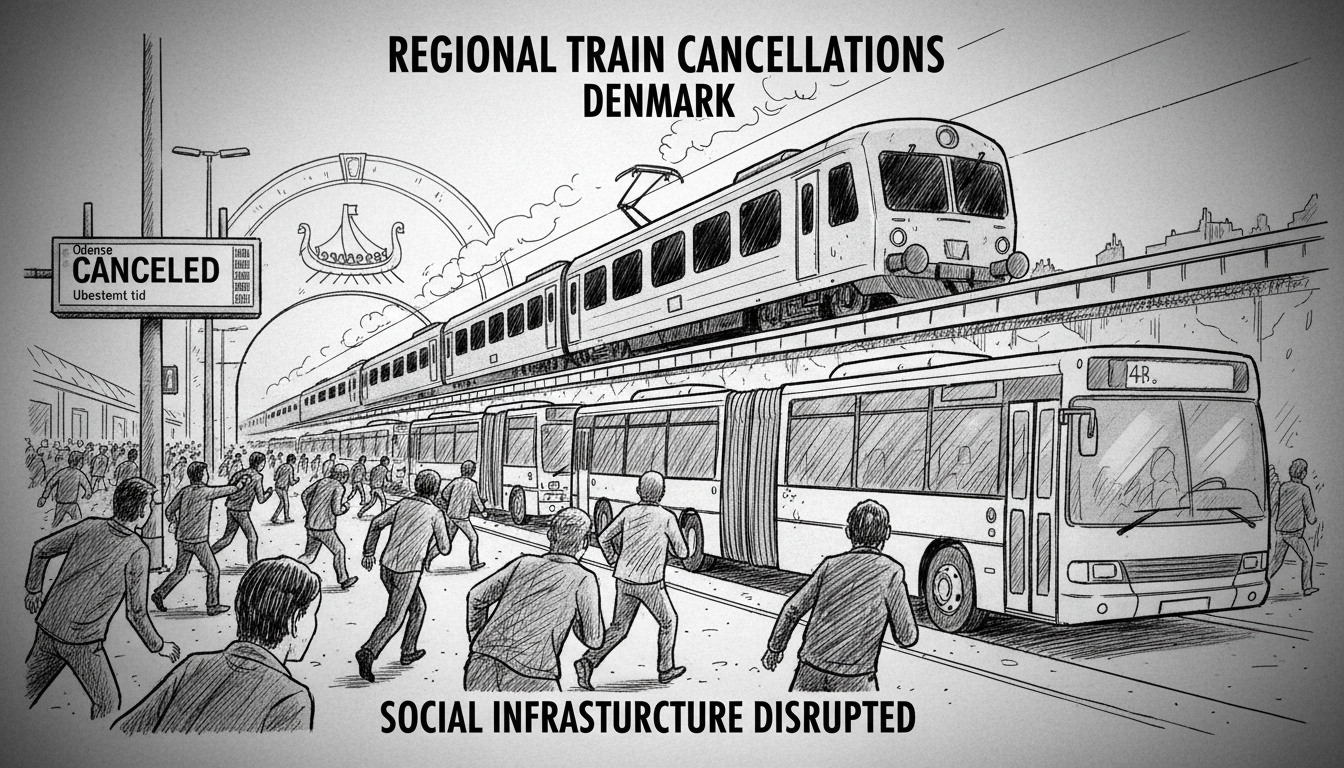
Multiple regional train services between Odense and Fredericia were canceled on Friday morning. The cancellations occurred after several trains broke down on the critical Funen-Jutland connection. Transport officials confirmed the disruption in an early statement. They arranged replacement bus services for passengers traveling to smaller stations along the route. InterCity and InterCityLyn trains continued to operate, but regional commuters faced significant delays. The exact timeline for restoring normal service remained unclear as the morning rush hour began.
This disruption highlights a recurring tension within the Danish welfare system. Reliable public transport is a cornerstone of social equity and regional cohesion. When key routes falter, it disproportionately affects workers, students, and families who depend on predictable schedules. The Odense-Fredericia corridor is a vital artery connecting central Denmark. Its reliability impacts not just daily commutes but also regional economic integration. Frequent service interruptions can erode public trust in shared infrastructure, a core component of the social contract.
From an integration perspective, consistent public transport is crucial. It connects new residents in suburban areas to language schools, job centers, and community hubs in city cores like Odense. Unplanned cancellations can isolate individuals who are building new lives and depend on these links. Municipal social centers often emphasize transportation access as a key to successful settlement. When the system fails, it creates invisible barriers to participation in Danish society. This incident serves as a practical reminder that social policy extends far beyond legislation into the daily functioning of public services.
What does this mean for Denmark's social policy goals? Infrastructure reliability is a silent partner in integration efforts. A breakdown is more than an inconvenience. It is a fracture in the network that binds communities together. Officials must view these operational failures through a wider lens. They affect educational access, employment punctuality, and social inclusion. The response with replacement buses is a standard mitigation, but it often lacks the capacity and comfort of train services. This can deter usage, particularly among elderly passengers or those with young children.
Looking forward, these events prompt questions about investment and maintenance priorities. The Danish model prides itself on efficiency and universal access. Repeated technical failures challenge that narrative. They invite scrutiny of where resources are allocated within the national transport budget. For international observers, this is a tangible example of the Scandinavian welfare state in action, or inaction. The system's strength is tested not in theory but in its daily performance. The true measure of Danish social policy is how quickly and effectively it mends these routine ruptures for all citizens.