
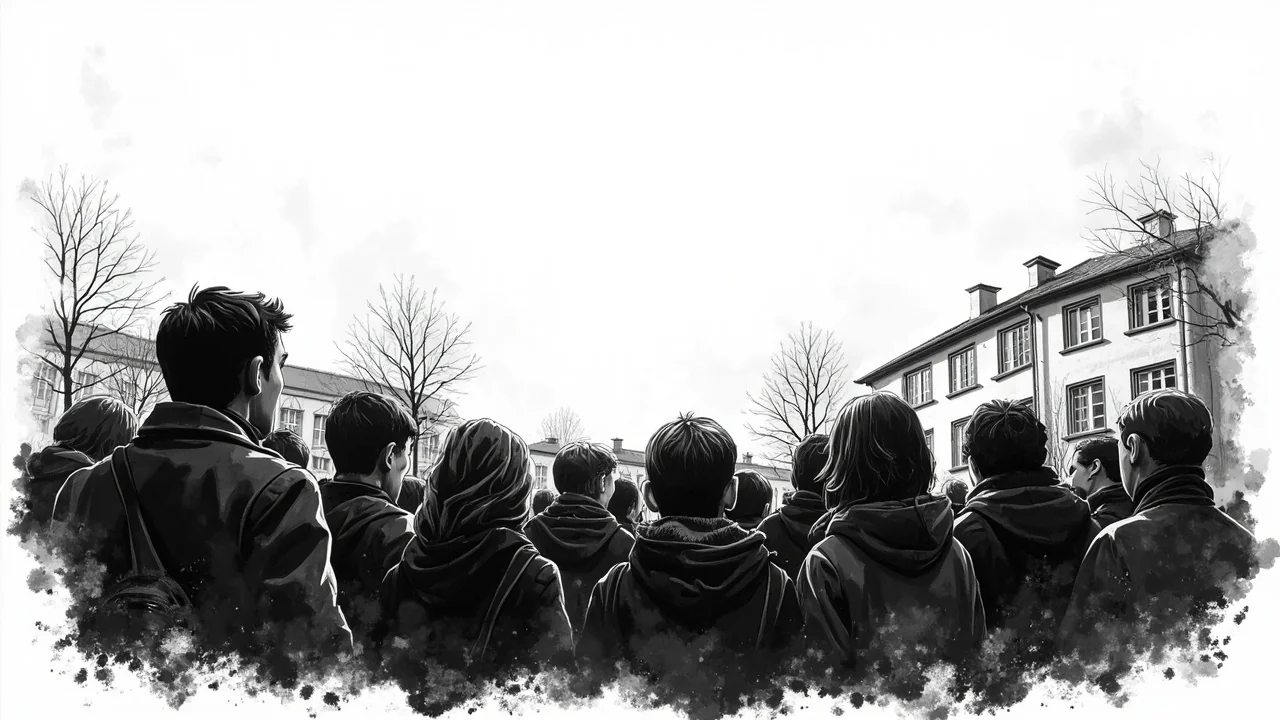
Sweden's education system faces an acute crisis, illustrated by nearly 700 personal stories collected by a single teacher. High school teacher Maria Wiman will deliver these testimonies to Education Minister Simona Mohamsson (L) at Rosenbad on Monday. The collection includes accounts of student suicide and severe bullying, representing an unprecedented grassroots appeal to the Swedish government.
A Teacher's Initiative Reaches the Top
Maria Wiman, a high school teacher, initiated the project after winning a charity auction for a day with Minister Mohamsson. The auction benefited Musikhjälpen. Wiman organized a fundraiser, gathered 120,000 kronor in five days, and secured the winning bid. "It was almost a thousand people who helped me win," Wiman said. "And what do I do with all these voices then?" Her answer was to create a platform for students, parents, and teachers to share their experiences of a failing system. The nearly 700 narratives now form a direct channel from classrooms to the government district.
Political Pressure Mounts in Stockholm
The delivery of these testimonies places significant pressure on the Swedish government and the Education Minister. Simona Mohamsson, a Liberal Party minister, must now respond to a documented crisis compiled outside official channels. This action occurs within a wider political context where the Swedish Parliament, or Riksdag, has faced recurring debates on education funding and student welfare. The Riksdag building has been the site of numerous policy discussions, but advocates argue bureaucratic processes often dilute urgent concerns. This direct handover at Rosenbad, the government headquarters, bypasses normal bureaucratic filters.
The Stories Behind the Statistics
The source material cites two specific, harrowing examples: Max, who took his own life in high school, and Bryna, who was bullied at age eleven. These names represent hundreds of similar accounts detailing mental health crises, violence, and inadequate support within Swedish schools. Wiman's collection transforms abstract policy debates into human terms. The stories allege systemic failures that existing government policy in Sweden has not remedied. They challenge the efficacy of recent Riksdag decisions aimed at improving school environments and student safety.
Minister's Response and Next Steps
Education Minister Simona Mohamsson has acknowledged the scheduled meeting. Her office will receive the physical documentation of the 700 stories. The ministerial response will be closely watched by teachers' unions, parent groups, and opposition parties in the Swedish Parliament. Standard procedure would involve ministry officials reviewing the material before formulating a formal response or proposing new policy directives. However, the public nature of this handover accelerates the timeline. Mohamsson's Liberal Party must balance coalition dynamics within the Swedish government while addressing a visible public outcry.
Historical Context of School Reforms
This is not the first time the Swedish school system has faced a major review. Over the past two decades, the Swedish Parliament has enacted multiple reforms concerning curriculum, grading, and teacher qualifications. Many of these Riksdag decisions were designed to address declining international test scores and equity gaps. Critics argue that reforms have increased administrative burdens on teachers while failing to improve classroom conditions. The current center-right government, led by the Moderates, has continued to tweak education policy, but the stories collected by Wiman suggest deeper, unaddressed issues of student well-being and safety.
The Path from Testimony to Policy
The journey from personal testimony to legislative action in Stockholm politics is complex. For these 700 stories to influence government policy in Sweden, they must be translated into formal proposals, undergo committee review in the Riksdag, and secure majority support. The Minister could use the accounts to advocate for specific budgetary increases or legal changes. Alternatively, the material could be referred to the National Agency for Education for investigation, a process that can take months or years. The immediate question is whether this direct appeal will shortcut the usual slow grind of Swedish policy-making.
A Defining Moment for Mohamsson
This event represents a defining moment for Education Minister Simona Mohamsson. Her handling of the 700 stories will be seen as a test of her ministry's responsiveness. She can choose to treat the meeting as a symbolic listening exercise or as the starting point for a new policy initiative. Her political allies and opponents in the Riksdag will use her response to gauge the government's commitment to education. With the next general election on the horizon, Stockholm politics often turns on such tangible issues. The minister's day with Maria Wiman, initially a charity event, has become a high-stakes political engagement.
The Unfiltered Voice of the Schoolyard
Maria Wiman's project succeeds because it provides raw, unfiltered data. Unlike official reports from government agencies, these stories carry emotional weight and specific detail. They document a reality that statistics on class size or funding levels often obscure. The collection includes perspectives from across Sweden, implying the crisis is national, not local. This presents a unified challenge to the Swedish government's current approach. It argues that the problem is not a lack of policy, but a failure of policy to connect with the lived experience of students and teachers.
What Happens After Rosenbad?
The meeting at Rosenbad is a beginning, not an end. The true measure of success will be visible in future Riksdag decisions and budgetary allocations. Will the Swedish government propose a new student well-being initiative? Will the Education Minister appoint a special commission? Or will the stories be archived, their impact fading after the news cycle turns? Maria Wiman has stated her goal was to give a voice to those who helped her win the auction. She has fulfilled that promise. The responsibility now shifts to Minister Mohamsson and the wider machinery of Swedish politics to prove those voices were heard.