
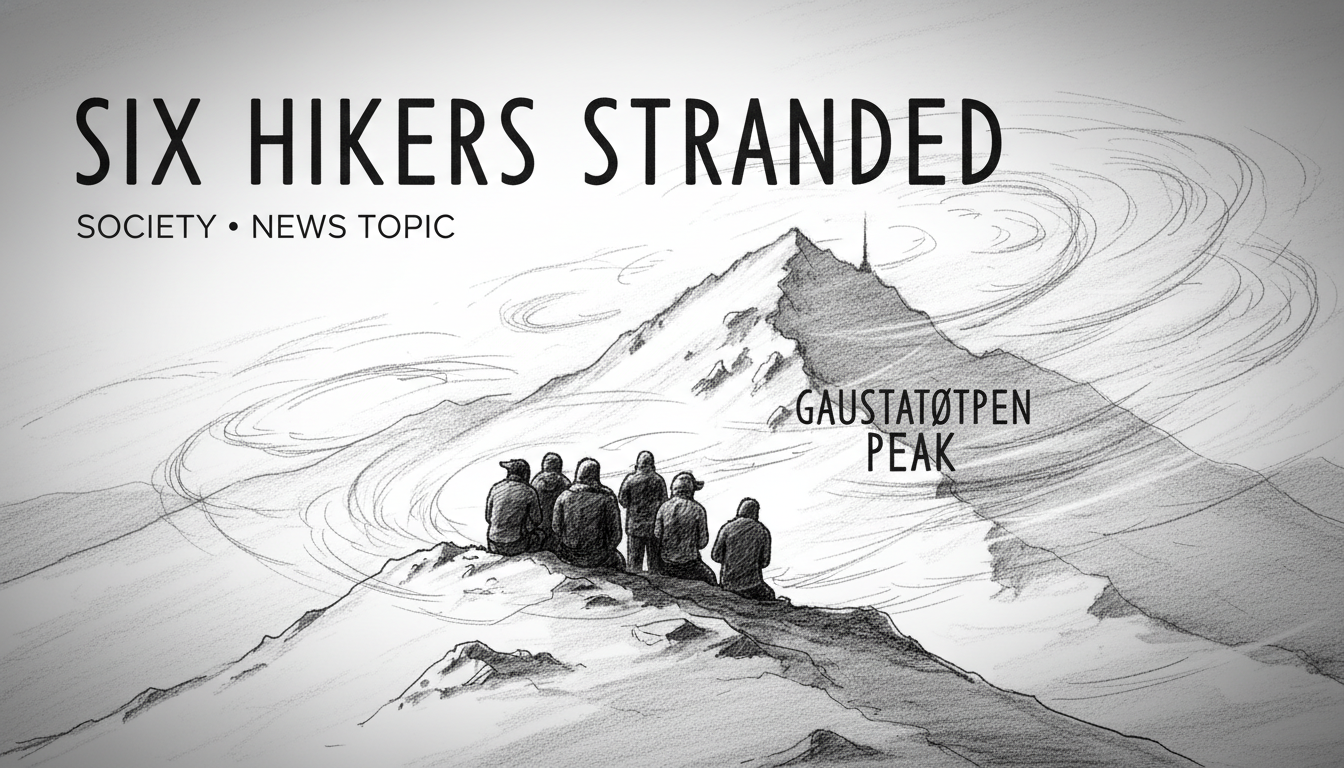
Norway's mountain rescue services were activated on New Year's Eve after a group of six foreign hikers could not find their way down from the summit of Gaustatoppen. Thick fog and temperatures of minus ten degrees Celsius created dangerous conditions on the 1,883-meter peak. Police in the South-East region confirmed they were coordinating a response to bring the group to safety.
Authorities stated they were in contact with the operator of the Gaustabanen funicular railway. The plan was to use the unique mountain railway to evacuate the stranded tourists. This incident highlights the ever-present risks of hiking in Norway's unpredictable mountain terrain, even on a popular and accessible peak.
A New Year's Eve Rescue Mission
The call for help came as many Norwegians were preparing for festive celebrations. For the rescue teams, it meant mobilizing for a winter operation in challenging weather. The police report noted wind alongside the severe cold, factors that rapidly increase the risk of hypothermia and frostbite. Disorientation in white-out fog conditions is a common and serious threat.
Using the Gaustabanen represented a practical solution. The railway tunnel, carved inside the mountain, provides a sheltered passage from near the summit to the base area. It was originally constructed in the Cold War for military access to a strategic communications station. Today, it primarily serves tourists during the summer season.
Its deployment for a rescue underscores its continued value as a safety asset. This was not a standard operation, requiring coordination between police, rescue personnel, and the railway staff. The priority was to get the hikers out of the elements and into warmth as quickly as possible.
The Allure and Peril of Gaustatoppen
Gaustatoppen in Telemark county is one of Norway's most famous mountains. Its distinct shape and the breathtaking view from the top attract tens of thousands of visitors each year. On a clear day, you can see roughly one-sixth of Norway from its summit. This very accessibility can breed a false sense of security.
New Year's Eve hikes to watch the sunset or fireworks are a tradition for some. The mountain has a well-trodden path, and the Gaustabanen offers an easier alternative to hiking. However, winter in the Norwegian mountains demands respect. Weather systems can change with little warning, transforming a clear hike into a fight for survival.
Statistics from the Norwegian Red Cross and other rescue organizations consistently show that fog and sudden weather shifts are leading causes of mountain incidents. Tourists, both international and domestic, can underestimate the conditions, relying on fair-weather experiences. Proper preparation is non-negotiable.
Expert Advice for Mountain Safety
Mountain safety experts point to this incident as a textbook example of why preparation is key. "Checking the detailed weather forecast for the mountain area, not just the valley, is the first and most crucial step," says a veteran instructor from the Norwegian Trekking Association. "Mountain weather is its own entity."
The essentials for a winter hike go beyond warm clothes. Experts mandate a packing list that includes a map and compass, a headlamp, extra food and water, a windproof and waterproof shell, and a thermal emergency blanket. A fully charged phone is vital, but service cannot be relied upon in remote areas.
"Informing someone of your precise route and your expected return time is perhaps the simplest and most important safety rule," the expert emphasizes. "That way, if you do not check in, rescue teams know where to start looking." For foreign tourists, this could mean detailing plans with hotel staff or a tour operator.
The group on Gaustatoppen was fortunate that a technical solution like the funicular was available. Most mountain rescues involve ground teams hiking or skiing in, or risky helicopter operations in poor visibility. These missions put volunteer rescue personnel in significant danger.
A Broader Look at Rescue Resources
This successful operation will likely end as a footnote in Norway's mountain rescue logs. Yet it sparks a recurring conversation about responsibility and cost. Norway's decentralized, volunteer-based rescue system is world-renowned but operates under constant pressure.
Some local politicians and rescue leaders have called for more direct funding from the national government. Others debate the potential for introducing mandatory insurance for foreign hikers, similar to models in Alpine countries. The debate balances Norway's tradition of free access to nature against the rising costs of operations.
Each rescue involves police coordination, volunteer manpower, and often helicopter flight hours. While no one suggests denying help, there is a growing push for better preventive information targeting tourists. This includes clearer signage at trailheads and promoting safety apps that work offline.
A Cautionary Tale for All Seasons
As the six hikers likely recovered in a warm lodge, the lessons of their New Year's Eve ordeal remained. Gaustatoppen stands as a symbol of Norway's majestic natural beauty. It also serves as a reminder that the mountains are indifferent to plans and traditions.
The incident concluded without reported injury, a best-case scenario. It showcased the efficiency of Norway's rescue response and the innovative use of existing infrastructure. For future visitors, the message is clear: respect the mountain, prepare for the worst, and never assume a well-known path is a safe one.
Norway's right to roam, the allemannsretten, is a cherished freedom. With it comes the responsibility to be competent and prepared. As hiking tourism continues to grow, the shared goal for authorities, experts, and visitors is to ensure that stunning views are never overshadowed by preventable emergencies.