
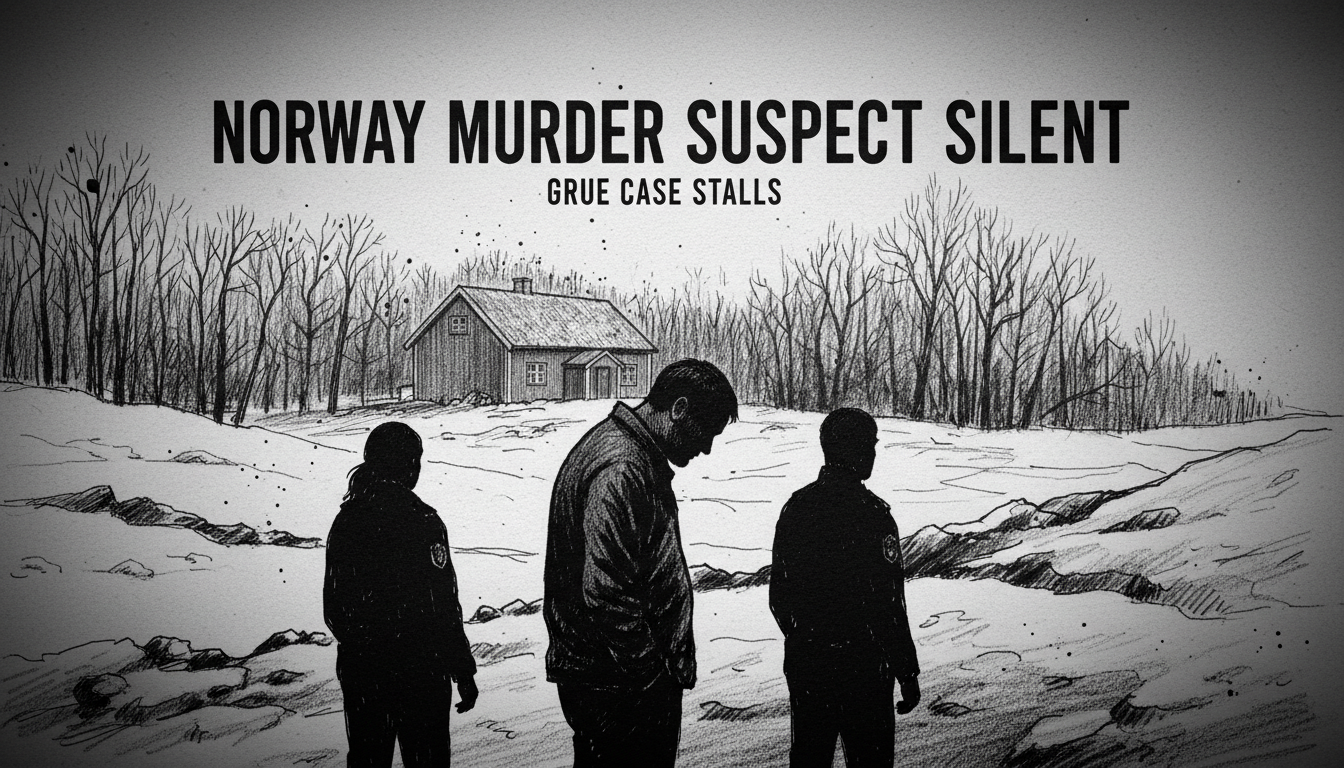
Norway's low-crime reputation faces a stark test in the quiet municipality of Grue, where a murder suspect has refused police interrogation. The body of a woman in her 40s was discovered in the Innlandet county community, sending shockwaves through the typically tranquil region. Police prosecutor Anja Ruud confirmed the suspect's silence, a move that has stalled the early stages of the investigation. Defense is being handled by the law firm of prominent lawyer John Christian Elden, with attorney Anders Brosveet assisting. Brosveet confirmed contact with his client but cited confidentiality obligations when declining further comment.
A Community in Shock
Grue, with its forests and farmlands, represents the heart of rural Norway. Homicide here is a profound anomaly. The nation's overall homicide rate stands at approximately 0.5 per 100,000 inhabitants, one of the lowest figures globally. Such statistics make each case not just a criminal investigation but a communal trauma. Residents in small communities know each other, and the violation of safety feels deeply personal. The identity of the victim, a local woman in her 40s, intensifies this impact. Local police are now tasked with managing both a complex investigation and the palpable anxiety spreading through the district.
The Legal Right to Silence
The suspect's decision not to submit to police questioning is a legally protected right under Norwegian law. This right is enshrined in the Criminal Procedure Act and is a fundamental aspect of the justice system. It is not an admission of guilt but a strategic choice often advised by defense counsel during the initial, chaotic phase of a major investigation. "In high-stakes cases like a homicide, the initial police interview is critical," explains Professor Lars G. Svendsen, a criminal law expert at the University of Oslo. "Defense lawyers frequently counsel silence until they have full access to the prosecution's evidence. It prevents clients from making inconsistent statements under pressure." This silence forces investigators to rely entirely on physical evidence, witness testimonies, and technical data to build their case before any potential confrontation with the suspect.
The Defense Strategy
The involvement of John Christian Elden's firm signals the seriousness of the case. Elden is one of Norway's most well-known defense attorneys, having represented clients in several high-profile criminal proceedings. His associate, Anders Brosveet, is now the operational lead on the ground. Their immediate strategy appears focused on procedural control: safeguarding the suspect's rights, managing communication, and methodically analyzing the police's actions. This approach creates a challenging dynamic for investigators in Grue. Without a statement, they cannot probe for motives or confirm timelines directly from the person of interest. It places a heavier burden on forensic science and community cooperation to establish the facts of the case.
Investigative Pressure Mounts
For the police in Innlandet, the silence is a significant obstacle. The investigation's first 48 to 72 hours are often considered the most crucial for gathering fresh evidence and securing witness accounts. Police prosecutor Anja Ruud and her team must now pivot. Their work will intensify around the crime scene, the victim's personal and digital life, and potential witnesses. In a rural area like Grue, community relationships are key. Officers will be conducting delicate interviews with neighbors, friends, and family, all while knowing the suspect has legal representation scrutinizing every step. The quality of the forensic evidence collected—DNA, digital footprints, potential murder weapon—becomes the cornerstone of the entire prosecution.
A National Pattern in a Local Tragedy
While rare, this case echoes a pattern seen in other serious crimes across Norway. The legal system, with its strong emphasis on defendant rights and meticulous procedure, can sometimes appear slow from the outside. The silence of a suspect is a jarring element for the public seeking immediate answers and a sense of resolution. It creates a narrative vacuum, often filled with speculation and rumor, which can further distress the victim's family and the local community. The police must balance their investigative needs with the responsibility to manage public information carefully, ensuring they do not compromise the judicial process.
The Path Forward in the Judicial System
The case will eventually move from the police investigation phase to the prosecutorial realm. If charged, the suspect will face trial in the Hedmark District Court, the first tier in Norway's three-tiered system. A conviction or an appeal would then move to the Eidsivating High Court, and potentially to the Supreme Court in Oslo. Every interaction, from the initial police response to the eventual court arguments, will be examined under the strict principles of Norwegian law. The suspect's current silence will become a point of discussion in any trial, but it cannot be interpreted as evidence of guilt by the court. The prosecution's success will hinge entirely on the independent evidence they manage to assemble now.
The Human Cost Beyond the Headlines
Beyond the legal maneuvering lies a profound human tragedy. A woman's life has been violently cut short in a place where such events are almost unthinkable. Her family and friends are left navigating unimaginable grief under the glare of a national news story. The community of Grue, which statistically should never experience this, must find a way to heal its sense of security. The Norwegian model of justice, while focused on fairness and rehabilitation, must also deliver a form of closure and accountability for those left behind. This dual demand—for a flawless legal process and for communal healing—is the immense challenge now facing authorities in Innlandet county.
The silence in the interrogation room in Grue speaks volumes about the complexities of justice. It underscores the tension between a community's need for answers and an individual's right to a fair defense. As forensic teams work and lawyers prepare, the quiet fields of Grue wait, a reminder that even in the world's safest countries, profound violence can find a way in, leaving a long and difficult road to truth in its wake.