
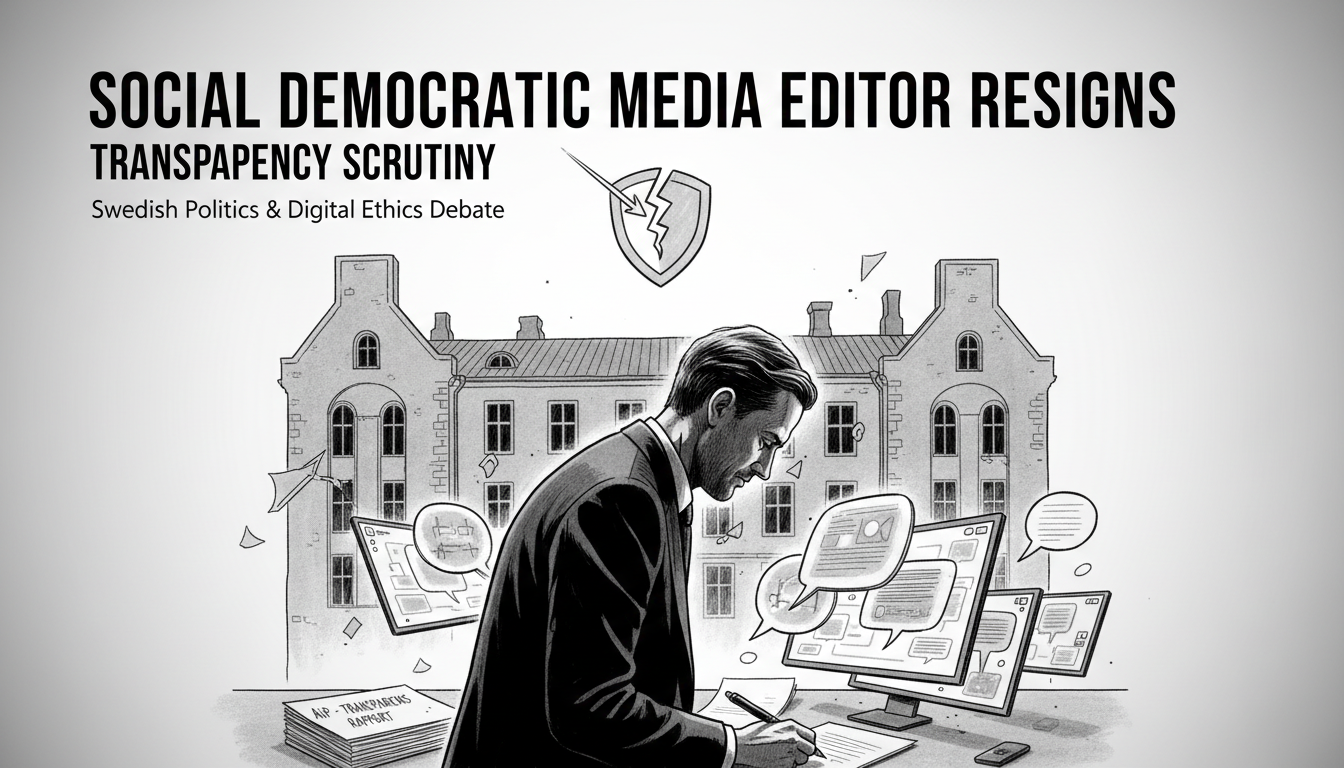
The editor-in-chief of the Social Democratic Party's media company, Jenny Åkervall, has resigned from her position. The company's board announced the decision following a critical review of the party-owned media accounts. According to reports, Åkervall requested a leave of absence. The scrutiny revealed that AiP Media, wholly owned by the Social Democrats, disseminates political content across various social media platforms. The origin of this content does not always appear clearly to users, which has drawn substantial criticism. The Moderate Party has labeled AiP Media a 'troll factory.' The Social Democrats have defended their operations by stating anyone can discover that AiP, which stands for Aktuellt i Politiken, is owned and funded by the party. Reports indicate Åkervall also holds political roles for the Social Democrats in the Danderyd municipality.
This resignation highlights ongoing tensions in Swedish politics regarding party-affiliated media and transparency. The Swedish government and the Riksdag have long debated regulations surrounding political advertising and media ownership. The incident raises questions about the boundaries between party political communication and independent journalism. Similar debates have occurred in the past concerning other party-owned outlets. The Swedish Parliament's constitutional committee has periodically reviewed these matters, but clear legislative action remains elusive.
For international observers, this case illustrates a unique aspect of the Nordic political landscape. Many Swedish political parties operate associated media or news services. These entities exist in a gray area between internal party organs and public-facing media. The controversy centers on whether such content should be explicitly marked as partisan material. Current Swedish law requires transparency in political advertising, but the application to organic social media content is less defined. This situation creates potential challenges for public discourse and informed democratic participation.
The departure of a senior editor from a party-owned entity is a notable event within Stockholm politics. It signals internal pressure and external scrutiny are impacting operational decisions. The leadership change at AiP Media may lead to revised content strategies or clearer disclosure practices. The Swedish government has not commented directly on this specific case. Broader discussions about media integrity and political influence are likely to continue in the Riksdag building and among policymakers in Rosenbad. Future government policy in Sweden may need to address these digital-age transparency gaps more directly.
This episode serves as a reminder of the complex relationship between political parties and media in democratic societies. The core issue involves balancing political expression with the public's right to clear information about message sources. The outcome of this scrutiny could influence how all Swedish political parties manage their communication channels. It also tests the resilience of Sweden's political norms in an era of digital misinformation and sophisticated online campaigning. The resignation is a direct consequence of increased media oversight holding powerful institutions accountable.