
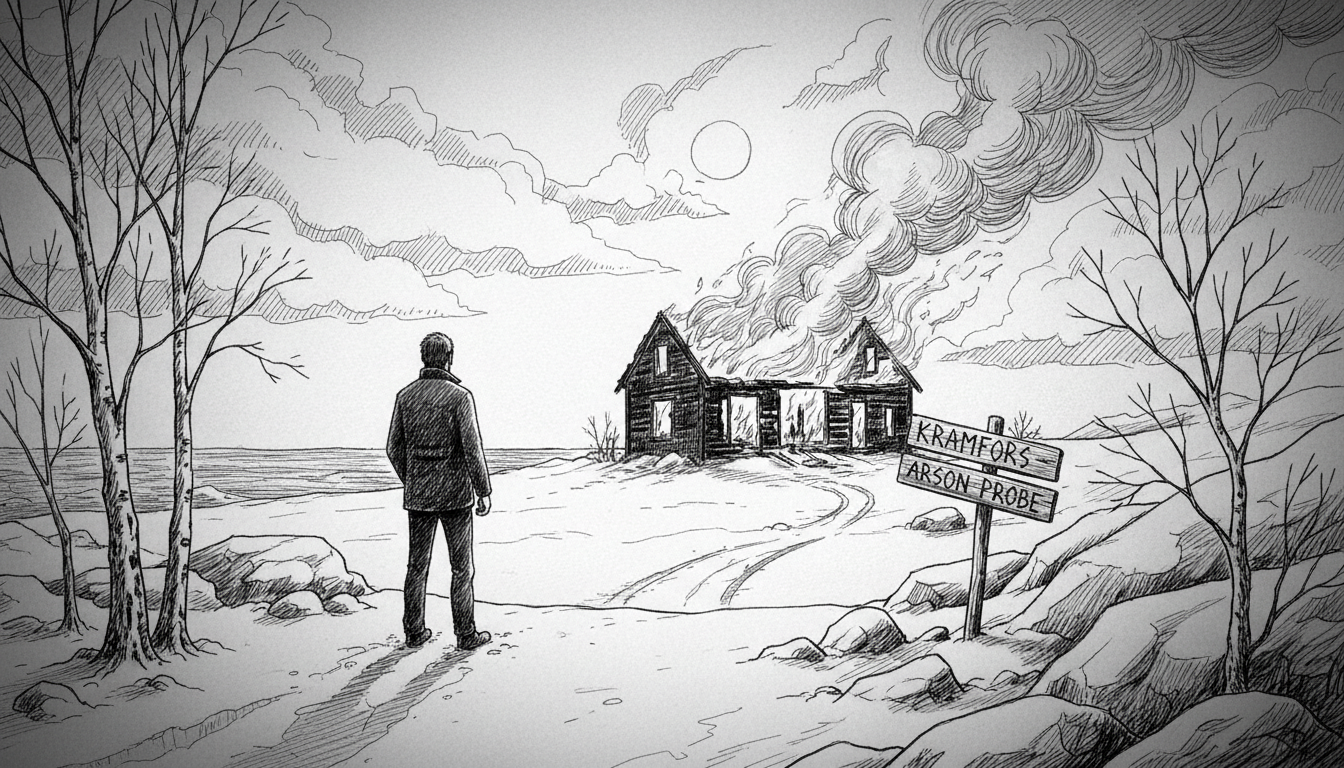
Sweden's quiet Kramfors municipality is the scene of a major police investigation after a deadly villa fire claimed one life. A man is now in custody, suspected of murder and aggravated arson. The tragedy unfolded in the Västernorrland region, where a person was found dead by firefighters inside the burning home. This follows a puzzling false alarm at the same address just hours earlier.
Emergency services received the first call around 3 AM. Police and firefighters rushed to the scene but found no evidence of a blaze. Authorities initially treated it as a false alarm. The situation turned deadly by mid-morning. A second, urgent call brought crews back to the villa, now fully engulfed. Firefighters in breathing apparatus entered the smoke-filled building. They discovered a victim inside. Medical efforts failed. The person was pronounced dead at the scene.
A Community in Shock
Kramfors, a municipality of around 18,000 people, is known for its forested landscapes and the Ångermanälven river. Violent crime, particularly of this nature, is rare here. The incident has sent ripples of shock through the local community. Neighbors describe a normally tranquil residential area now cordoned off with police tape. Forensic teams in white suits have been meticulously examining the property for days. The contrast between the peaceful setting and the violent event is stark. Local residents are left grappling with unanswered questions about what happened in their midst.
“We didn’t know if there were more people in the building, so we wanted to investigate that part thoroughly,” said rescue leader Fredrik Svensson in a statement to media. His comment highlights the initial chaos and danger faced by first responders. The police have not released the identities of the deceased or the suspect. They have also not detailed the relationship between them. This is standard procedure in ongoing Swedish investigations.
The Legal Gravity of 'Mordbrand'
The suspect's detention for 'grov mordbrand' – aggravated arson – signals the seriousness of the case. In Swedish law, 'mordbrand' is not simple property damage. It is defined as arson that endangers life. When a death results, the penalties are severe. Conviction can lead to a life sentence. The classification reflects an understanding that fire is an uncontrollable force. Setting a blaze in a dwelling is considered a direct attack on human life, not just property.
“The judicial system treats arson resulting in death with extreme severity,” explains legal analyst Karin Lindahl, who is not directly involved in this case. “The investigation will focus on proving intent. Did the suspect intend to kill, or intend to set a fire knowing people were inside? The forensics are crucial. Experts will look for the origin point and any traces of accelerants. The timing of the two alarms will be a central puzzle.”
The Puzzling Timeline of Events
The sequence of events presents a key mystery. The false alarm at 3 AM and the fatal fire reported later that morning are now under intense scrutiny. Were they connected? Was the first call a failed attempt or a deliberate distraction? Police have confirmed they are investigating the two incidents in relation to each other. This timeline adds a layer of complexity to the case. It suggests premeditation or, at the very least, a period of escalating events leading to the tragedy.
Such cases, while rare, demand immense resources. Specialist forensic fire investigators work alongside homicide detectives. They sift through ash and debris to find the fire's starting point. They look for electrical faults or other accidental causes to rule them out. In parallel, detectives work to establish motive and opportunity. They will map the relationships and movements of everyone involved. The goal is to build a picture that explains both the false alarm and the devastating outcome.
A Broader Look at Arson in Sweden
Nationwide, Sweden has seen a variable number of arson cases over the past decade. Statistics from the Swedish National Council for Crime Prevention show fluctuations. There is no clear upward or downward trend in recent years. Each case, however, has a profound impact. Arson attacks on schools, community centers, and homes strike at the heart of societal safety. They destroy not just buildings but a sense of security. Police have dedicated units focused on improving investigative methods for fire-related crimes. This includes better forensic techniques and faster lab analysis.
For communities like Kramfors, the statistical context offers little comfort. A single event transforms the perception of safety. The knowledge that a violent death occurred in a nearby home lingers. It challenges the idyllic image of peaceful Swedish small-town life. Community leaders often emphasize resilience and solidarity in the wake of such events. They encourage residents to support one another while trusting the judicial process.
The Long Road Ahead
The investigation is now in a meticulous phase. The suspect will be held in custody while prosecutors build their case. A custody hearing determines if detention is necessary to prevent flight, interference with evidence, or further crime. The prosecutor will present preliminary evidence to a judge. The suspect’s lawyer will have the right to contest the detention. This is a standard but critical part of the Swedish legal process.
For the family and friends of the deceased, the coming months will be a painful journey through the justice system. They will await answers while mourning their loss. The Swedish victim support system offers counseling and legal guidance. But no service can fill the void left by such a sudden and violent death. The community, too, must find a way to move forward. The scar left by the fire will remain long after the investigation concludes and headlines fade.
What brings a person to the point of setting a deadly fire? The answer, if it ever fully emerges, will likely be found in a tangled web of human conflict, emotion, and tragedy. For now, Kramfors is left with ashes, questions, and a stark reminder that peace can be fragile.