
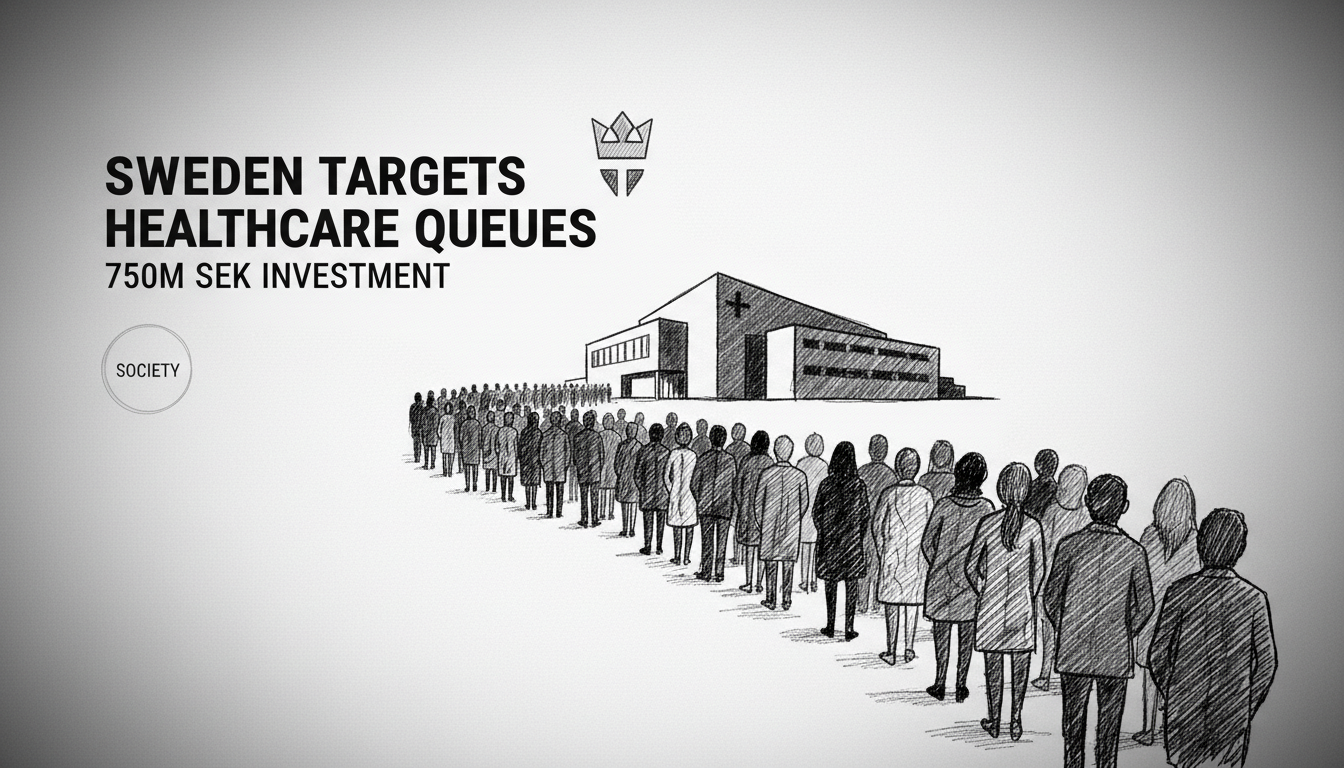
Sweden's government is launching a 750 million SEK investment to cut waiting times for knee replacements, hernia operations, and colonoscopies. The funding, announced from the Rosenbad government offices, aims to address persistent regional disparities in access to elective care. This marks the latest national attempt to influence healthcare delivery managed by Sweden's 21 autonomous regional councils.
"Our goal is clear: shorter waiting times and more predictable care for patients," said Minister for Health Care Acko Ankarberg Johansson in a statement. The Swedish Parliament (Riksdag) has backed the initiative, which will be distributed to regions based on need and performance metrics. The policy specifically targets procedures where queues have remained stubbornly long despite previous national investments.
A Persistent Challenge in Swedish Healthcare
Sweden's universal healthcare system faces a fundamental tension between national policy goals and regional execution. While the government in Stockholm sets broad health policy and allocates funds, the 21 regional councils hold constitutional responsibility for providing care. This division means a cash injection from the state does not guarantee uniform results across the country. The average wait for a knee replacement was 140 days in 2022, but that figure masked significant local variations.
Approximately 20,000 knee arthroplasty procedures are performed annually in Sweden. Demand is rising with an aging population, placing sustained pressure on orthopedic surgery capacity. Previous queue-reduction investments have sometimes failed to achieve full impact, as regions faced different bottlenecks like staffing shortages or surgical theater availability. This new investment must navigate those same complex realities on the ground.
The Mechanics of the New Investment
The 750 million SEK (approximately $70 million USD) will be directed to regions through a targeted grant system for the 2025 fiscal year. Funding is earmarked exclusively for increasing the volume of three procedures: knee prosthesis operations, inguinal hernia repairs, and diagnostic colonoscopies. The Swedish government expects regions to report quarterly on how the money is used and the resulting reduction in patient wait times.
"This is not a blank check," a senior official at the Ministry of Health and Social Affairs explained. "The funding is conditional on regions presenting credible plans for actually increasing procedure numbers. We are focusing on areas where the evidence shows national investment can make a concrete difference." The government's hope is that by concentrating resources, it can create a measurable benchmark for success and encourage regions to prioritize these specific queues.
Historical Context and Regional Hurdles
Analysts point to a pattern of well-intentioned national initiatives struggling with implementation. "The Swedish model gives regions strong autonomy, which is good for adapting to local conditions but challenging for national priority-setting," said Karin Söderström, a healthcare policy analyst at the Health Economics Institute. "Money from Stockholm can help, but if a region lacks surgeons or nurses, the funding alone won't solve the queue problem."
Workforce shortages remain a critical barrier across the Swedish healthcare landscape. Training new orthopedic surgeons takes years, and competition for skilled staff is fierce between regions. Furthermore, resources are often pulled toward acute and emergency care, leaving elective procedures like knee replacements vulnerable to delays. This investment attempts to ring-fence resources for planned care, but its success depends on regional management's ability to execute.
Patient Impact and Systemic Pressures
For the estimated tens of thousands awaiting these procedures, the investment promises tangible relief. A delayed knee replacement means prolonged pain, reduced mobility, and often an inability to work. Faster access to colonoscopies can lead to earlier cancer detection. The human impact of long queues is a powerful driver behind the government's continued focus on this issue.
However, experts caution that one-year investments can create a "stop-start" effect. "Sustainable queue reduction requires long-term planning in workforce and infrastructure, not just annual cash injections," Söderström noted. The aging Swedish population guarantees that demand for these procedures, particularly joint replacements, will continue to grow. This places the spotlight not just on this 750 million SEK, but on the broader systemic coordination between the national government and regional councils.
The Road Ahead for Swedish Health Policy
The coming year will serve as a test case for this targeted approach. Government ministers will monitor regional reports closely, with performance likely influencing future healthcare negotiations. The Riksdag's role will be to evaluate the outcomes and determine if this model should be expanded to other treatment areas. Success could redefine how national funds are used to steer regional healthcare priorities.
Failure to significantly reduce queues, however, would intensify debate about the structure of Swedish healthcare itself. It would raise difficult questions about whether the current balance of power between Stockholm and the regions is fit for purpose in ensuring equitable access. The 750 million SEK investment is therefore more than a budget line; it is a probe into the effectiveness of Swedish health governance. The results will shape policy for years to come, determining whether national ambitions can finally translate into shorter waits from Kiruna to Malmö.