
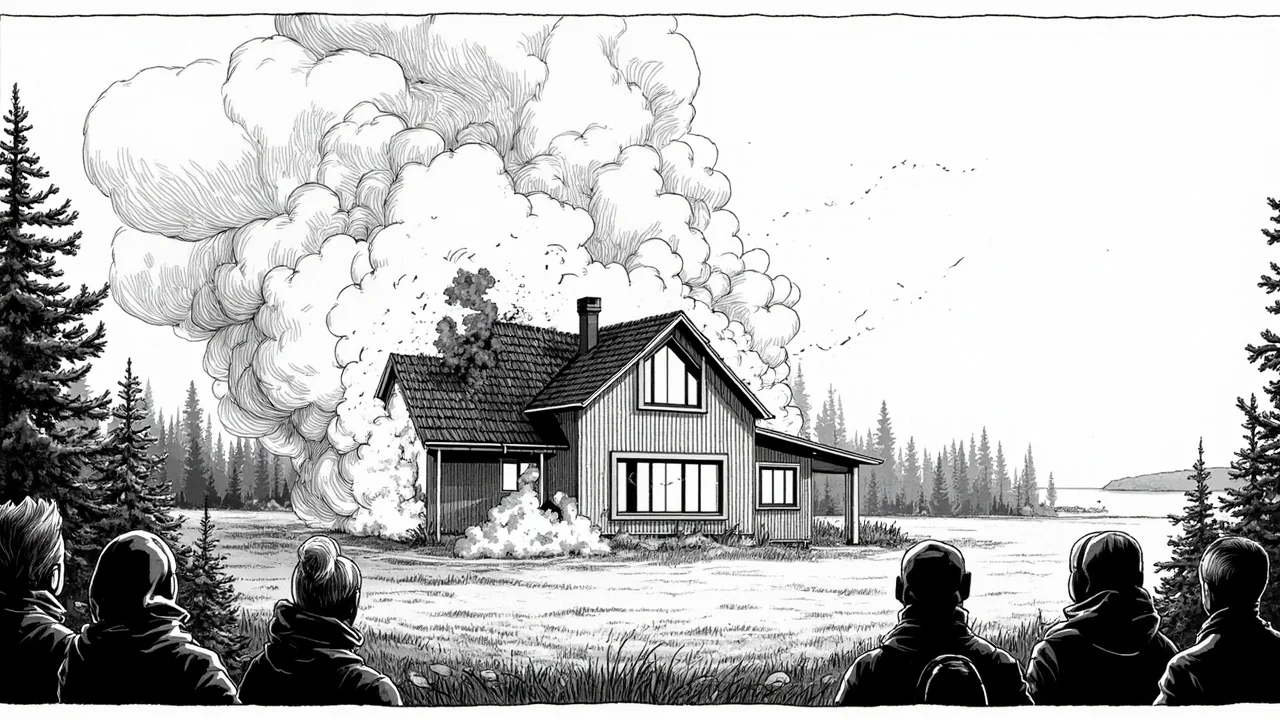
Sweden's emergency services battled a major villa fire in Gothenburg's Torslanda district on Sunday evening. The alarm reached emergency operators just before 6 p.m. as flames engulfed a single-family home. No one was inside the burning villa, but the intense blaze forced the evacuation of several neighboring houses due to the risk of spreading fire.
“We are on site with a comprehensive resource package. All persons should have gotten out of the house,” said Mats Gränsmark, alarm and command officer at the rescue service. Firefighters arrived to find the fire fully developed, with flames already reaching the roof. Their strategy shifted to an external attack, pouring water onto the structure from the outside to contain the inferno.
Police secured the area with two patrols while ambulance crews stood by. The cause of the fire and the full extent of the damage remain unknown. Rescue officials stated they expected firefighting operations to continue throughout the night in the quiet, residential neighborhood.
A Community Disrupted
For residents of Torslanda, a suburb known for its spacious villas and proximity to both city and nature, the fire was a shocking disruption. Sunday evenings are typically quiet, reserved for family time or preparing for the week ahead. The sudden arrival of multiple fire trucks, police cars, and the ominous glow of flames shattered that calm. Neighbors watched from a safe distance, some having been hurriedly evacuated with only minutes to gather essentials.
This scene touches on a deep-seated aspect of Swedish society: the sanctity and security of the home. The villa is more than a house; it represents a core Swedish dream of space, privacy, and connection to nature. A fire like this doesn't just destroy property; it violates a profound sense of safety. “It’s your castle,” said a local resident in a similar past incident. “When it’s threatened, everything feels unstable.”
The Anatomy of a Response
The response to the Torslanda fire highlights the standardized yet highly effective Swedish emergency model. The term “comprehensive resource package” used by command officer Gränsmark is key. It signals a major incident response, likely involving multiple fire engines, ladder trucks for high-angle attack, and command vehicles. The immediate evacuation of adjacent homes is a standard precaution in Swedish firefighting, prioritizing life safety over property when a blaze threatens to jump.
Swedish building materials, often featuring a lot of wood, can allow fires to develop rapidly. This makes early detection and neighborly vigilance critical. While the cause is unknown, common triggers in such homes include electrical faults, fireplaces, or appliances. The shift to an external attack is a significant tactical decision. It means the fire has progressed to a point where sending crews inside is too dangerous, often due to structural weakness or intense heat.
“When the fire is in the roof, the entire structure is compromised,” explains a retired fire safety engineer from Stockholm. “The priority becomes preventing collapse and protecting exposures—the other houses. It becomes a defensive operation.” This methodical, safety-first approach is a hallmark of Sweden's rescue services.
Safety in the Suburban Landscape
Torslanda is emblematic of Swedish suburban living. These areas, while peaceful, present unique challenges for emergency services. Wider spacing between houses compared to dense urban areas can limit initial fire spread, but it also means longer response times and a reliance on individual household safety measures. Events like this fire serve as a stark reminder for all homeowners.
Swedish society places a high degree of personal responsibility on fire prevention. This includes mandatory smoke detectors in every home, careful maintenance of electrical systems, and clear escape plans. The cultural emphasis on trygghet—a sense of security and safety—is deeply felt here. A nearby fire rattles that trygghet, prompting community conversations about preparedness.
In the days following the fire, local community Facebook groups in areas like Torslanda often buzz with discussions. People share information, offer help to affected neighbors, and ask questions about safety checks. This digital neighborliness is a modern extension of the traditional Swedish concept of grannsamverkan—neighborly cooperation.
Looking at the Aftermath
As the fire trucks eventually leave and the smoke clears, the difficult phase begins. For the property owners, it involves navigating insurance, assessing the total loss, and facing the emotional toll. In Sweden, property insurance is virtually universal and is designed to cover such catastrophic events. The process is generally efficient, but it cannot replace lost personal items with sentimental value.
For the evacuated neighbors, the return home is a relief mixed with anxiety. They will look at their own wooden decks, wiring, and heating sources with new eyes. The fire serves as an involuntary, powerful drill in emergency readiness. It also tests the strength of local community bonds. Offers of spare rooms, cups of coffee, and help with pets often emerge from these crises, reinforcing the social fabric.
The investigation into the fire's origin will proceed methodically. Swedish authorities are thorough in determining causes to update safety recommendations and codes. Whether it was an accident or a fault, the findings contribute to a national body of knowledge aimed at preventing the next blaze.
A Night of Flames, a Reminder for All
The Torslanda villa fire, while ultimately not a human tragedy, is a property disaster and a community event. It showcases the proficient, no-nonsense response of Swedish emergency services. It also exposes the vulnerability that lies beneath the surface of our safe, orderly suburbs. These homes are our havens, but they require constant vigilance.
As the residents of the affected street look at the charred remains, their sense of trygghet will slowly rebuild. It will be bolstered by the efficient response they witnessed, the support from their community, and the inevitable personal reviews of their own home safety. The incident becomes a story passed down in the neighborhood, a marker in time. It asks a silent question of every homeowner reading about it: Is your villa, your apartment, your own castle, as safe as you believe?