
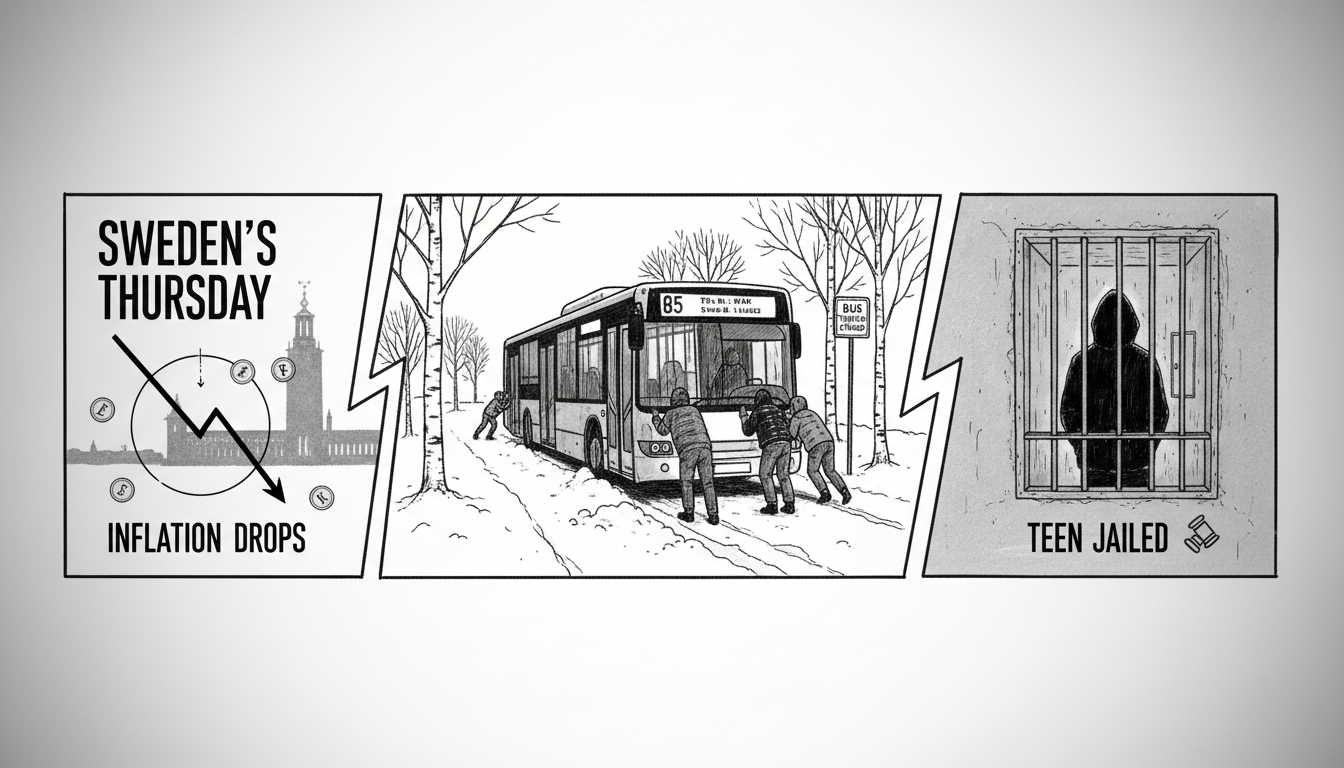
Sweden's inflation rate fell faster than expected in December, dropping to 2.3% according to Statistics Sweden. This economic news arrived on a Thursday where Gothenburg's public transport ground to a halt under heavy snowfall, and a 17-year-old was sentenced to jail for a shooting, highlighting persistent concerns over youth crime. These three disparate events paint a picture of a nation navigating economic stability, weather vulnerability, and complex social challenges all at once.
A Welcome Chill for the Economy
The drop in inflation to 2.3% marks a significant cooling from previous highs and comes in below many analysts' forecasts. For Swedes, who have watched prices climb steadily, this is a tangible relief. "Seeing the inflation number come down is like feeling the first real thaw after a long winter," said Lars Pettersson, a café owner in Stockholm's Södermalm district. "My costs for coffee beans and pastries aren't going down, but the pace of increase is slowing. It gives me a bit of breathing room."
The Riksbank, Sweden's central bank, has been aggressively using interest rate hikes to manage inflation. This faster-than-anticipated decline suggests their measures are taking effect. Financial experts now speculate the central bank might ease its monetary policy stance sooner than previously thought. "The data is encouraging," said economist Elin Forsberg. "It suggests the peak of this inflationary cycle is behind us. The focus for the Riksbank will now shift to ensuring inflation stabilizes around the 2% target without triggering a deep recession."
This economic shift occurs against Sweden's long-standing cultural emphasis on stability and social welfare. Price stability is deeply woven into the national psyche, affecting everything from annual union negotiations to the famous 'jantelagen' or law of Jante, which frowns upon financial excess. A return to lower inflation supports the model of predictability that underpins Swedish society.
Gothenburg Grinds to a White Halt
While the economic temperature dropped, the real thermometer plunged in Sweden's second city. Heavy, persistent snowfall led to the cancellation of all bus services across Gothenburg, crippling the city's mobility. As a major port on the west coast, Gothenburg is particularly susceptible to maritime-influenced weather systems that can dump significant snow.
"It's chaos out there, but a quiet, beautiful chaos," said Anna Bengtsson, a nurse who spent an extra hour walking to her shift at Sahlgrenska University Hospital. "The trams are running, but if you rely on buses, you're stuck. You see people on cross-country skis going to the grocery store. It's very Swedish."
The disruption highlights the city's reliance on its bus network and its vulnerability to extreme weather. For residents, it's a familiar, if frustrating, winter ritual. The city's response—prioritizing tram lines and main roads—is a practiced dance. Yet, each event reignites debates about preparedness and investment in winter infrastructure. Meteorologists note these events may become more frequent or intense, challenging the city's operational norms.
A Teenager's Path to a Prison Cell
In a courtroom far from the snow, a different kind of chill settled. A 17-year-old was sentenced to jail for involvement in a shooting, a case that immediately invokes Sweden's ongoing struggle with youth crime. According to the Swedish National Council for Crime Prevention, reported crime among 15- to 17-year-olds rose by 7% in 2022 compared to the year before.
Sweden's legal system treats minors distinctly, emphasizing rehabilitation over punishment. Even for serious crimes, sentences for youths are lighter than for adults, focusing on education and reintegration. This approach stems from a fundamental belief in the possibility of change, a cornerstone of the welfare state. However, a jail sentence for a 17-year-old signifies the severity of the crime, acknowledging a threshold where rehabilitation must occur within a secure setting.
"Every case like this is a double failure," said David Rosenqvist, a youth outreach worker in the Stockholm suburb of Rinkeby. "It's a failure for the victim, for society, and for that young person whose life is now on a much harder path. The sentence is necessary, but the real work is in the years before this moment—in schools, in leisure centers, in providing alternatives."
Experts stress that solutions require addressing interconnected social and economic factors: segregation in housing, gaps in education, and lack of opportunity in vulnerable areas. The conversation often turns to the role of family, community, and the state's responsibility to intervene early.
Connecting the Dots on a Swedish Day
On the surface, inflation, snow, and a court verdict share little. But viewed through a wider lens, they touch on core Swedish values: economic stability, functional public services, and social safety. The positive inflation data supports the model that funds the welfare system. The transport disruption tests that system's resilience. The youth crime case challenges its capacity for inclusion and protection.
In Malmö's Möllevången square, at a bustling outdoor market despite the cold, shopper Mira Jonsson reflected on the day's news. "We expect things to work here," she said, adjusting her scarf. "We expect prices to be stable, the buses to run, and our children to be safe. When one of those things fails, it feels like a crack in the foundation. Today had both good news and reminders that we can't take anything for granted."
Looking Ahead
The falling inflation offers hope for economic relief in 2024, potentially easing pressure on households and the Riksbank. Gothenburg will dig out, and its buses will run again, until the next storm. The jailed teenager begins a state-managed process of rehabilitation, his future heavily shaped by the system now responsible for him.
These stories, distinct yet simultaneous, form the ongoing narrative of modern Sweden. They reveal a society constantly measuring itself against its own high standards of stability, efficiency, and social justice. The question moving forward is how these pillars—the economic, the infrastructural, the social—will hold and adapt under continued pressure. For now, the nation does what it often does: analyzes the data, clears the snow, and debates the best path forward for its youngest citizens.