
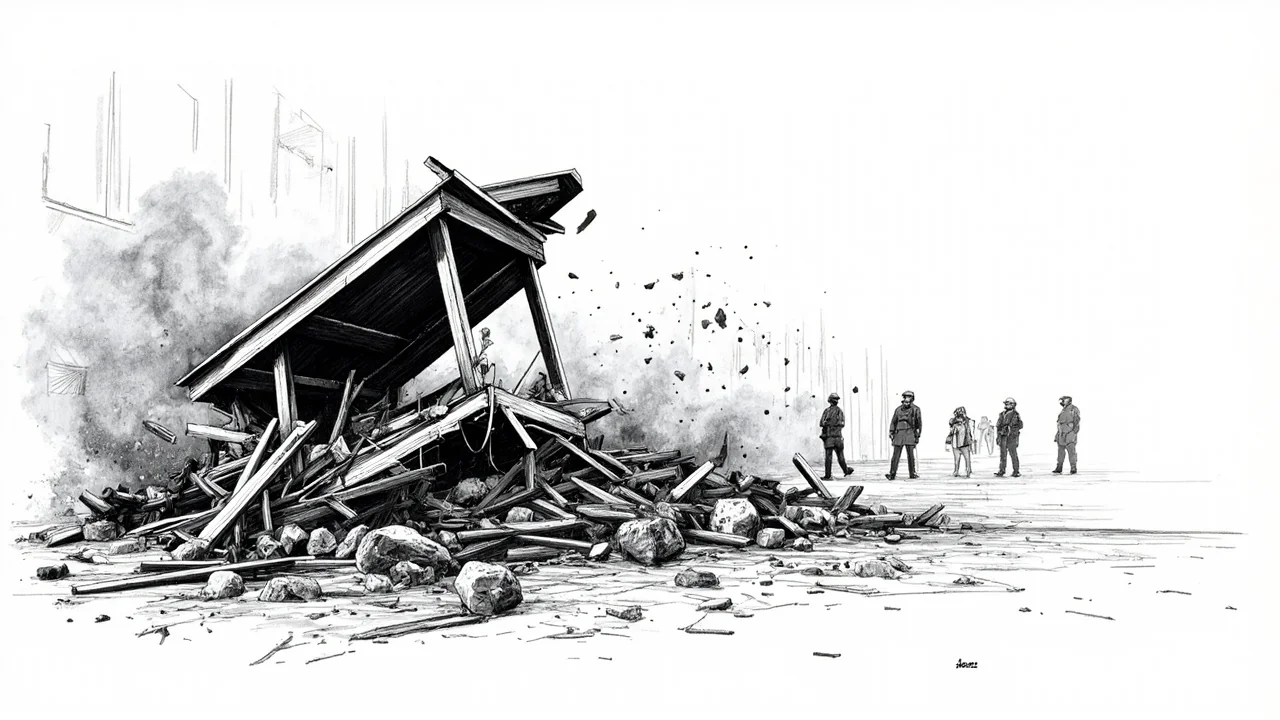
Denmark's capital was shaken Thursday night by a powerful explosion that tore through a popular kiosk on Copenhagen's Istedgade. The blast, heard across the Vesterbro district, turned a routine family evening into a scene of chaos and terror for residents living above the shop. Emil Dahl-Axelsen was putting his children to bed on the fourth floor when the deafening roar erupted from the 1001 Nat kiosk below. "Suddenly we heard the bang and could feel a violent pressure," Dahl-Axelsen, a special consultant for Copenhagen Municipality, recounted. He ran to the window to see an orange glow and flames already licking up the building's facade.
A Night of Routine Shattered
The 1001 Nat kiosk is a neighborhood staple, known for its long hours serving residents from early morning until late at night. Its destruction left a gap in the daily rhythm of Vesterbro. For the family living directly above, the explosion was a visceral, frightening event that forced an immediate evacuation. Dahl-Axelsen and his partner quickly dressed their children and hurried down the main staircase to Istedgade. They emerged onto the street to a scene of devastation. The kiosk's facade was gone, replaced by smoldering wreckage. A car parked in front had its windshield shattered and a side mirror torn off; another vehicle nearby also sustained damage. The force of the blast propelled debris across the street and drew shocked residents from their homes.
Community in Shock, Investigation Underway
In the immediate aftermath, the focus was on containment and safety. Police cordoned off the area as forensic technicians arrived to scour the site for evidence. The cause of the explosion remains under active investigation by Copenhagen Police. The incident highlights the vulnerability of mixed-use buildings in dense urban neighborhoods. While such violent events are rare in Denmark, they resonate deeply in a society built on trust and a sense of communal security. The sight of a familiar, everyday establishment reduced to rubble creates a particular kind of psychological impact, eroding the normalcy residents depend on.
From my perspective, covering Danish society and integration, this event on Istedgade—a street with a complex history and a vibrant, diverse community—carries additional layers. Incidents like this can strain the social fabric, testing the resilience of neighborhood bonds. The response from municipal services and community support networks in the coming days will be critical. Copenhagen Municipality, where Dahl-Axelsen works, will likely be involved in both the practical support for displaced residents and the longer-term community coordination.
The Human Cost Beyond the Blast
The most lasting impact is often on those who experience the trauma directly. For the children being put to bed, the sound of an explosion and the frantic rush to escape will be a formative memory. The family has lost, at least temporarily, the safety of their home. Other residents in the building face uncertainty about structural damage and when they can return. This personal disruption is the real story behind the headlines about police investigations and damaged property. It is a sudden, violent intrusion into private life, a theme I've seen in other contexts when families are displaced by fire or conflict.
Danish social policy and the welfare system are designed to catch people in such moments of crisis. The municipality's social services typically activate to provide emergency housing, psychological support, and practical aid. This safety net is a cornerstone of Danish society, but its effectiveness is tested in the raw, immediate hours after a disaster. The community's own response—checking on neighbors, offering help—is equally vital. In multicultural areas like Vesterbro, these informal networks are diverse and can be powerful sources of resilience.
Looking Ahead: Security and Normalcy
As the forensic work continues, the street will begin a slow return to normal. The kiosk owner faces the total loss of a livelihood. Insurance assessments and building inspections will dictate the timeline for repairs. For the residents of the building, the path back to normalcy is longer, involving dealing with insurance companies, finding temporary repairs, and processing the emotional shock. The incident may also prompt conversations about building safety codes and the storage of materials in small retail spaces, though it is too early to draw conclusions before the police investigation is complete.
Events like this explosion, while criminal in nature, intersect with broader themes of urban life, social cohesion, and public safety. They raise questions about how well-protected residents are in their own homes and how quickly a community can heal. The Danish model relies on high levels of trust in authorities and neighbors to function. A violent breach of peace tests that trust. The coming days will show how the local community, the police, and the municipal system collaborate to restore it.
Ultimately, the story of the Istedgade explosion is not just about a damaged building. It is about a family interrupted, a neighborhood startled, and the fragile nature of daily security. As the investigation seeks answers, the human task of rebuilding a sense of safety begins. In a city known for its order and calm, the echo of that single bang on a Thursday night will linger far longer than the smoke that cleared over Vesterbro.