
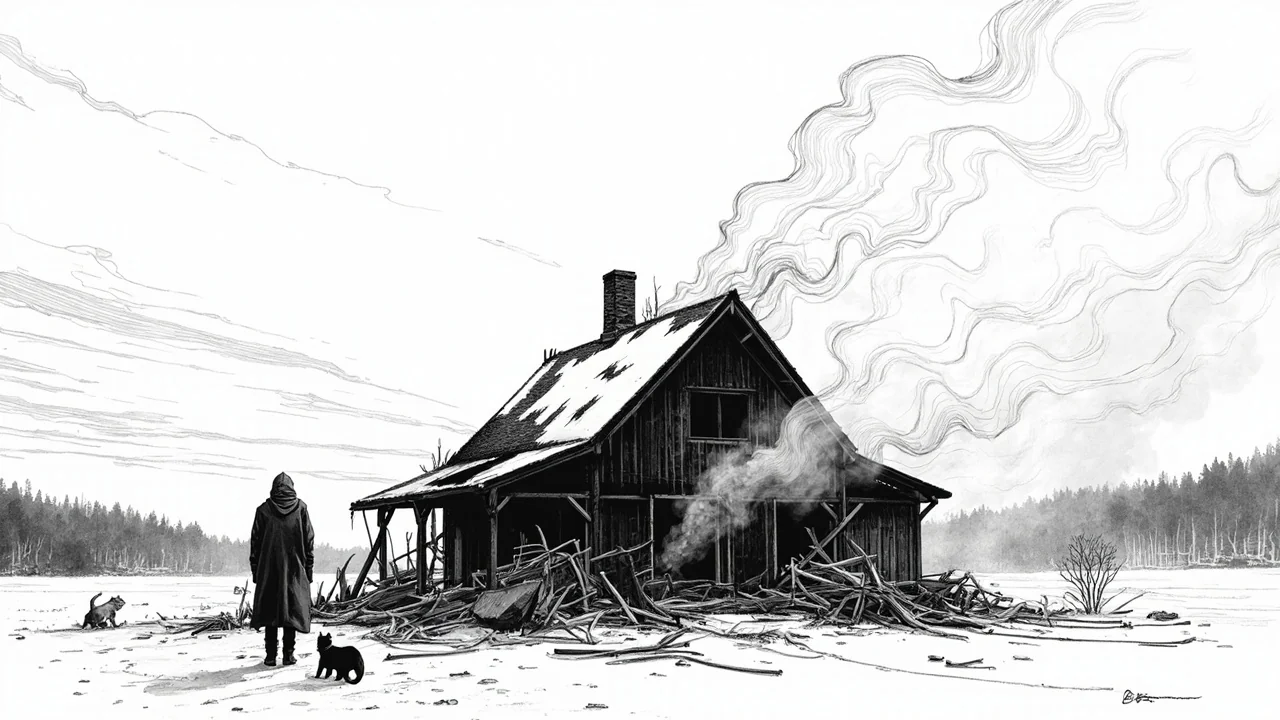
Finland house fire injuries rose by one Friday morning when a 10 AM fireplace blaze in Launos left a resident with minor wounds and a family cat dead. The two-story detached home sustained severe damage in the fire, which began as occupants lit the hearth for heating. Emergency services responded to the Lopen municipality incident, arranging temporary housing for the affected family while investigating the cause.
Authorities confirmed the fire originated from traditional fireplace use, a common heat source in Finnish omakotitalot, or detached houses. The injured resident received treatment for light burns and smoke inhalation, with no other human casualties reported. This incident underscores the persistent risks of residential heating methods in Nordic climates, even as safety standards advance.
The Launos Fire: A Friday Morning Tragedy
Firefighters from the local rescue department arrived at the scene shortly after the alarm was raised. They contained the blaze to the single property, preventing spread to nearby forests in the rural area. The home suffered extensive structural damage, particularly in the living area where the fireplace was located. Family possessions were largely destroyed, with the loss of the family pet adding emotional trauma to the physical damage.
Temporary accommodation is being organized through municipal social services, a standard protocol in such emergencies. Finnish law mandates that municipalities provide immediate support for residents displaced by fires or other disasters. This response is part of Finland's robust welfare safety net, often cited as a model in EU social policy discussions.
Heating Hazards in Finnish Households
Fireplace and wood stove heating remains widespread in Finland, especially in older omakotitalot outside urban centers. Nearly 30% of Finnish single-family homes use wood as a primary or secondary heat source, according to Statistics Finland data. This tradition, while culturally embedded, carries inherent fire risks if maintenance is neglected or installations are faulty. The Launos fire highlights the need for ongoing public awareness campaigns.
The Finnish Ministry of the Interior regularly issues safety guidelines for solid fuel heating systems. These include annual chimney sweeping and using certified fire guards. However, compliance varies, and accidents often stem from simple human error, like leaving flammable materials too close to heat sources. This case appears to follow that pattern, with initial reports pointing to a straightforward ignition incident.
EU Directives and National Fire Safety Codes
Finland's building safety regulations align with EU construction product directives, which set minimum fire safety standards for residential buildings. The European Commission's Energy Performance of Buildings Directive (EPBD) also influences heating system efficiency and safety requirements. Finnish national codes, enforced by local building supervision authorities, often exceed these EU minima, particularly for insulation and smoke detector mandates.
Since 2010, Finland has required interconnected smoke alarms in all new homes and major renovations. This law, passed by the Eduskunta, Finland's parliament, has significantly reduced fire-related fatalities. Yet older homes, like the one in Launos, may not have been upgraded to the latest standards. The government's ongoing renovation subsidy programs aim to address this gap, linking fire safety to energy efficiency improvements.
Political parties in the ruling coalition have debated increasing these subsidies. The Centre Party, with strong rural support, advocates for higher grants for homeowners to update heating systems. Meanwhile, the Green League emphasizes transitioning to electric heat pumps, which carry lower fire risks. These policy discussions are set against EU-wide goals for decarbonizing heating, adding a complex layer to domestic safety priorities.
Local Response and Prevention Strategies
Lopen municipal authorities are leading the post-fire support, coordinating with the Western Uusimaa emergency services. Mayor Jari Kivelä, in a statement, expressed sympathy for the family and reminded residents of available safety checks. Local rescue departments offer free home fire risk assessments, a service promoted across Finnish municipalities but with varying uptake rates.
The incident has sparked conversations in online community forums about fireplace safety. Many Finns share tips on proper wood storage and chimney maintenance. This grassroots knowledge exchange complements official campaigns but also reveals gaps in reaching all demographics, particularly elderly residents living alone in rural areas.
From a broader Nordic perspective, Finland's fire death rate per capita is slightly higher than Sweden's but lower than Norway's, according to Nordic Council statistics. This variation is often attributed to differences in housing stock ages and heating habits. Finland's long, cold winters necessitate reliable heating, making complete abandonment of fireplaces unrealistic in the short term.
Analysis: Policy Gaps and Future Directions
As Aino Virtanen, Finnish Political Correspondent, I see this Launos fire as a microcosm of wider safety governance challenges. The Finnish government, based in Helsinki's landmark Parliament House, has effectively legislated for new buildings but faces a slower retrofit of existing homes. The Ministry of Economic Affairs and Employment runs grant schemes for safety upgrades, yet application processes are often criticized as bureaucratic.
EU funding from the Just Transition Fund could potentially be directed toward modernizing heating in rural Finnish homes. This would require coordination between national ministries and the European Commission, a process currently focused on industrial regions rather than residential safety. Finnish MEPs have occasionally raised this issue in the European Parliament's Internal Market Committee, but it remains a secondary concern compared to larger energy policies.
The role of insurance companies also shapes fire prevention. Most Finnish home insurance policies require regular chimney cleaning for coverage validity, creating a financial incentive for compliance. However, deductibles and coverage limits can leave families underinsured for total losses, as seen in Launos where the home is likely a total write-off. This economic aspect fuels political debates about social protection adequacy.
Looking ahead, the tragedy in Launos may prompt local MPs to question the government on outreach programs. With municipal elections on the horizon, fire safety could emerge as a niche issue in rural constituencies. The Finnish National Rescue Association (SPEK) already collaborates with schools to educate children, a long-term strategy that may yield future dividends.
Ultimately, this Friday morning fire serves as a somber reminder that even routine actions like lighting a fireplace carry risk. It underscores the balance between cultural traditions and modern safety standards, a policy area where Finland generally excels but where constant vigilance is required. As the family in Launos rebuilds, their experience may quietly influence the next round of home safety revisions in the Eduskunta.