
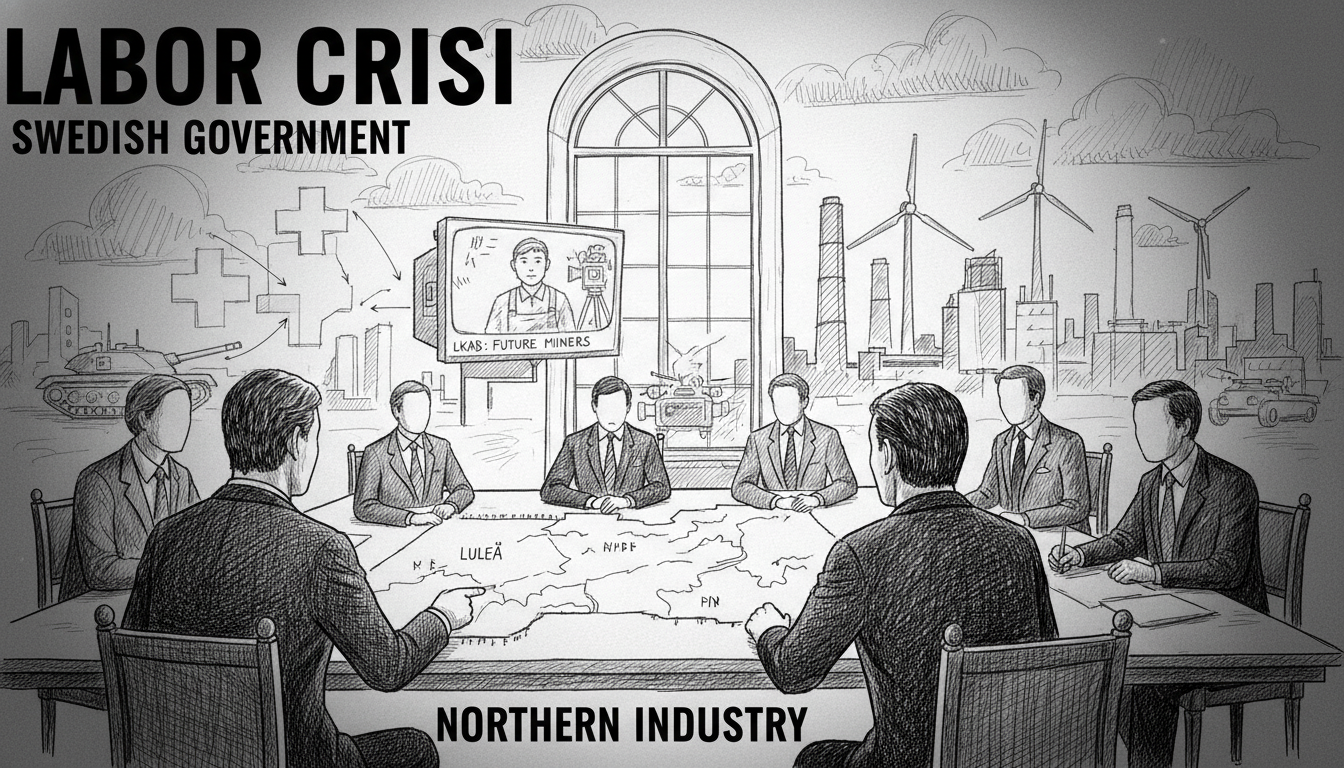
The Swedish government faces a critical labor shortage in its northern industrial heartland. Leading political and business figures gathered in Luleå this week to address the issue. The debate centers on future personnel needs for the region's mining and defense sectors. The Swedish Parliament will likely need to craft new policy responses to this demographic challenge.
Carina Sammeli, the municipal commissioner for Luleå, framed the problem starkly. She said she could hire every high school graduate from Luleå for the next decade. That is not possible, she noted, because other sectors also need those workers. The healthcare system and the defense forces compete for the same limited pool of young talent. This creates a direct policy conflict for Stockholm.
State-owned mining giant LKAB is taking unconventional steps to attract workers. Director Niklas Johansson stated the industry must make a greater effort. The company is sponsoring a reality television series about its Kiruna iron ore mine. The goal is to make mining careers appear attractive and modern to a younger generation. This move signals a shift in traditional Swedish industrial recruitment strategies.
The labor shortage has deep roots in Swedish regional policy. For decades, young people have migrated south to cities like Stockholm and Gothenburg. Northern municipalities struggle to retain skilled workers. This trend now threatens strategic national projects. These include the green transition, which relies on northern minerals, and bolstered national defense in the Arctic region.
The Riksdag has previously debated incentives for remote work and housing subsidies. Concrete legislative packages have seen limited success. The current government, based in Rosenbad, must balance immediate industry needs with long-term regional development. Policy decisions made in the coming months will shape northern Sweden's economy for a generation.
Analysts point to a simple demographic reality. The northern counties have an aging population and low birth rates. Immigration alone cannot fill the specialized technical roles required by mining and advanced manufacturing. This reality forces a difficult conversation about national priorities and resource allocation. The government's next budget proposal will be a key indicator of its commitment to solving this crisis.
This is not just an economic issue but a matter of national security and sovereignty. A depopulated north weakens Sweden's strategic position in the Baltic region. The decisions taken by the Swedish Parliament in the Third Quarter will be closely watched by both industry leaders and international partners. The outcome will test the government's ability to implement cohesive long-term planning across multiple ministerial domains.