
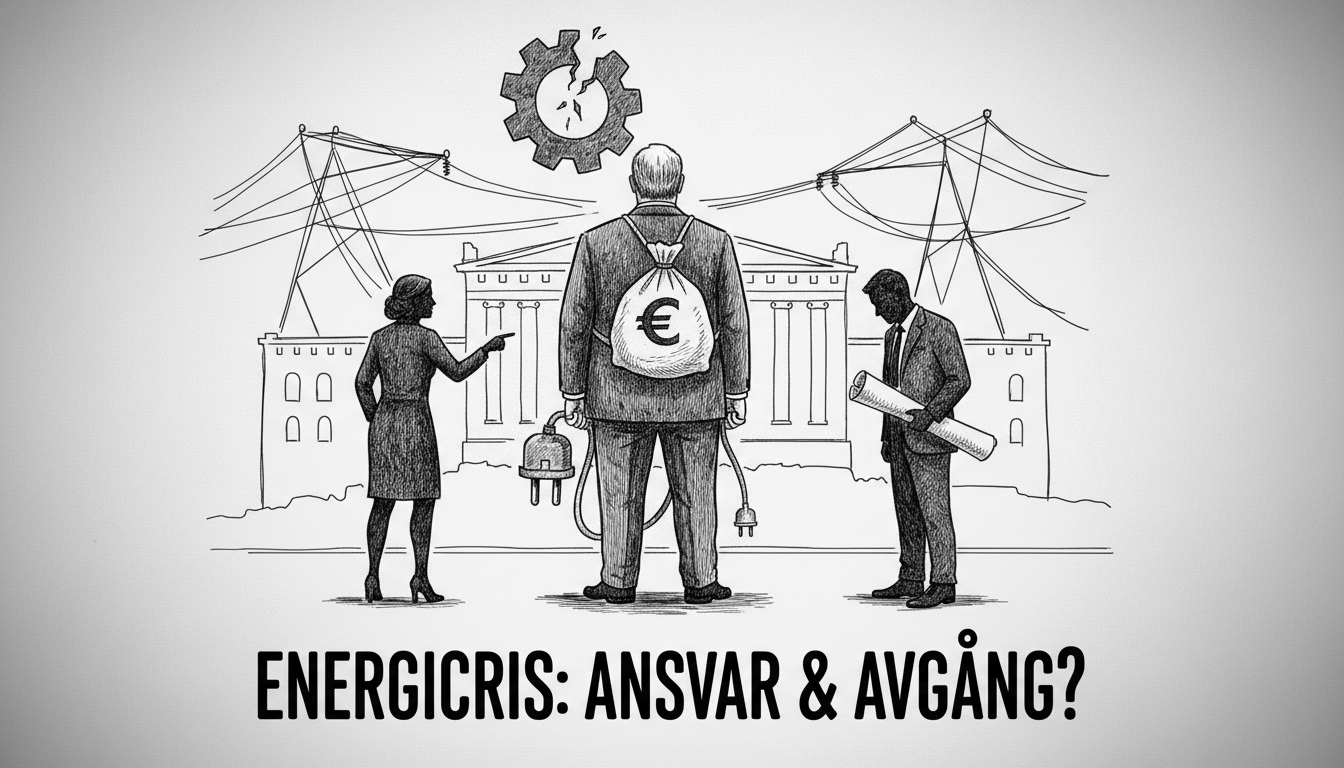
The Swedish government has removed Per Eckemark from his position as Director-General of Svenska kraftnät, the state-owned power grid operator. The decision came after just over six months in the role. According to a government press release, the move was made in consultation with Eckemark. Sources within the political administration, however, indicated significant dissatisfaction with his performance. A primary reason cited was the agency's failure, under his leadership, to procure a crucial emergency electricity reserve. This reserve is designed to ensure grid stability during periods of peak winter demand.
Despite his removal, Eckemark will not leave public service. He will be reassigned to a position within the Government Offices in Stockholm, specifically at Rosenbad. He will retain a monthly salary of 145,000 Swedish kronor until April 2031. The government stated his new role will involve working for a competitive and strong Sweden. This practice of reassigning ousted agency heads to the central government administration is a well-known feature of the Swedish system. It is often colloquially referred to as the 'elephant graveyard'. The system aims to protect the independence of agency heads from political pressure, but it can lead to high-profile officials being placed in vague advisory roles.
The political fallout has been immediate. Fredrik Olovsson, the energy policy spokesperson for the opposition Social Democrats, placed the blame squarely on the governing coalition. He specifically criticized Energy and Industry Minister Ebba Busch, whose ministry oversees Svenska kraftnät. Olovsson stated that the government received warnings from the agency before the summer about potential problems with the procurement process. This information was reportedly confirmed during a hearing with the Riksdag's Industry Committee in November. It is a failure of the government's core responsibility to secure our energy system, Olovsson said. The procurement for the emergency power reserve has now been restarted. Svenska kraftnät hopes to secure a provider by mid-January.
This incident highlights a recurring tension in Swedish governance. Agency heads enjoy strong employment protections to ensure operational independence from the political leadership in the Riksdag. When a minister and an agency director clash, the minister cannot simply fire the director. The solution is often a costly reassignment within the sprawling government districts of Stockholm. The case raises questions about recruitment processes for top civil service jobs and accountability for critical national infrastructure projects. For international observers, it serves as a case study in the Swedish model's balance between political direction and bureaucratic autonomy. The government now faces scrutiny over its energy security planning as winter approaches, with opposition parties likely to demand clearer answers in parliamentary debates.