
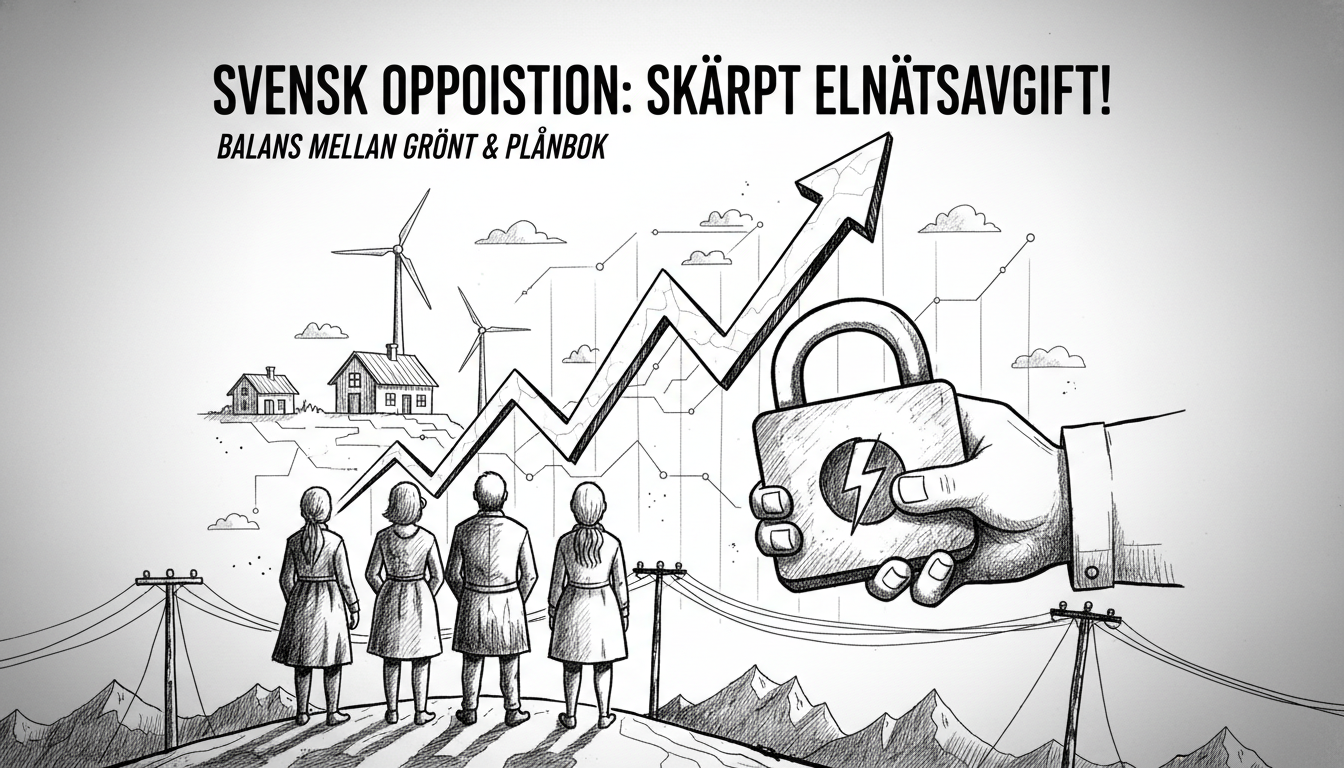
The Swedish Social Democratic Party is pushing for stricter regulations on electricity network companies. The party aims to prevent arbitrary fee increases that burden households and businesses. This political move follows recent announcements from major network operators about planned price hikes.
Fredrik Olovsson, the party's energy policy spokesperson, outlined the demands at a press conference. He stated that electricity network costs are rising at an unacceptable pace. Olovsson criticized the current government's energy policy record during his remarks.
He called for tougher price regulation and a delay in implementing so-called power tariffs. The demands come directly after Vattenfall and Ellevio announced fee increases. Vattenfall plans a 14 percent rise, while Ellevio will increase fees by an average of 5 percent starting at the turn of the year.
The Social Democrats propose a new mandate for the Energy Markets Inspectorate (EI). They want the regulator to scrutinize whether fee increases reflect genuine investment costs. The goal is to ensure hikes fund necessary grid investments rather than simply boosting corporate profits.
This debate sits at the heart of Sweden's energy transition. Network companies argue they need substantial investment to modernize infrastructure for renewable energy. Critics counter that consumers bear disproportionate costs while companies maintain high profitability. The Swedish Parliament has historically balanced these competing interests through regulatory frameworks.
The current government coalition faces pressure from both sides. Industry groups warn that excessive regulation could slow vital green investments. Consumer organizations and opposition parties demand stronger protection against rising living costs. This tension reflects broader European struggles with energy affordability during the transition from fossil fuels.
Energy policy decisions made in the Riksdag building have direct consequences for every Swedish electricity consumer. Network fees typically constitute about one-fifth of a household's total electricity bill. Recent years have seen consistent above-inflation increases in these regulated monopoly charges.
The Energy Markets Inspectorate currently reviews network companies' revenue frameworks every four years. The Social Democrats' proposal would add interim scrutiny of specific fee increases. This represents a significant shift toward more active regulatory oversight from the agency based in Stockholm.
Political analysts note this issue tests the government's parliamentary support. The Social Democrats can potentially build a majority with other opposition parties on consumer protection matters. Such a scenario would force the government to either compromise or face legislative defeat.
The coming weeks will show how the government responds from its offices in Rosenbad. Ministry officials will likely analyze the legal and economic implications of tighter regulation. The outcome will influence Sweden's energy costs and investment climate for years to come.
Network companies maintain that Sweden's grid requires massive investment to handle electrification and renewable expansion. They argue that current regulations already ensure reasonable returns. The debate ultimately centers on who pays for the infrastructure supporting Sweden's climate goals.
This political development matters for international observers tracking Nordic energy policy. Sweden often serves as a policy laboratory for balancing market efficiency with consumer protection. The resolution of this regulatory debate will offer insights into managing energy transitions in developed economies.