
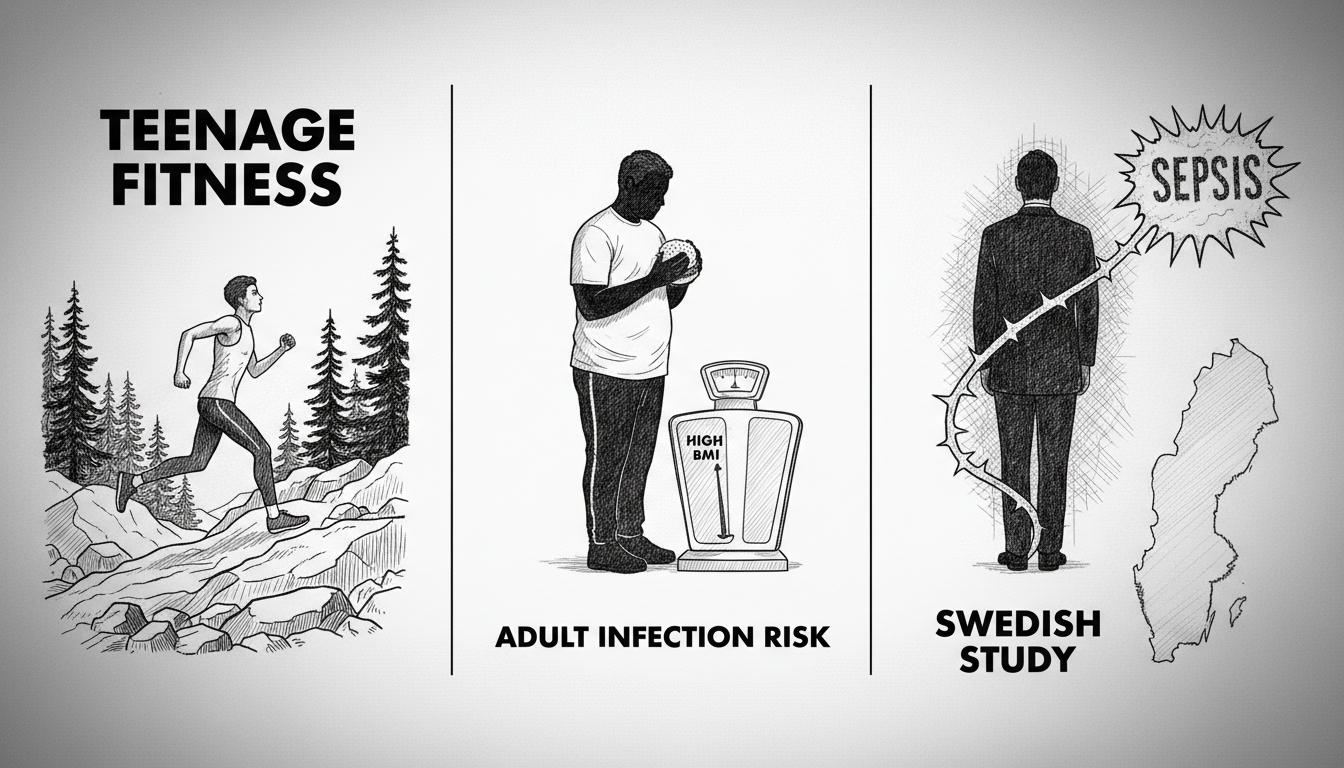
A major Swedish study reveals a direct link between teenage health and serious adult infections. Research from the University of Gothenburg followed nearly one million Swedish men for over thirty years. The findings show higher BMI and poor fitness in adolescence increase the risk of pneumonia and sepsis later in life. This study adds a new dimension to known cardiovascular and cancer risks. It provides crucial data for public health planning and individual lifestyle choices.
The research used national conscription, patient, and cause-of-death registries. Men with obesity in their youth faced a threefold higher risk of sepsis. The risk was elevated even at high-normal BMI levels and worsened progressively. The analysis adjusted for socioeconomic factors, asthma, and muscle strength. The study focused solely on men, so applicability to women remains uncertain. The researchers note significant gender differences exist in obesity and infection studies.
Doctoral student Birger Sourander emphasized the societal importance of these findings. He stated that knowing actionable risk factors is vital for individuals and public health. Sourander pointed to rising obesity and physical inactivity as current trends. He argued political tools and other initiatives could reverse this direction. The study was published in the Journal of Internal Medicine.
This research has profound implications for Sweden's national health strategy. The country has a strong tradition of preventive healthcare and population-wide studies. The findings directly challenge the effectiveness of current youth fitness programs. They suggest early intervention is more critical than previously understood. The economic burden of treating severe bacterial infections is substantial. Preventing them through adolescent health could save significant public resources.
For international readers, this underscores the Nordic model's focus on long-term data. Sweden's comprehensive national registries enable this type of decades-long research. The study's scale is nearly impossible to replicate in countries without similar systems. The results highlight a global issue, as adolescent obesity rates rise worldwide. The Swedish data provides a clear warning for other nations. Investing in youth physical health is an investment in future adult resilience.
The study's limitations are clear, but its message is powerful. It connects lifestyle choices made decades earlier to severe health outcomes. This adds weight to calls for stronger school physical education programs. It also supports policies targeting healthy food access for teenagers. The research is a call to action for parents, educators, and policymakers alike. The cost of inaction is measured in future hospitalizations and human suffering.