
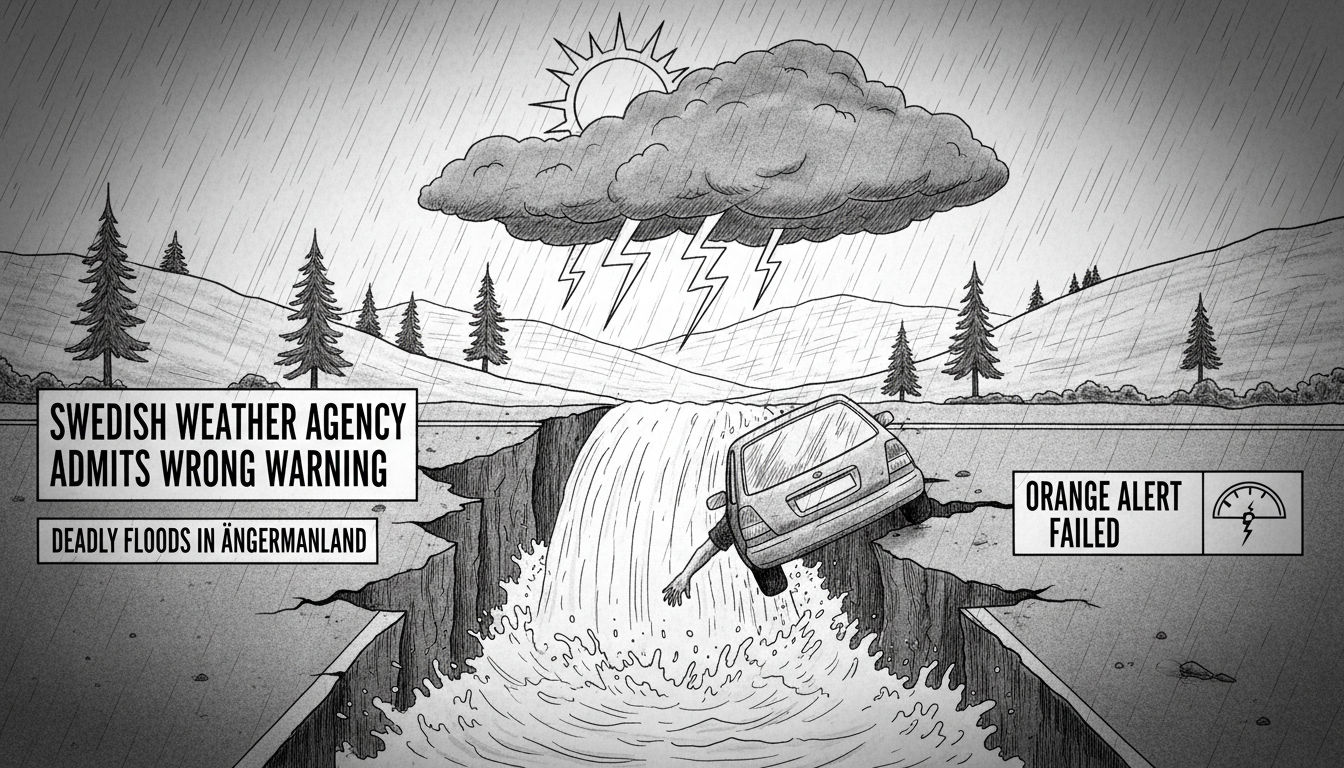
Sweden's Meteorological and Hydrological Institute acknowledges it issued an insufficient weather warning before September's deadly flooding in Ångermanland. The agency now says it should have issued an orange alert instead of the weaker yellow warning it provided.
Heavy rainfall hit the Ångermanland region on September 7. The severe weather created dangerous road conditions that led to one fatality.
A man died after his vehicle plunged into a large road fissure caused by the flooding. The incident occurred during the intense rainfall that overwhelmed the region's infrastructure.
The weather agency conducted an internal evaluation of its warning system. Officials concluded their alert level was too weak given the actual weather conditions.
What does this admission mean for Sweden's emergency preparedness? The evaluation suggests forecasting models may need adjustment for extreme weather events.
This incident highlights the real-world consequences of weather prediction errors. When agencies underestimate severe conditions, public safety faces immediate risks.
Ångermanland is located in northeastern Sweden along the Baltic Sea coast. The region experiences frequent rainfall but rarely sees flooding of this magnitude.
The agency's admission represents a rare public acknowledgment of forecasting failure. Such transparency could help improve future warning systems and prevent similar tragedies.