
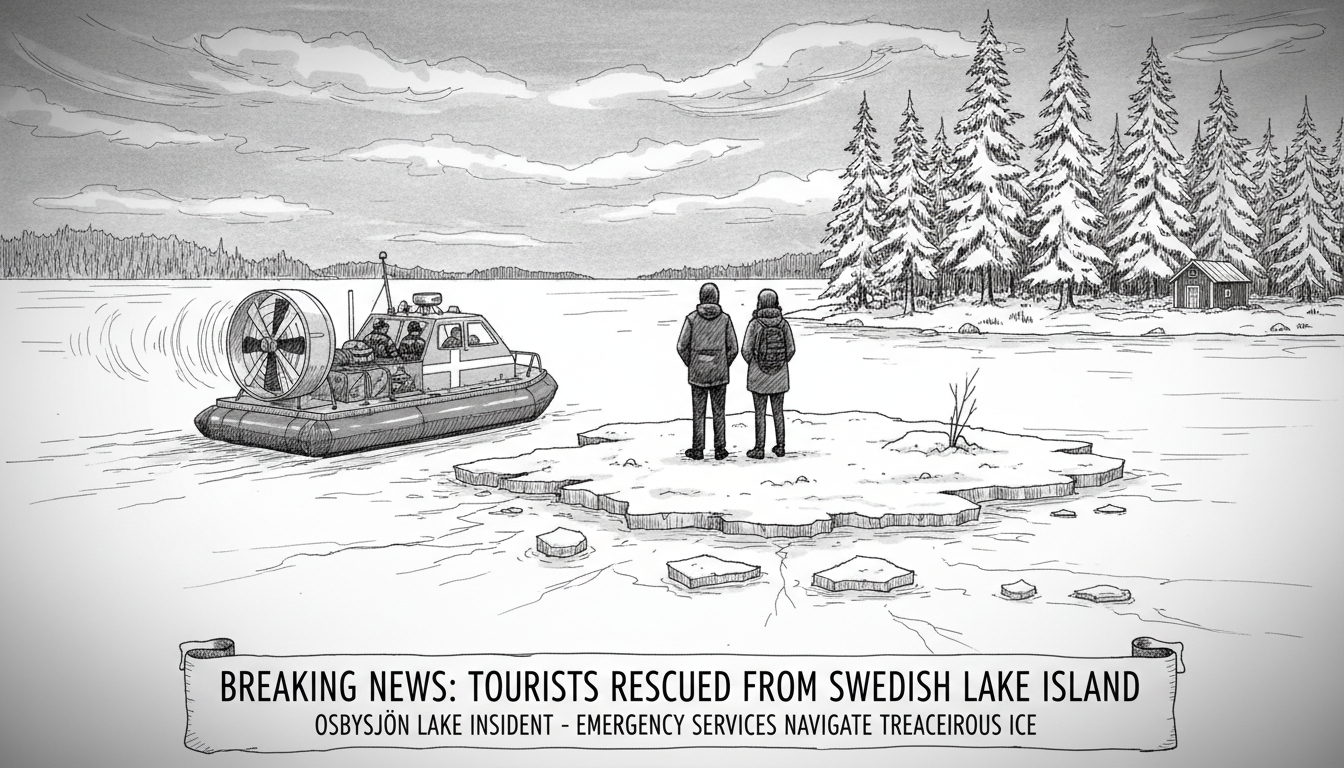
Two tourists faced an unexpected predicament on Sunday after spending the weekend on Kvinnö island in Osbysjön lake. They found themselves trapped when attempting to return to the mainland. Recent freezing conditions had created a dangerous situation with ice covering parts of the lake. The ice proved too thick for their rubber boat to navigate through but too thin to support walking across.
Emergency services received the distress call at 2:30 PM. Rescue teams from Osby immediately mobilized to address the situation. Jan Persson, the operation leader, initially reported uncertainty about the exact number of people involved. He stated that while they believed two individuals were stranded, there could potentially be up to four people on the island.
The rescue team made a crucial assessment about the tourists' rubber boat. They determined it couldn't handle the icy conditions safely. Instead, they prepared an aluminum boat designed to withstand greater stress. The rescue operation also included a backup plan involving cutting a channel through the ice if the aluminum boat approach failed.
The mission proceeded more successfully than anticipated. By approximately 5:20 PM, both tourists had reached safety on the mainland. Patrik Sander, the officer in charge at Osby rescue service, confirmed their safe return. He described how the rescued individuals received warm blankets, coffee, and buns to recover from their ordeal.
Sander characterized the rescue operation as challenging but well-executed. He explained their decision to deploy one of their aluminum boats despite the freezing conditions. The rescue commander emphasized his team's solution-focused approach to emergency situations. He described this particular mission as a special assignment that required careful planning and execution.
This incident highlights the unpredictable nature of Swedish lake conditions during seasonal transitions. Lake ice can create particularly dangerous situations for boaters and outdoor enthusiasts. The rescue service used this opportunity to issue important safety advice for others considering lake activities during this time of year. They strongly recommend checking weather forecasts thoroughly before venturing onto lakes.
Sweden's extensive lake systems require particular caution during early winter and spring months. Changing temperatures can rapidly alter ice conditions, creating hazards that even experienced boaters might underestimate. This successful rescue operation demonstrates the importance of professional emergency services in rural and lake-rich regions. The quick response and proper equipment likely prevented a more serious outcome.
Local authorities typically increase safety warnings during seasonal transitions. They advise carrying proper safety equipment and maintaining communication devices when engaging in water activities. The Swedish Civil Contingencies Agency regularly updates safety guidelines for outdoor recreation across different regions and seasons.