
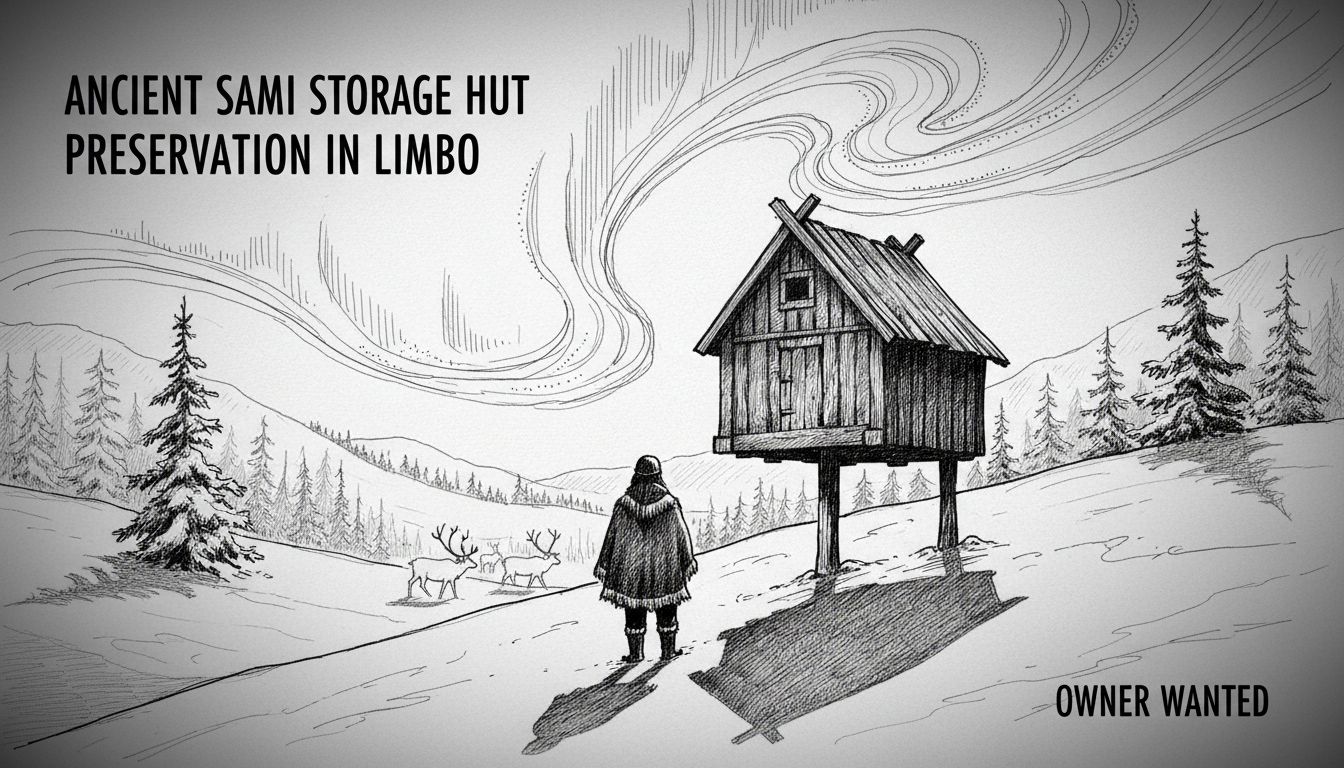
High above the ground near Lake Guhpusjávri in northern Sweden stands a njalla, a traditional Sami storage building designed to protect food from predators. This particular structure has become the center of a unique preservation puzzle. Local authorities want to declare it a protected historical building, but they face an unexpected challenge. They cannot find the owner.
The search for rightful ownership stretches back through centuries. Records suggest the njalla was built by Per Andersson Huuva, the wealthiest reindeer herder in the Rautas area during the mid-1700s. He constructed it as a personal monument, a testament to his status in Sami society. Even today, officials believe the building likely belongs to the Huuva family as inherited property.
Yet no family members have stepped forward to claim ownership. The local Sami village that once used the structure during communal reindeer migrations hasn't asserted rights either. This creates a cultural preservation dilemma that reflects broader challenges in protecting indigenous heritage.
Building antiquarian Anna Elmén Berg explained the legal standstill in a statement. Swedish cultural heritage law requires consultation with building owners before granting protected status. Without an identified owner, the preservation process cannot move forward.
This situation highlights the complex intersection of indigenous rights and cultural preservation in modern Sweden. The njalla represents more than just historical architecture. It embodies Sami traditions, land use practices, and centuries of reindeer herding culture. Its preservation would maintain an important physical link to Sweden's indigenous history.
For international readers, this story reveals how Sweden handles cultural heritage protection. The system prioritizes property rights, even when dealing with centuries-old structures. This careful balance between individual rights and cultural preservation creates occasional standoffs like the one at Lake Guhpusjávri.
The njalla's future remains uncertain as the search continues. Local communities watch with interest, understanding that such structures become rarer each year. They represent living history in Sweden's northern landscapes, where Sami culture continues to shape regional identity.
What happens next depends on whether descendants come forward or authorities find alternative legal pathways. Either way, this small storage hut has sparked important conversations about preserving indigenous heritage across Swedish society.