
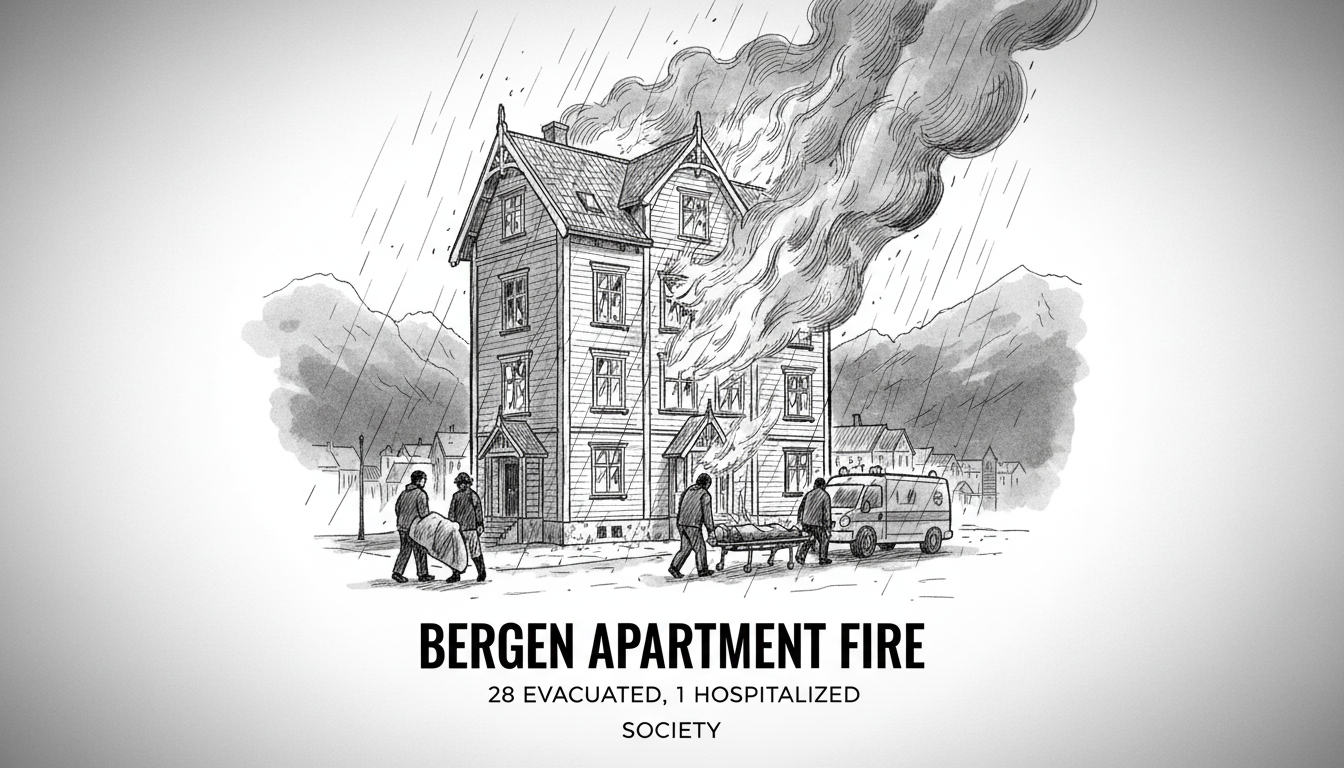
Norway apartment fire sees one resident hospitalized and 28 evacuated after a basement blaze tore through a residential block in Bergen early Tuesday. The incident underscores the ever-present fire risks in urban housing, even in a nation renowned for its strict safety standards. The fire, reported just after 3:15 AM, was extinguished by 4:00 AM, but not before filling the building with smoke and displacing dozens of residents. The single occupant of the basement apartment was transported to Haukeland University Hospital conscious and communicative, police said.
A Swift Emergency Response
Vest police district confirmed the fire originated in a basement apartment. Operations manager Steinar Hausvik stated the injured person was 'conscious and communicative' upon transport to Haukeland, Norway's largest hospital. Emergency services arrived to find significant smoke in the area of the multi-unit building. Of the 28 people evacuated, three were unable to return to their homes by Tuesday morning due to smoke or water damage, highlighting the disruptive aftermath of such events. Police records show 51 individuals are officially registered at the address, indicating a densely occupied building.
The rapid response by Bergen's fire and rescue services prevented a more catastrophic outcome. Fires in compact urban blocks, particularly those with shared ventilation and escape routes, can escalate with deadly speed. 'The timing, in the early hours, is both a curse and a blessing,' said a former fire safety inspector who wished to remain anonymous. 'Fewer people are moving about, which can delay discovery, but it also means most residents are at home and can be alerted. The critical factor is the integrity of smoke alarms and the building's containment structures.'
Scrutiny on Basement Apartments and Urban Density
The focus on the fire's point of origin—a basement apartment—will likely trigger local inspections and public discussion. Basement units, while providing vital affordable housing in a costly city like Bergen, can present unique hazards. These include limited escape routes, potential for windowless rooms, and proximity to electrical or storage areas. Bergen, nestled between mountains and fjords, has a historic urban core with buildings of varied ages and compliance with modern fire codes. The city's characteristic wooden architecture, while culturally significant, demands vigilant maintenance and updated safety measures.
Norway has comprehensive fire prevention regulations, but their application in older, privately-owned apartment blocks can be inconsistent. The Norwegian Directorate for Civil Protection (DSB) continuously emphasizes the importance of functional smoke detectors in every bedroom and escape path. This incident will serve as a case study for local authorities. It tests the community's support systems for temporarily displaced citizens and the efficiency of inter-agency cooperation between police, fire, and health services in Hordaland county.
The Human Cost and Community Support
Beyond the statistics, a fire of this nature fractures the daily lives of residents. For the three households unable to return, the immediate future involves dealing with insurance, finding temporary accommodation, and salvaging possessions. The social support apparatus in Norway, often coordinated by the municipal government and organizations like the Norwegian Red Cross, typically swings into action following such events. They provide emergency shelter, clothing, and counseling services. The psychological impact on residents, particularly those who witnessed the event or were forcefully evacuated into the cold night, can be significant and long-lasting.
Haukeland University Hospital, where the injured resident was taken, is the central trauma center for Western Norway. Its capacity to handle such incidents is robust, but the patient's condition will be monitored closely for smoke inhalation injuries, which can sometimes worsen hours after exposure. The fact that the individual was conscious is a positive initial sign, but full medical assessments are ongoing.
A Broader Look at Nordic Fire Safety
While Norway's fire fatality rate is historically low compared to many countries, each incident prompts national reflection. Scandinavian winters, with extended darkness and increased reliance on indoor heating, electrical blankets, and lighting, create seasonal risk factors. Experts point to public education campaigns on electrical safety, proper use of candles, and clear escape planning as key preventative tools. In densely populated Bergen neighborhoods, where wooden buildings can be close together, the containment strategy of the first responding fire crews is crucial to preventing a single-unit fire from becoming a block-wide disaster.
The effective evacuation of 28 people in a short timeframe suggests alarms functioned and residents were alert. This is a testament to both individual preparedness and the clarity of emergency procedures. However, it also raises questions about permanent housing solutions for those displaced and the potential for stricter retrofitting requirements for basement apartments in terms of fire-resistant materials and secondary egress options.
Policy Implications and Preventative Measures
This fire will not trigger a national political debate like an oil rig incident or a major forest fire might, but it resonates deeply at the municipal level. City councilors in Bergen may face questions about inspection frequency for rented apartments, especially in lower-cost housing segments. The balance between preserving housing stock, maintaining affordability, and guaranteeing safety is a persistent challenge for urban planners in growing Norwegian cities.
The incident serves as a stark, middle-of-the-night reminder that fire risk is universal. It cuts through the perception of Norway as a place insulated from such mundane dangers by its wealth and order. The response demonstrates system strength, but the event itself exposes ever-present vulnerabilities. As the investigation into the cause begins, the community's focus remains on the recovery of the hospitalized individual and the swift restoration of normalcy for all evacuated families. Will this event lead to a targeted safety audit of similar housing units across Bergen's storied neighborhoods?