
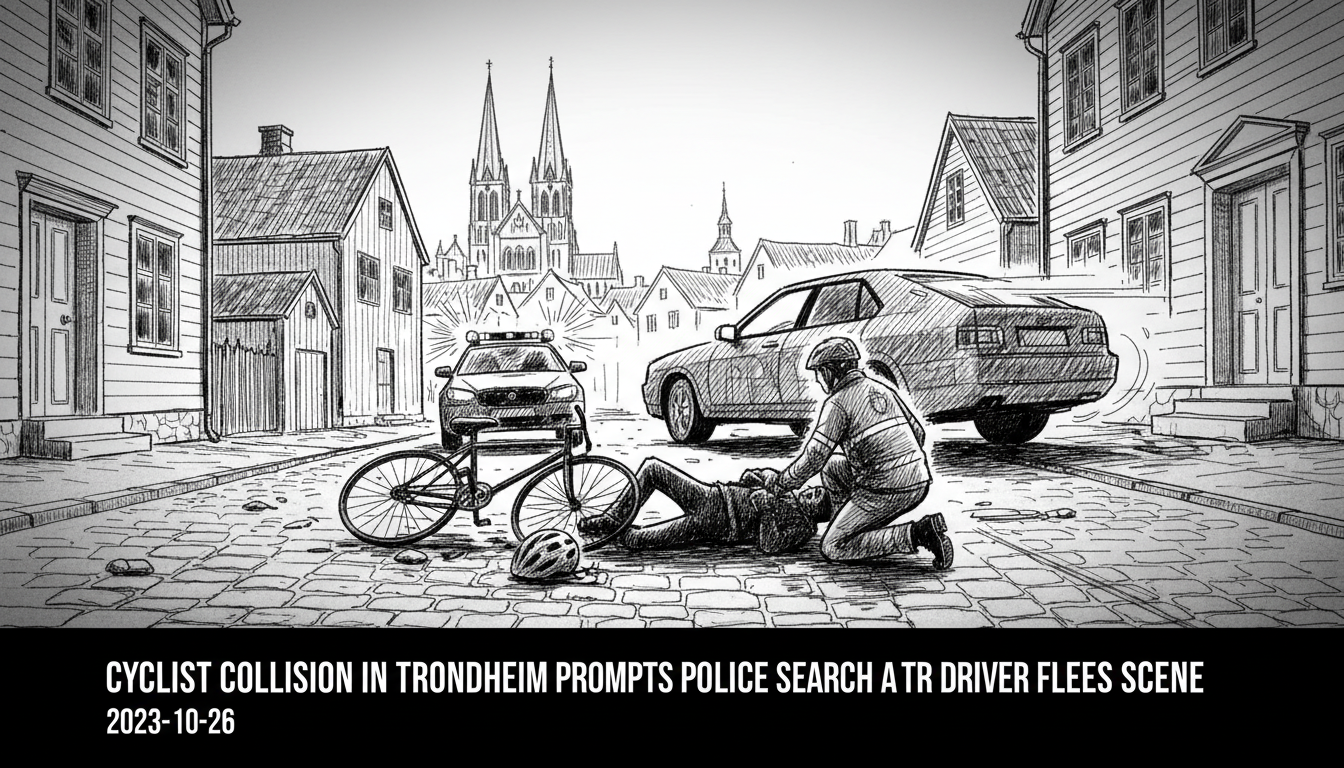
A cyclist received on-site medical treatment after a collision with a motorist at Trikkestallen in Trondheim early this morning. Emergency services responded to the incident. The driver of the car fled the scene, and the vehicle subsequently struck a wall.
Police initially reported the cyclist was transported to St. Olavs Hospital. The man was conscious at the time, but the extent of any injuries was not known. Authorities launched a search for the missing driver.
In a later update, police clarified the cyclist was not taken to the hospital but was instead allowed to return home. A doctor assessed the individual at the scene and declared him uninjured. The search for the driver who fled continues.
This incident highlights ongoing tensions in Norwegian urban planning and traffic safety. Trondheim, like Oslo and Bergen, actively promotes cycling as part of its sustainable transport policy. The city has invested in dedicated bike lanes and a public bike-sharing system. Yet conflicts between cyclists and motorists persist, especially at complex intersections and during early morning commutes.
Norway has strict laws regarding hit-and-run incidents. Leaving the scene of an accident, particularly where injury is possible, carries severe penalties. The legal framework is designed to ensure accountability and support the country's Vision Zero policy, which aims to eliminate all traffic fatalities and serious injuries. The driver's decision to flee will likely result in more serious charges than the collision itself if apprehended.
For international observers, this case reflects a broader Nordic commitment to road safety that sometimes clashes with human behavior. Norwegian police are generally efficient in these investigations, often using traffic cameras and vehicle registration data. The outcome here will test that response system. The incident also serves as a reminder for visitors and new residents. Norwegian traffic laws are rigorously enforced, and the cultural expectation is to remain at the scene of any accident, however minor it may seem.
The response from emergency services followed standard Norwegian protocol. Ambulance personnel are trained to assess and treat on site, reducing unnecessary hospital visits when possible. This efficient use of healthcare resources is a hallmark of the Norwegian system. The quick correction from police about the cyclist's destination also shows a commitment to accurate public information, even if initial reports were incomplete.
What happens next depends on identifying the driver. Police will examine the abandoned vehicle for evidence. They will also review any available footage from the area around Trikkestallen. Local residents may be questioned. The case is now as much about the failure to stop as it is about the original collision. It underscores a simple truth. Norway's advanced infrastructure and laws cannot prevent every human error or moment of poor judgment. The system's strength is measured in its response.