
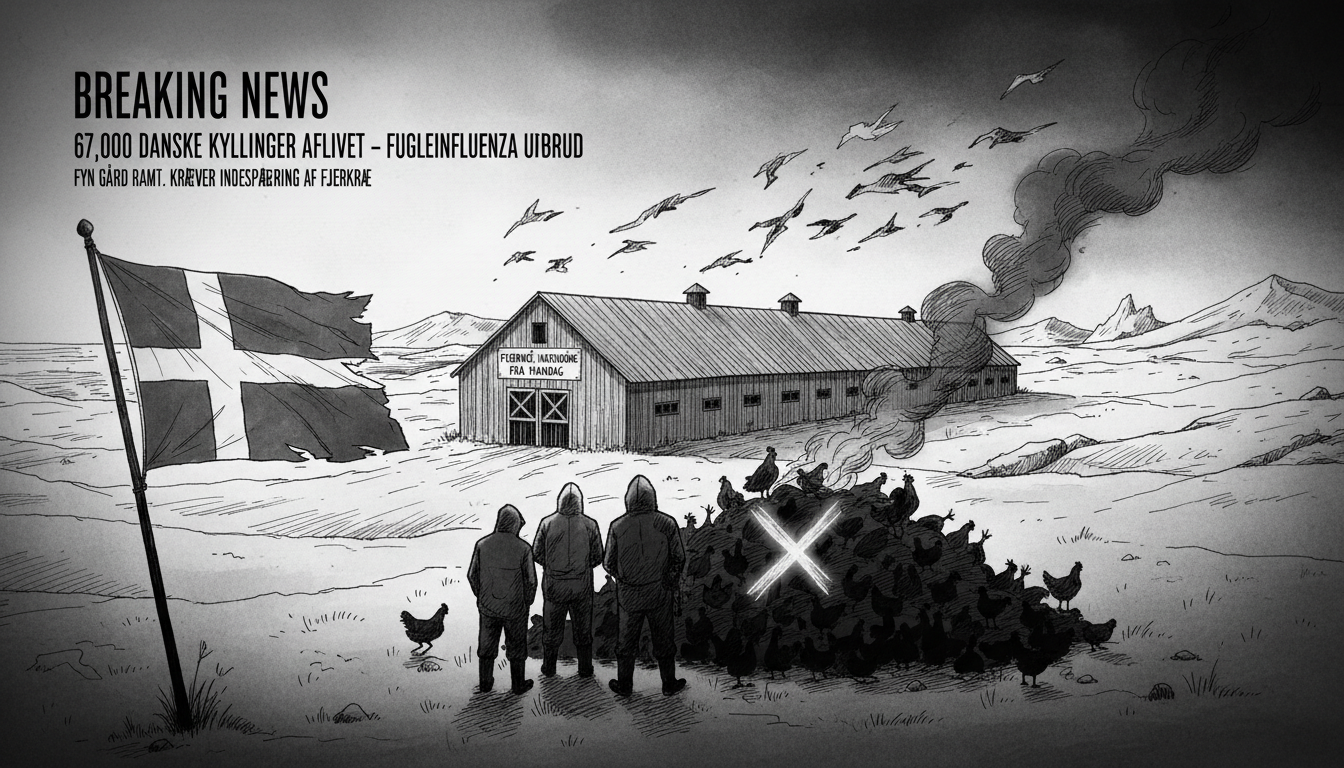
Danish authorities will cull 67,000 chickens and hens following a bird flu outbreak on Funen island. The decision comes after contagious bird influenza was confirmed at a farm near Aarup.
The Danish Veterinary and Food Administration made the announcement Sunday. They will euthanize the entire flock to prevent disease spread.
Officials detected the outbreak suspicion on Friday. The State Serum Institute confirmed the contagious bird flu on Saturday.
This marks the second recent threat level increase for avian influenza. The administration raised the risk from medium to high after multiple findings in wild birds across Denmark and neighboring countries.
Starting Monday, new rules require all captive poultry and birds to be kept indoors or covered. This protects domestic birds from infection through wild birds.
The agency established both protection and surveillance zones around the infected farm. The protection zone extends three kilometers while surveillance covers ten kilometers.
Within these zones, all poultry owners must register their birds. Moving live birds, eggs or poultry products requires special permission from authorities.
Bird flu spreads through wild birds, their droppings and carcasses. The disease can enter poultry enclosures via contaminated footwear.
Officials urge farmers to change footwear before entering animal areas. This prevents tracking infected wild bird droppings into barns.
With this latest outbreak, authorities have culled approximately 278,000 chickens and turkeys across four flocks since October. The repeated outbreaks suggest current containment measures might need strengthening despite existing protocols.
How does bird flu spread to poultry?
The virus typically transmits through wild birds, their droppings or carcasses, often entering farms via contaminated equipment or footwear.
What areas are affected by restrictions?
Protection zones extend three kilometers around infected farms while surveillance covers ten kilometers, with movement restrictions and registration requirements.