
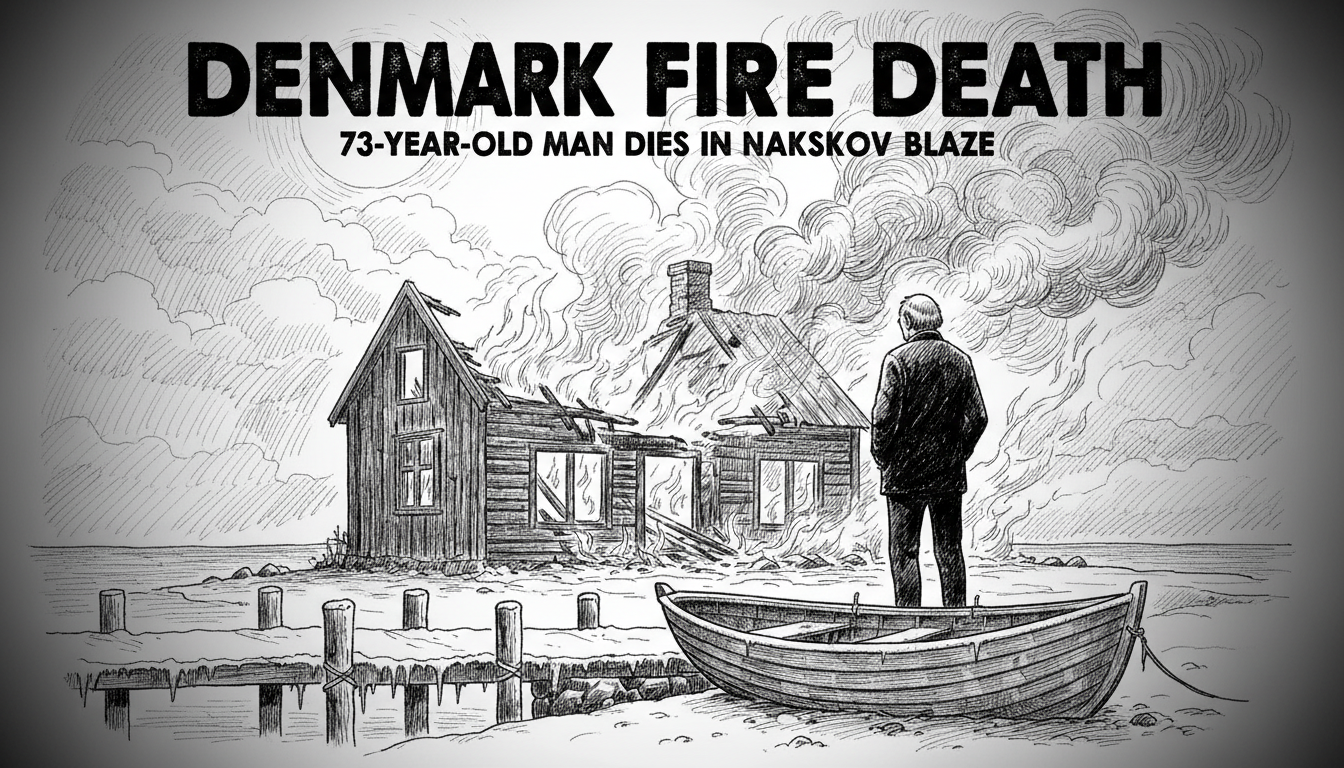
Denmark fire death in Nakskov has claimed the life of a 73-year-old man after his apartment became fully engulfed in flames. The blaze on Nybrogade was reported to emergency services at 7:52 PM on Tuesday evening, marking a tragic end for a resident in Lolland's largest town. Police have stated they currently see no indications of criminal activity, but a thorough investigation into the fire's cause is now underway.
Vagtchef Benjamin Voss of the South Zealand and Lolland-Falster Police confirmed the death. "We have notified the next of kin and will initiate the investigation to find out what happened and what the cause of the fire could be," Voss said. The apartment was described as 'overtændt' – a Danish term meaning fully alight or engulfed – when firefighters arrived. The emergency services have now left the scene, but the property remains under guard until police investigators can begin their detailed work.
This incident strikes at the heart of a close-knit community of approximately 12,000 people. Nakskov, like many towns on Lolland, has navigated economic shifts and population changes. The sudden loss of an elderly resident in such a violent manner sends shockwaves through neighborhoods where many people know each other. It raises immediate questions about fire safety for senior citizens living independently, a key concern for Danish municipalities nationwide.
A Community's Quiet Night Shattered
For residents of Nybrogade and the surrounding area, Tuesday evening transformed from ordinary to horrific. The call to emergency services at 7:52 PM triggered a rapid response from Nakskov's fire brigade and police. Neighbors would have seen flashing blue lights illuminate the street as crews worked to contain the intense blaze. The term 'overtændt' used by authorities indicates a fire that had progressed beyond its initial stage, presenting significant challenges for firefighters.
The practical reality of a fire in a populated residential street is complex. Firefighters must balance aggressive attack with concern for structural collapse and the safety of adjacent properties. In a town like Nakskov, the emergency responders are often local, adding a personal dimension to their professional duty. The confirmation of a fatality is the outcome every first responder dreads, casting a pall over their crucial work.
The Investigation Begins: Seeking Answers in the Ashes
With the fire extinguished, the focus now shifts to the meticulous process of forensic fire investigation. Police have been careful to state they have no current indications of criminality, but the investigation must systematically rule out all possibilities. Experts will begin by securing the scene, a process already started with the guarding of the property. They will then work to locate the fire's point of origin, often the key to understanding its cause.
Fire investigators look for specific clues. They examine electrical wiring, heating appliances, and potential ignition sources like cooking equipment or smoking materials. The presence and functionality of smoke alarms is a critical early check. In Denmark, working smoke alarms are legally required in all homes, and their role in preventing fatalities is well-documented. The investigation will also consider the victim's age and mobility, factors that can affect escape time.
"The police investigation will now work to uncover what happened," said Voss, outlining the procedural next steps. This involves forensic technicians, possibly with canine units trained to detect accelerants, and collaboration with fire service experts. The goal is to build a scientific narrative of the fire's progression. For the bereaved family, this process, while necessary, prolongs the period of uncertainty before they can gain a full understanding of their loved one's final moments.
The Human Context: Aging in Denmark's Smaller Communities
This tragedy touches on broader themes within Danish society, particularly regarding its aging population and the welfare system's support in rural areas. The victim was 73, an age where individuals may face health or mobility challenges. Denmark prides itself on a system that enables seniors to live independently in their own homes for as long as possible, supported by municipal home care. This model is a cornerstone of the Danish welfare state.
However, its success in every community depends on resources and infrastructure. Lolland Municipality has experienced population decline, a trend that can pressure local services. Ensuring regular safety checks, functional alarms, and adequate support for elderly residents living alone requires consistent municipal focus. This fire will inevitably prompt local officials in Nakskov and across Lolland to review their community safety outreach, especially towards senior citizens.
Statistics on fire deaths in Denmark show that the very young and the elderly are the most vulnerable. A single incident like this represents a profound failure of safety for that individual. It triggers a mandatory evaluation of protocols by both the local municipality and the fire prevention authorities. The question becomes whether this was a tragic, isolated accident or a symptom of a wider, addressable risk for older Danes living alone.
Nakskov: A Town Facing Familiar Challenges
To understand the impact of this event, one must know something of Nakskov. As the largest town on Lolland, with its 12,000 inhabitants, it is a regional hub. Historically centered on the now-closed shipyard, the town has worked to reinvent its economy. Such communities often have strong social cohesion, where news travels quickly and a loss is felt collectively. The death of a long-term resident is not just a police statistic; it is the loss of a neighbor, a familiar face at the local supermarket, a part of the town's social fabric.
The sense of community in towns like Nakskov can be a double-edged sword in times of tragedy. It provides immense support for the grieving family, with neighbors rallying to offer help. Yet, it also means the shock and sorrow are widely and deeply shared. In the absence of clear answers, speculation can spread. The swift and transparent communication from police about the ongoing investigation is therefore crucial not just procedurally, but for community morale.
Local civic leaders and volunteer organizations, such as those connected to the local church or community center, will likely play a role in the coming days. They offer channels for collective mourning and practical support. This informal welfare network, complementing the official state system, is a vital part of the social ecosystem in Denmark's smaller towns.
A Look Ahead: Safety, Scrutiny, and Prevention
The immediate days ahead will be occupied by the forensic investigation and the family's private grief. Subsequently, the findings will be reviewed by the police and the relevant municipal authorities. If the fire is determined to be accidental, the focus will turn sharply to prevention. Could it have been avoided? Was there a working smoke alarm? Are there lessons for similar households across the region?
Danish fire safety campaigns consistently stress the importance of smoke alarms, escape plans, and caution with potential ignition sources. This case may become a somber reference point in future safety outreach by Lolland Municipality and the national fire safety board. For the residents of Nybrogade, the physical scar of the fire-damaged building will serve as a long-lasting reminder of the fragility of safety.
Ultimately, this story from a quiet street in Nakskov is a stark reminder that safety is a shared responsibility. It rests on individual vigilance, properly maintained equipment, effective municipal services, and a responsive community. As the investigation seeks to pinpoint a technical cause for the flames, the human cause for reflection is already clear. How does a society that values independent living for its elders ensure that independence does not become isolation, and that a home remains a sanctuary, not a trap? The search for answers in Nakskov continues, both in the smoldering apartment on Nybrogade and in the conscience of the community that surrounds it.