
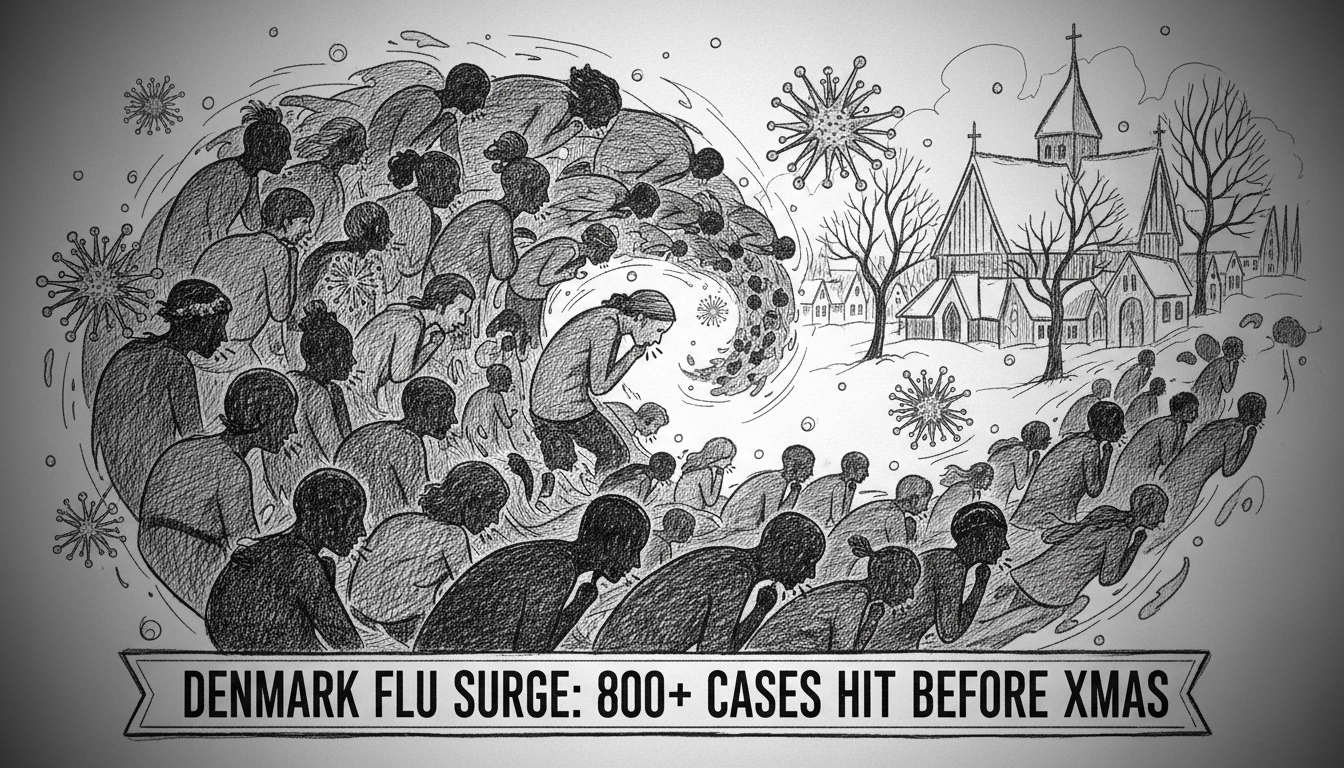
Denmark's influenza infection rate has surged from medium to high just days before the Christmas holidays. The Statens Serum Institut (SSI) reported over 800 confirmed cases and nearly 200 related hospitalizations in its latest weekly respiratory infection update. This sharp rise signals a challenging start to the winter virus season, with influenza A dominating and COVID-19 wastewater levels also climbing to a high level. The convergence of multiple viruses places new pressure on the Danish healthcare system during its busiest social period.
A Triple Threat in Winter Air
While influenza takes center stage, it is not acting alone. The SSI data reveals a trio of circulating viruses. Respiratory syncytial virus (RSV) infections are at a medium level, though hospitalizations remain low. COVID-19 maintains a medium level for both infections and hospital admissions. The most concerning indicator may be the concentration of COVID-19 in wastewater, which has now risen to a high level nationwide. This often serves as an early warning sign for future case increases, suggesting COVID-19 activity could intensify in the coming weeks. The simultaneous circulation creates a complex public health picture.
“We are seeing the expected seasonal increase, but the jump to a high level for influenza is notable,” a senior SSI epidemiologist said in a statement accompanying the data. “The timing, right before families gather for Christmas, increases the risk of broader transmission within communities.” The expert emphasized that vaccination remains the strongest protective tool, especially for the elderly and those with chronic health conditions. Denmark’s vaccination program for influenza and COVID-19 targets these groups, but uptake varies.
The Strain on Municipal Health Services
The rise in cases translates directly to workload for Denmark’s municipalities, which are responsible for primary care and prevention. General practitioners are seeing increased traffic for respiratory symptoms. Local health authorities are now reinforcing public messaging about basic hygiene and responsible behavior. The classic Danish public health advice—stay home if you’re sick, wash your hands frequently, and consider using face masks in crowded places—is being promoted anew. For many, the situation feels like a return to familiar, albeit unwelcome, routines from recent winters.
Hospital preparedness is now under scrutiny. While influenza hospitalizations are currently categorized at a medium level, the sharp rise in cases suggests this could change. The Danish Health Authority monitors bed capacity and staff availability closely during winter. A spokesperson noted that plans are in place to manage increased admissions, but sustained high levels of multiple viruses could lead to postponed non-acute procedures. The system relies on the public using emergency services appropriately and seeking initial advice from their GP or the online health portal.
Vaccination as the Cornerstone Defense
Public health experts point to vaccination as the most effective strategy to blunt the impact of this surge. The Danish flu vaccine is typically well-matched to the circulating influenza A strains. Similarly, updated COVID-19 vaccines target currently dominant variants. However, vaccine fatigue is a real concern. After several years of intense focus on COVID-19 vaccinations, convincing all at-risk individuals to get their seasonal shots requires persistent effort. Community health centers across Copenhagen and other cities are extending hours to improve access.
“The data is a clear call to action for anyone who is eligible but hasn’t yet been vaccinated,” said a Copenhagen-based doctor specializing in infectious diseases. “It’s not just about individual protection. It’s about reducing the overall burden so hospitals can care for the most vulnerable.” This collective responsibility is a central tenet of the Danish welfare model. High vaccination rates protect the functionality of society’s shared health infrastructure.
Navigating the Holiday Season Safely
The timing of this surge presents a unique social dilemma. The Christmas week is traditionally a time for large family gatherings, crowded shopping, and festive parties. Public health officials are walking a fine line, urging caution without sparking undue alarm. The recommendation is pragmatic: if you have symptoms, take a test and avoid visiting elderly relatives. Consider ventilation in crowded indoor settings. These simple measures can significantly reduce chains of transmission without canceling celebrations entirely.
For parents, the RSV data brings specific concerns, as the virus most severely affects young children. While hospitalizations are low, pediatric wards are vigilant. The advice from child health nurses is consistent: contact your GP if a young child has difficulty breathing, is dehydrated, or is unusually lethargic. For most children, RSV will be a heavy cold, but early medical assessment for the very young is crucial.
A Look Ahead to the New Year
The coming weeks will be decisive. Infection rates often peak in January or February after holiday travel and gatherings. The SSI’s surveillance system will provide critical data on whether this early surge plateaus or continues to climb. Authorities are modeling various scenarios to allocate resources effectively. The hope is that an early peak could lead to an earlier decline, but much depends on public behavior and vaccination coverage.
This winter season tests the integrated respiratory disease strategy Denmark developed post-pandemic. It blends surveillance, vaccination, and clear public communication without resorting to mandates. The goal is to manage endemic viruses sustainably within the normal function of society. The current high influenza level is a stern first exam. The nation’s response will demonstrate how well it can balance public health with daily life in this new era of coexisting with multiple significant respiratory viruses. The ultimate question remains: can collective responsibility and a robust welfare system successfully navigate this triple threat?