
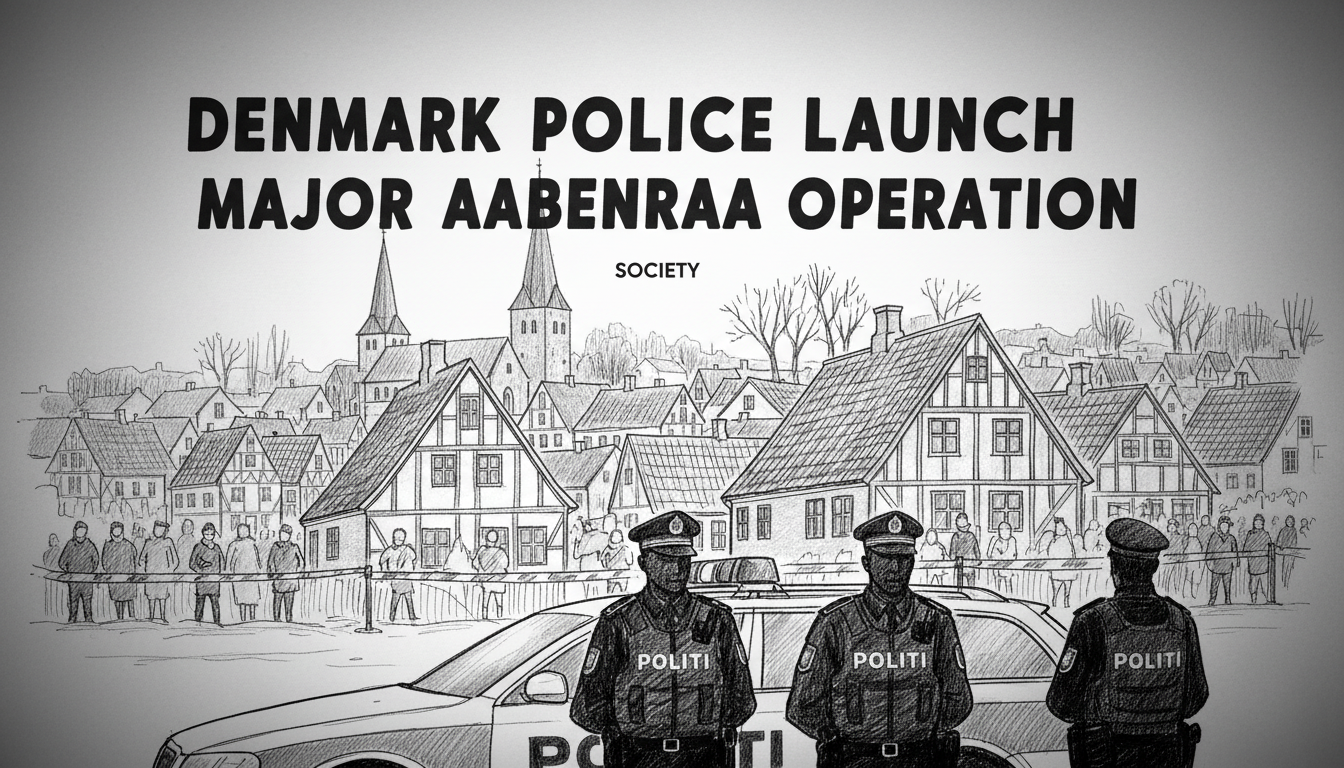
Aabenraa police deployed a significant, highly visible force Wednesday morning responding to a report of suspicious circumstances. Officers from Syd- & Sønderjyllands Politi cordoned off an area in the southern Danish border town, urging public cooperation via a social media statement. The operation underscores the sudden nature of police work in even the most tranquil Danish municipalities.
A Morning of Heightened Police Presence
Residents of the South Jutland town witnessed an unusual police mobilization. The regional force posted a brief message on X, formerly Twitter, around 8 AM. It confirmed a 'mistænkeligt forhold' – a suspicious circumstance – was under investigation. Authorities stated they were 'meget synlige,' or very visible, and asked citizens to respect any cordons. No further details were provided, leaving the community with questions. This immediate information blackout is a standard tactical procedure during live operations.
Police experts explain such protocols protect investigative integrity. 'Preserving a scene is critical,' says a former detective superintendent with the Danish National Police. 'The first hours are golden. A single compromised piece of evidence can derail an entire case.' This approach reflects a systematic Danish policing model, where public appeals for space are common during initial responses. The quiet town of Aabenraa, with its population of 16,000, rarely sees such overt displays of police resources.
The Delicate Balance of Public Information
Withholding details creates a vacuum, often filled with speculation on local social media groups. Yet law enforcement leaders defend the practice vehemently. 'Our primary duty is to resolve the situation, not to provide real-time updates,' the former superintendent notes. 'Releasing incomplete information can alert suspects, endanger victims, or cause unnecessary public alarm.' Danish police communication has evolved, using platforms like X for rapid, broad-stroke announcements while reserving details for formal press briefings.
This incident highlights a modern challenge for Danish authorities. They must maintain public trust through transparency while safeguarding operational security. The Aabenraa statement successfully achieved its core goal: it notified the community of a police presence and set clear behavioral expectations. For locals going about their Wednesday, it was a jarring reminder that public safety operations can unfold anywhere, at any time.
Community Impact in a Close-Knit Municipality
The psychological effect in a smaller community like Aabenraa is profound. Unlike in larger cities where police activity might blend into the background, a major response here becomes the day's defining event. Shop owners, parents on the school run, and municipal workers all become involuntary witnesses. This collective experience can foster community solidarity but also breed anxiety when facts are scarce. Local integration networks and social centers often become informal hubs for information sharing and support in such moments.
Trust in public institutions is a cornerstone of the Danish welfare model. Sudden police actions test that trust. 'People need to believe that the police are acting in their collective interest, even when they cannot see the full picture,' says a Copenhagen-based sociologist who studies public institution trust. High-profile cases in recent years have made some immigrant communities wary of police interactions. Clear, consistent communication from the outset is crucial for maintaining the social contract across all demographic groups.
The Path Forward for the Investigation
The next phase for Syd- & Sønderjyllands Politi will involve a meticulous scene examination. Forensic teams likely combed the cordoned area for physical evidence. Detectives will have begun interviewing potential witnesses and reviewing any available CCTV footage from the vicinity. The classification of 'suspicious circumstances' is broad. It could range from an unexplained property disturbance to a more serious, potentially criminal, discovery. The police will not comment until they have a firm evidentiary basis for public announcements.
Local officials and the mayor’s office typically defer to police leadership during active investigations. Their role shifts to monitoring community sentiment and preparing to provide logistical or social support if needed. The municipal administration’s response will be measured, ensuring it does not interfere with the legal process. This division of responsibility between law enforcement and civic leadership is a well-rehearsed aspect of Danish crisis management, designed to be efficient and clear.
Looking Beyond the Cordons
While this single event in Aabenraa will conclude, it opens a window into the everyday reality of Danish policing. It operates on a foundation of public compliance and institutional restraint. The visible presence requested not just physical space but also social trust—a currency essential in the Danish system. As the investigation progresses from response to analysis, the community's patience will be as much a part of the process as the forensic work.
Will the resolution of this 'suspicious circumstance' reinforce the quiet normality of border-town life? Or will it reveal a fracture in the perceived security of Denmark’s smaller regions? The answers depend on what the police find and how they choose to share their conclusions with the public that granted them the space to work.