
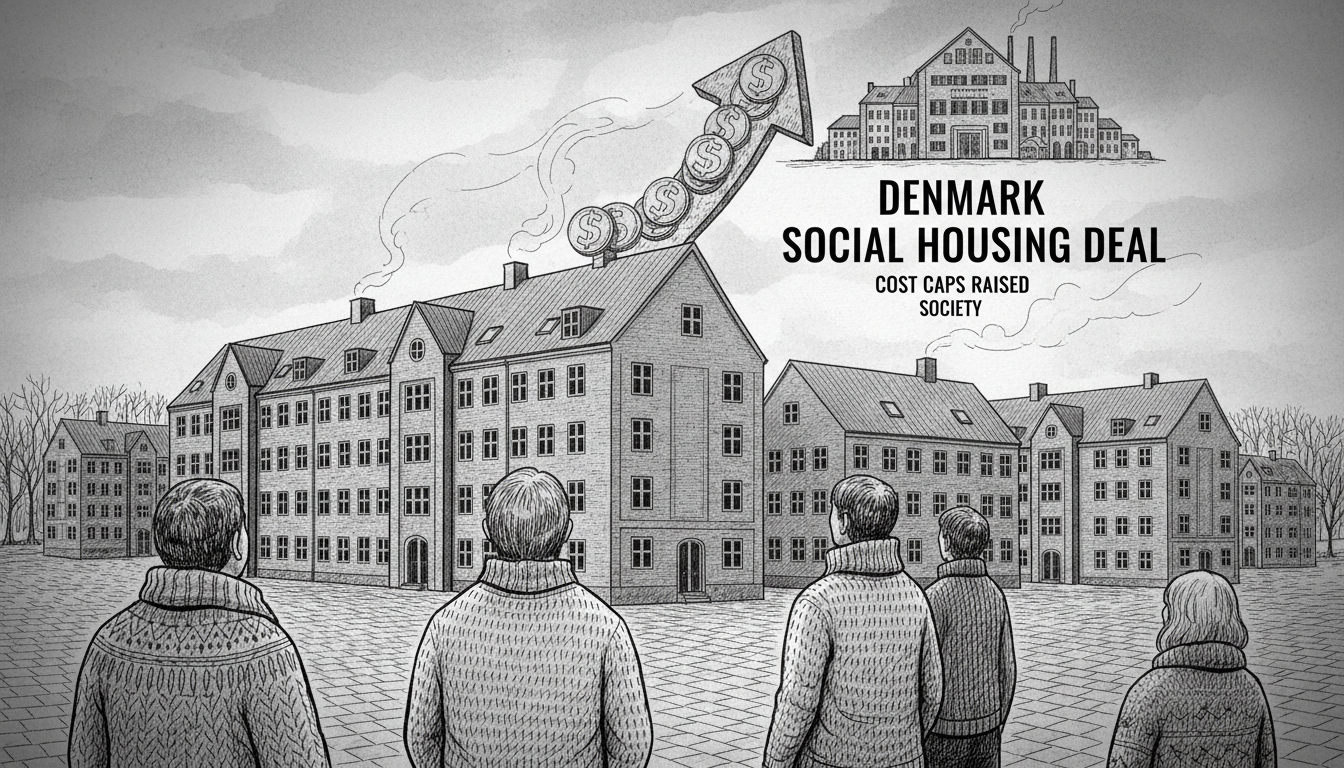
Denmark's social housing system shelters one million residents, a fifth of the population facing a deepening affordability crisis. A new political agreement seeks to inject life into this crucial sector by raising the maximum allowed construction costs for almennyttige boliger, or non-profit housing. This deal between the government, Socialistisk Folkeparti, Konservative, and Enhedslisten could reshape housing access for years to come.
The Pressure on Affordable Homes
Copenhagen's skyline is dotted with cranes, yet many new developments remain out of reach for average earners. Social housing associations have struggled to build under strict cost ceilings. These ceilings haven't kept pace with rising material and labor expenses. Approximately 20% of Denmark's housing stock is almennyttige boliger, but construction has lagged behind demand. Waiting lists for these homes have ballooned in urban centers.
Housing inequality tests integration and social cohesion in cities. As Fatima Al-Zahra, I've visited communities in Nørrebro and Vollsmose where families wait years for stable housing. "We need more homes that people can actually afford," said Karen Jensen, a board member of a Copenhagen housing association. "The old cost limits made many projects impossible to finance." This sentiment echoes across Danish municipalities.
Breaking the Construction Deadlock
The core of the new agreement is a hike in the maksimumbeløb. This is the maximum cost permitted for building social housing with public support. Specific figures aren't detailed yet, but the principle is clear. Higher ceilings will enable housing associations to launch more projects. This policy shift acknowledges that current subsidies have been too rigid.
Experts in Danish social policy see this as a necessary adjustment. "Construction costs have risen by over 30% in the past decade," noted Lars Thomsen, a housing economist at Aalborg University. "Without updating these limits, we simply won't see new almennyttige boliger built." The agreement aims to balance affordability with viability. It ensures non-profit builders can cover expenses without passing excessive costs to tenants.
Who Benefits from the New Deal?
This isn't just about bricks and mortar; it's about people. Social housing in Denmark serves a diverse mix. It includes low-income families, seniors, students, and middle-income workers. In cities like Aarhus and Odense, these communities are vital for social stability. The Danish welfare system relies on accessible housing to support integration.
Consider the case of Amina, a nurse and single mother in Herlev. She's been on a waiting list for three years. "Renting privately takes half my income," she told me. "A secure, affordable home would change everything for my daughter and me." The new agreement promises to create more stories like Amina's. Success depends on implementation.
Housing associations must navigate planning permissions and local regulations. These can delay projects even with increased cost limits. Municipalities play a key role in allocating land and coordinating efforts.
Voices from the Front Lines
Reaction from housing advocates has been cautiously optimistic. "This is a step in the right direction," said Bjørn Christensen, head of the Danish Social Housing Association. "We've argued for years that cost caps were outdated. Now, we need to ensure these changes lead to actual construction starts." He emphasized that other barriers like land availability remain.
On the political front, the cross-party nature of the deal is significant. It shows consensus on the urgency of housing issues. A spokesperson for the Ministry of Interior and Housing said, "This agreement strengthens our commitment to affordable housing for all Danes." However, some critics warn that raising cost caps could lead to higher rents if not carefully managed.
The Bigger Picture: Integration and Society
From my perspective covering Danish society, housing is more than shelter. It's a foundation for integration. Newcomers to Denmark often find housing markets daunting. Social housing can be a gateway to stability. In areas with high immigrant populations, quality affordable housing supports language learning and employment.
Statistics from the Danish Integration Ministry show a correlation. Access to affordable housing links to better integration metrics. By boosting social housing supply, this policy could have ripple effects on social policy goals. Yet, it must be paired with efforts to prevent segregation. Ensuring mixed communities is essential for long-term cohesion.
Education systems benefit when families have secure homes. Reduced student mobility can improve outcomes. Social centers in communities like Tingbjerg rely on stable housing to run effective programs. This deal could strengthen the entire Danish welfare system if executed well.
What Comes Next?
The agreement sets the stage, but the real test will be in the coming years. Housing associations will now revise projects that were previously stalled. Construction must ramp up to meet demand. Copenhagen housing costs have skyrocketed, making this initiative critical.
Monitoring rent levels will be crucial to maintain affordability. The essence of almennyttige boliger is providing homes for all income levels. Looking ahead, questions remain. Will this lead to a significant increase in housing units? How will it impact Denmark's broader housing market?
Sustainability must also be considered. New builds should incorporate energy-efficient designs to align with climate goals. As Fatima Al-Zahra, I'll be tracking these developments closely. I'll speak to residents and officials across the country to gauge impact.
Denmark's social housing model has long been admired, but it faces modern pressures. This political deal is a recognition that adaptation is necessary. For one million residents and countless others in need, it offers hope. But only if words translate into homes that strengthen communities and foster inclusion.