
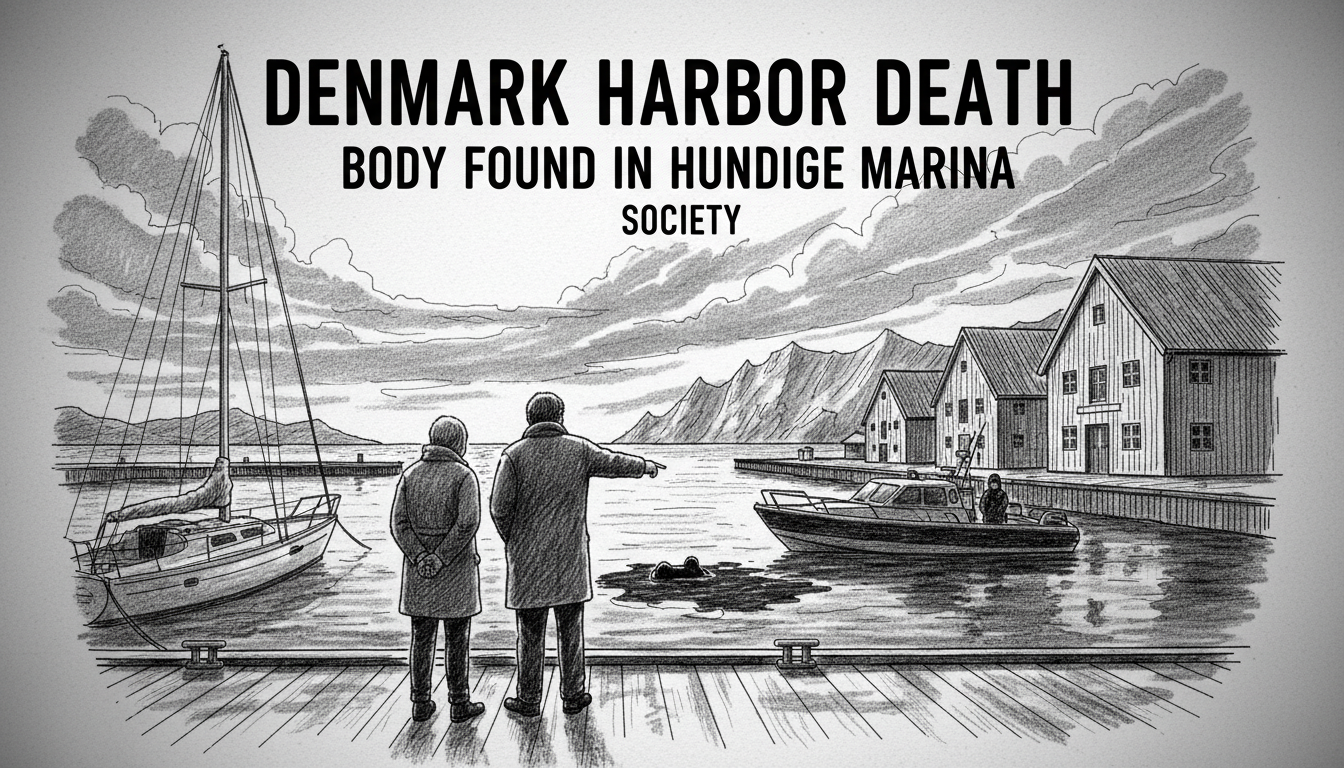
Denmark police are investigating after a deceased man was found in Hundige Marina early Wednesday morning. The Mid and West Zealand Police received a report at 5:25 AM and confirmed the discovery in the water at the popular recreational harbor southwest of Copenhagen. Authorities have released few details as the investigation into the circumstances begins.
Press spokesperson Maria Sander Hansen confirmed the police presence and the recovery of a lifeless man. She stated that no further information could be provided at this time, as the investigation into the incident's circumstances is ongoing. The police will now focus on identifying the deceased, notifying next of kin, and determining the cause of death. This process involves forensic examination and reviewing any available CCTV footage from the harbor area.
A Quiet Harbor Awakens to Tragedy
Hundige Havn is typically a place of leisure, filled with sailing boats and summer activity. Located in Greve Municipality, about 20 kilometers from central Copenhagen, it represents the calm, orderly face of Danish coastal life. The discovery of a body there just after dawn disrupts that peaceful image. Early morning commuters and marina residents would have seen a significant police response, with vehicles and personnel concentrated at the water's edge.
Such incidents, while relatively rare, trigger a standardized yet thorough police procedure. The priority is to secure the scene and preserve evidence. Officers from the Mid and West Zealand Police, the regional force responsible for law enforcement in the area, would have cordoned off the relevant section of the harbor. A forensic team likely documented the location and condition of the body before its removal for examination.
The Delicate Process of Investigation and Identification
The immediate steps for investigators are clear but sensitive. First, they must establish the identity of the deceased. This may involve checking missing persons reports, examining personal effects, and eventually using dental records or DNA analysis. Only after a formal identification can the police begin the difficult task of informing the man's family. Danish protocol emphasizes treating this notification with utmost care and discretion.
Concurrently, detectives will work to piece together the events leading to the death. They will explore all possibilities: a tragic accident, a medical episode leading to a fall, suicide, or foul play. The investigation will be methodical. Officers will canvass the area for witnesses who might have seen or heard anything unusual overnight or in the early hours. They will scrutinize the man's final known movements and his background.
"Without specific details, speculation is not only unhelpful but potentially harmful," says a former detective with experience in similar cases, who spoke on condition of anonymity. "The police have a duty to the deceased and his family to conduct a precise investigation. They will examine every angle, but that takes time. The public should expect updates only when they do not compromise the inquiry."
The Human Impact Beyond the Police Tape
While the police report deals in facts—time, location, gender—the human story is profound. A life has ended, and a family's world has been shattered. In Denmark's close-knit social structure, such an event resonates through local communities. The man may have been a resident of Greve, a boat owner, a worker, or a visitor. His death leaves a void for those who knew him.
Neighbors and regulars at the harbor will feel a sense of unease. A place associated with freedom and relaxation becomes a site of tragedy. This psychological impact is a silent companion to the official investigation. Community police officers often engage in the aftermath, providing a presence and reassurance as normal life gradually resumes around the scene.
Danish society places high trust in its authorities to handle such matters with competence and respect. The police's cautious release of information, while frustrating for public curiosity, aligns with this principle. It prioritizes the integrity of the investigation and the dignity of the deceased over immediate public disclosure.
Navigating the Questions Without Answers
At this stage, the key questions outnumber the answers. How did the man enter the water? Was he alone? What was the precise cause of death? The answers will come from the coroner's report and the detectives' findings. The police have not indicated any suspicion of crime, but they also have not ruled anything out. Their public statements will remain carefully neutral until they have conclusive evidence.
Harbor deaths, while uncommon, present specific investigative challenges. Water conditions can affect evidence. Determining whether an injury occurred before or after entering the water is a complex forensic task. The investigation may also look into the man's mental and physical health history, with permission from relatives, to build a complete picture.
A Community Awaits Clarity
For now, Hundige Havn will return to its daily rhythms, but with a somber note. The police tape will come down, and the boats will rock gently as always. Yet, for the investigators, the work is intensifying. For the family of the deceased, a painful waiting period has just begun. The Danish system, with its structured approach to crisis and support, will now envelop those most directly affected.
The case is a stark reminder that tragedy can touch even the most serene settings. It underscores the role of police not just as enforcers of law, but as first responders to human catastrophe. Their work in the coming days—combining scientific analysis with human empathy—will seek to provide closure to a story that began in the dark, quiet waters of a morning harbor.