
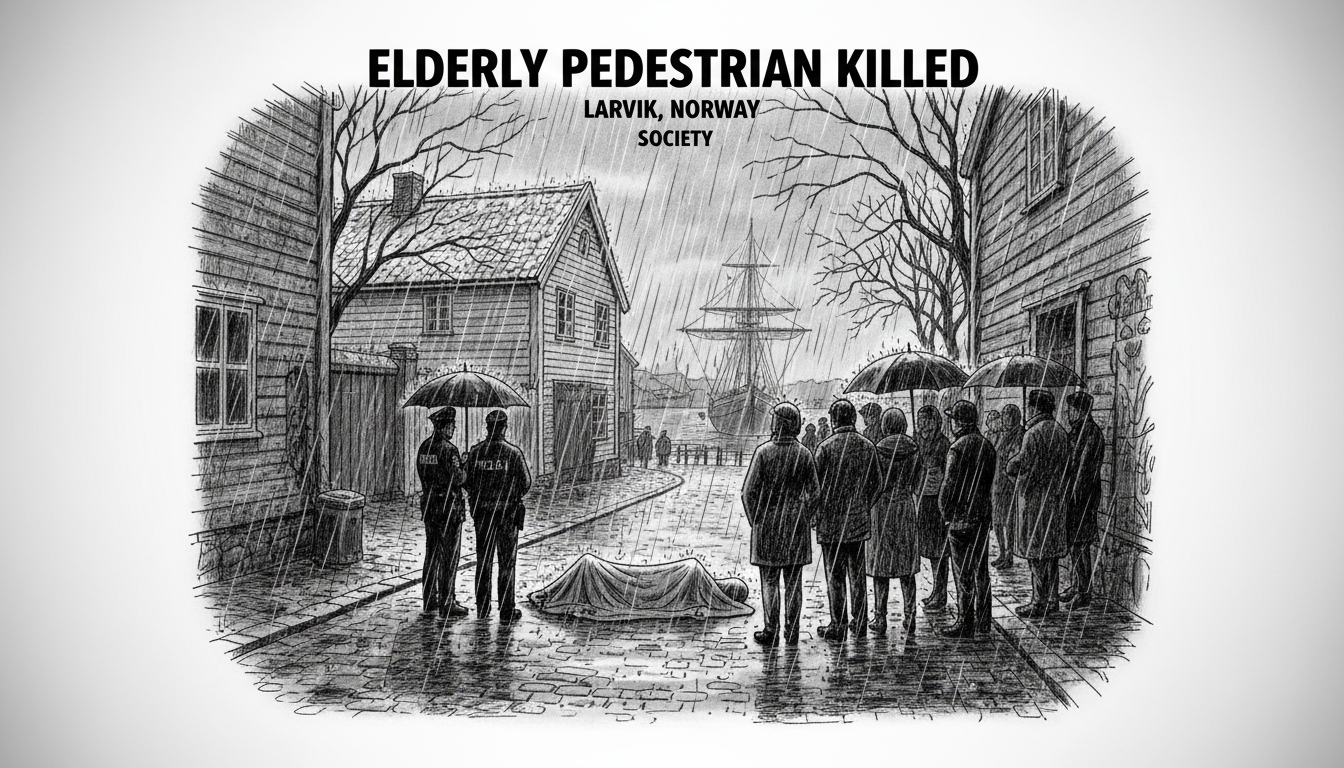
Norway's roads witnessed another tragedy Tuesday afternoon when a man in his 70s was struck and killed by a passenger car in Larvik. The fatal collision occurred in the Tjodalyng area, ending a life and sending shockwaves through the local community. Emergency personnel performed extensive resuscitation efforts at the scene, but were ultimately forced to declare the man deceased. The police have now completed the formal identification process and notified the next of kin.
A Quiet Afternoon Turns Tragic
The sequence of events leading to the fatal impact on a Larvik street remains under police investigation. Operational leader Jan Tore Gregersen confirmed the victim was a resident of Tjodalyng. The identification process took over 24 hours, a standard but painstaking procedure to ensure absolute accuracy before informing relatives. Local authorities have not released details regarding the driver or potential contributing factors, stating the investigation is ongoing.
This incident immediately refocuses attention on the persistent vulnerability of pedestrians within Norway's transport ecosystem. Despite the nation's global reputation for safe infrastructure, individual tragedies underscore a harsh reality. Every statistic represents a profound personal loss for families and communities.
Norway's Road Safety Record in Focus
Norway consistently ranks among the world's safest countries for road travel. Preliminary figures from 2022 recorded 116 traffic fatalities across the entire nation. This number, while low by international standards, is not an abstract figure for the families of those 116 individuals. Each death triggers a detailed investigation by authorities seeking to understand causation and prevent recurrence.
Pedestrian safety forms a critical component of Norway's Vision Zero policy, which aims to eliminate all serious road injuries and fatalities. Urban planning in cities like Oslo increasingly prioritizes pedestrian zones, reduced speed limits, and clearer crossings. Yet accidents in smaller towns and on local roads, like the one in Larvik, present ongoing challenges.
‘Every fatal accident is one too many,’ stated a senior advisor from the Norwegian Public Roads Administration last year. ‘Our work on speed management, visibility, and protective infrastructure for vulnerable road users must continue relentlessly.’
The Human Element Behind the Statistics
The death of the septuagenarian in Larvik highlights the specific risks faced by older pedestrians. Reaction times, mobility, and sensory perception can change with age, making thoroughfares more dangerous. This does not assign blame but acknowledges a reality that informs safety campaigns. Norwegian authorities often run initiatives focusing on driver awareness in residential zones and areas with high pedestrian activity.
Community reaction in Larvik has been one of somber reflection. Such incidents in closely-knit communities resonate deeply, reminding residents of the fragility of life during ordinary routines. The psychological impact on the driver involved, witnesses, and first responders is also a significant, often overlooked, consequence of traffic trauma.
Ambulance personnel who performed the unsuccessful heart and lung resuscitation at the scene face these realities daily. Their efforts, though unable to change Tuesday's outcome, represent the frontline response that defines emergency medicine.
Examining the Systemic Safeguards
Road safety experts point to a multi-layered approach for prevention. ‘It’s seldom one single factor,’ explains a traffic safety researcher at the Institute of Transport Economics. ‘We look at the interplay between vehicle speed, road design, lighting conditions, and the behavior of all road users. The goal of an investigation is to piece this together to find where the system failed.’
In Norway, such investigations can lead to tangible changes: adjusted speed limits, new traffic calming measures like speed bumps or raised crossings, and improved street lighting. Municipalities review accident blackspots and allocate budgets for physical improvements. The junction or street where Tuesday's fatality occurred will likely undergo renewed scrutiny by Larvik's municipal engineers.
National police also conduct seasonal enforcement campaigns targeting speeding and inattention, particularly near schools and residential areas. The underlying philosophy is that human error is inevitable; the transportation system must be designed to forgive those errors and prevent lethal outcomes.
A Look Ahead: Grief and Policy
The immediate aftermath of such an event is dominated by personal grief. The family of the deceased now begins the difficult process of mourning, their private loss marked by a public accident report. The community's role in offering support is paramount in the weeks to come.
On a policy level, this fatality contributes to the annual data that shapes national and local strategy. Each tragic event adds urgency to the Vision Zero mission. It reinforces the need for continuous investment in safer road designs and persistent public education.
Will Norway's relentless focus on incremental safety improvements be enough to prevent the next Larvik? That is the unanswerable question driving engineers, policymakers, and safety advocates. The only acceptable target, they reiterate, is zero. For the man in his seventies from Tjodalyng, that effort comes too late. His death serves as a stark, sobering reminder of the work that remains.