
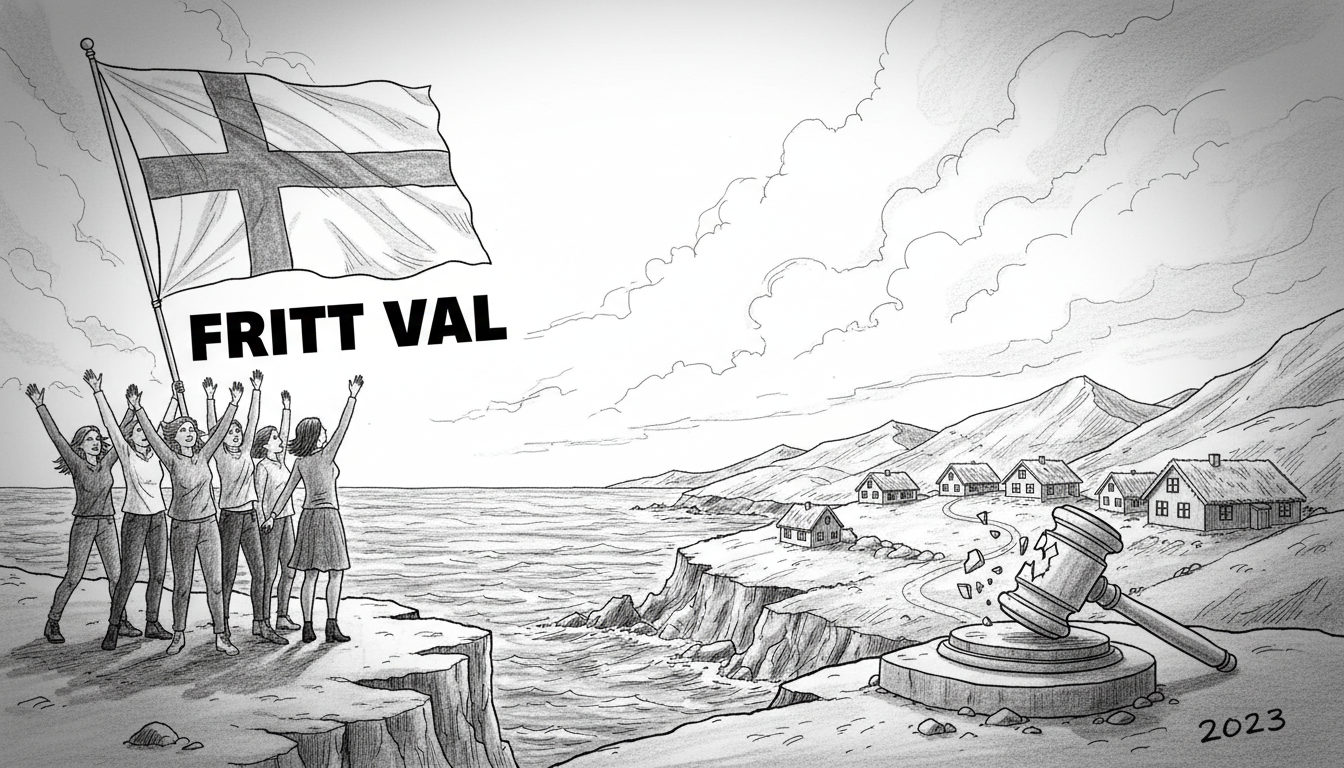
The Faroe Islands have rewritten their social contract after nearly seventy years. Women there can now access abortion services under a new, more liberal law. This change marks a profound shift for the North Atlantic archipelago, which had maintained one of Europe's most restrictive abortion frameworks. The local advocacy group Fritt Val celebrated the victory following a long campaign. Their members expressed relief and joy at the legislative turnaround. This development represents more than a legal adjustment. It signals a cultural evolution within the Danish realm, touching on deep questions of autonomy and healthcare access.
For almost seven decades, abortion in the Faroe Islands was permitted only in exceptional circumstances. These included severe risk to the mother's life or health. The law also considered cases of rape or severe fetal impairment. This restrictive approach stood in stark contrast to policies in mainland Denmark. The Danish welfare system generally provides broad access to reproductive healthcare. The disparity created a complex situation for women in the self-governing territory. Many previously had to travel to Denmark for procedures, adding logistical and financial burdens. The change aligns the islands more closely with Nordic norms on bodily autonomy.
The reform's passage reflects shifting public attitudes and persistent advocacy. Grassroots organizations worked for years to highlight the practical and ethical issues with the old law. They argued that restrictive policies disproportionately affected vulnerable women. The debate involved discussions about religion, societal values, and women's rights. The Faroese parliament, the Løgting, ultimately voted for the change. This decision connects to broader conversations about integration and social policy within the Kingdom of Denmark. It shows how regional self-rule interacts with evolving human rights standards.
From a Danish society news perspective, this is a landmark event. It demonstrates how social policies can diverge and then reconverge within the kingdom. The Copenhagen integration model often focuses on newcomers, but internal regional differences also matter. This policy shift will likely influence discussions in other Nordic regions with unique legal traditions. It raises questions about how local values and universal rights are balanced. The practical implementation will now fall to local health authorities and social centers. They must ensure accessible and non-stigmatizing services for all women who need them.
The move carries significant implications for the Danish welfare system's reach. It tests how core services are guaranteed across all parts of the realm. Experts note that healthcare access is a cornerstone of social integration. When services differ drastically between regions, it can create a sense of inequality. The reform may also impact Denmark immigration policy discussions indirectly. It sets a precedent for aligning local laws with broader European human rights principles. The real test will be in the rollout. Ensuring that every woman, regardless of background or location, has equal access to care is the next challenge. This is not just a legal change but a commitment to a new social standard.