
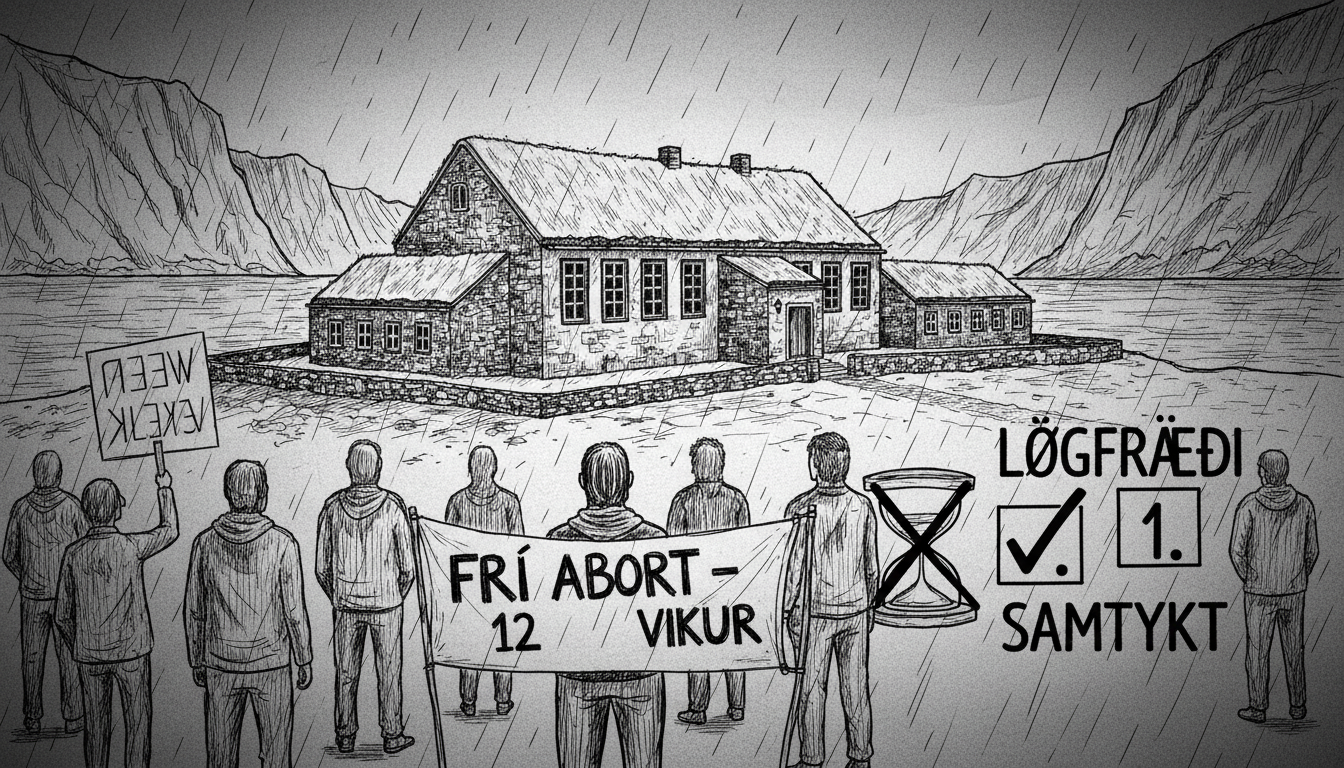
The Faroe Islands parliament, the Lagting, has passed a law granting women free abortion up to the 12th week of pregnancy. The historic vote passed with 17 votes in favor and 16 against. This marks a profound shift for the autonomous Danish territory, where abortion was previously permitted only in special cases. The proposal's sponsor, Hervør Pálsdóttir from the Republican Party, confirmed the result. An almost identical proposal was narrowly defeated last year in a 15-15 deadlock. A simple majority is required for a bill to pass in the Lagting.
This decision represents a major social policy evolution within the Danish realm. The Faroe Islands operate with extensive self-governance, including control over health and social affairs. The new law aligns the islands' policy more closely with Denmark's own abortion legislation, which has allowed abortion on request up to the 12th week for decades. The change reflects ongoing debates about women's rights, healthcare access, and cultural values in Nordic societies. It also highlights the complex relationship between Copenhagen and its autonomous regions, where local social policy can diverge significantly from mainland norms.
For international observers, this vote underscores the nuanced nature of the Danish welfare system. While Denmark is often seen as a monolithic bloc of progressive policies, its constituent parts can chart independent courses. The Faroese debate centered on deeply held religious beliefs and traditional values, which have historically shaped a more restrictive approach. The shift suggests a gradual societal change, possibly influenced by increased connectivity and dialogue with broader Nordic and European norms. The tight margin of victory indicates that this remains a deeply divisive issue within Faroese society.
The policy change has immediate practical implications. Pregnant individuals in the Faroe Islands will no longer need to demonstrate specific medical or social grounds to access abortion services within the first trimester. This reduces bureaucratic hurdles and potential stigma. Healthcare providers will now operate under a clear legal framework for early-term procedures. The move may also reduce the number of women traveling to Denmark or other countries for abortions, keeping healthcare local. Community leaders and social centers in towns like Tórshavn will likely play a key role in disseminating information about the new rights and available support.
Looking ahead, the implementation will be crucial. Municipalities and health authorities must now ensure services are accessible and that public information is clear. The debate is unlikely to end with this vote, as the narrow split suggests strong opposition persists. This moment is a significant case study in how traditional societies within the Nordic model navigate modern social policy questions. It shows that integration of new norms is not always a smooth, top-down process but can be a contested, local struggle with global resonance.