
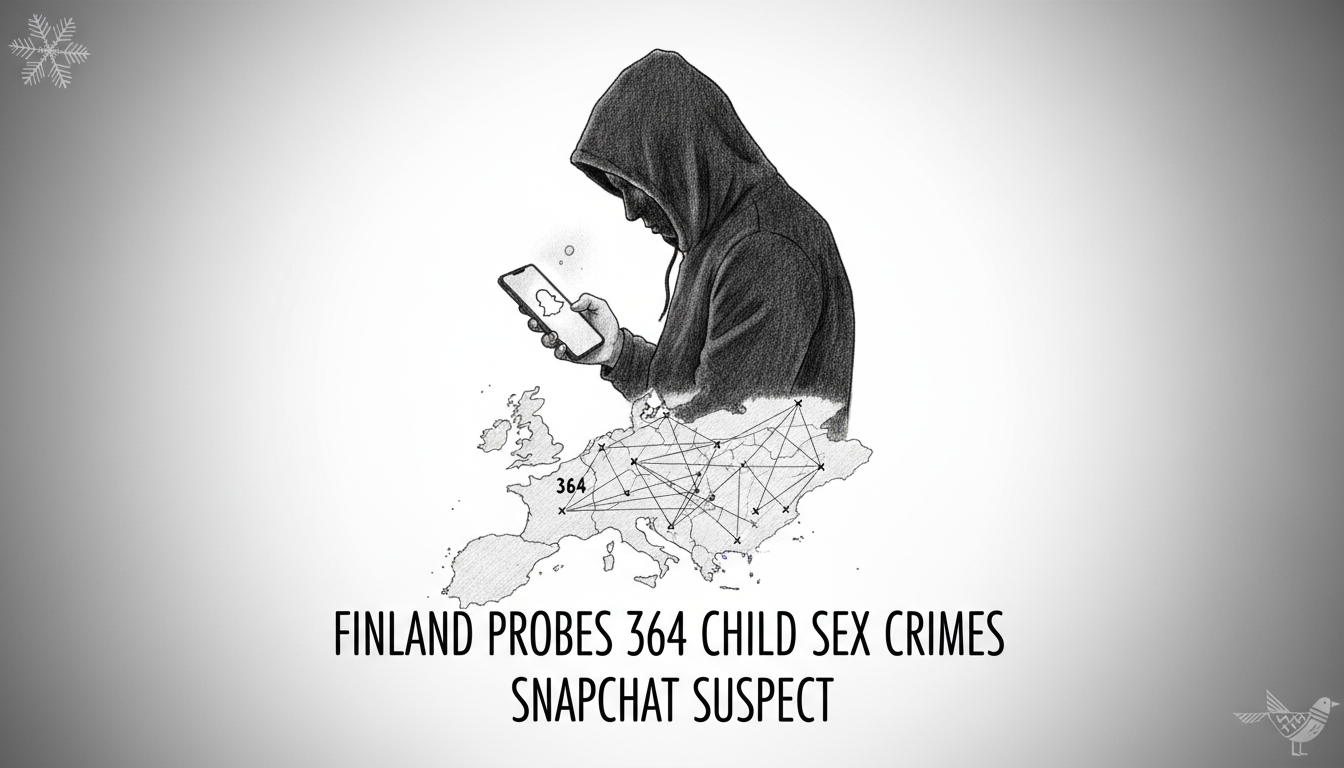
Finland's Central Finland Police Department is finalizing a pre-trial investigation into a 27-year-old man suspected of nearly 400 online sex crimes against children. The suspect allegedly contacted 364 victims, aged 9 to 15, across Finland via Snapchat between 2019 and 2022, soliciting sexually explicit material. The case, involving 265 counts of aggravated child sexual abuse and 98 counts of child sexual abuse, represents one of the most extensive online child exploitation investigations in Finnish history.
Police identified the suspect in late 2022 during another investigation, discovering hundreds of thousands of files on his mobile phone. The sheer volume of material, containing videos and images of unidentified children, required a two-year effort by a dedicated police unit to identify victims. "The identification process lasted about two years, and pre-trial investigations have been completed for 364 children," authorities stated, noting that hundreds more children in the files remain unidentified.
A Digital Hunting Ground
The investigation reveals a disturbing pattern of predatory behavior conducted entirely through a popular social media platform. The suspect, operating from within Finland, used Snapchat to befriend children before coercing them into producing and sending sexually explicit images and videos. He requested children to film or photograph themselves partially clothed, naked, or engaging in sexual acts like masturbation. Finnish police confirmed the suspect never met the children in person, highlighting the remote, digital nature of these crimes.
This case underscores a grim reality of modern childhood, where predators exploit the perceived privacy and ephemeral nature of certain messaging apps. Snapchat's features, which can make messages disappear, are often mistakenly seen by young users as offering complete safety. The platform has become a focal point for law enforcement agencies globally due to its use in child exploitation cases.
The Monumental Task of Investigation
Led by the Pirkanmaa region's child crime investigation team, the probe faced unprecedented logistical challenges. The primary hurdle was identifying victims from a digital cache of "hundreds of thousands of files." Detectives painstakingly worked to trace digital footprints back to real children scattered across the Finnish landscape, from Helsinki to Lapland. Each identified child and their guardians were interviewed, with victims provided a support person and access to crisis counseling services.
Despite the severity of the allegations, the suspect was not held in remand detention during the investigation. Finnish authorities stated there were no legal grounds under the Coercive Measures Act to detain him pre-trial. This aspect may draw public scrutiny as the case proceeds to the prosecutor's office for consideration of charges by year's end. The decision reflects Finland's strict legal standards for pre-trial detention, which require a demonstrated risk of flight or continued criminal activity.
A Rising Tide of Online Exploitation
This massive case is not an isolated incident but part of a sharp upward trend in Finland. Reports of online child sexual exploitation have increased significantly in recent years, mirroring a global crisis facilitated by digital connectivity. The National Bureau of Investigation (NBI) has repeatedly warned about the escalating scale of such crimes, where a single offender can target hundreds of victims without leaving their home.
Finnish law enforcement has responded by boosting specialist units and international cooperation. Finland participates actively in EUROPOL's efforts to combat online child sexual abuse and has strengthened its own legislative framework. However, cases like this demonstrate the overwhelming scale investigators face. The anonymity tools and global reach of the internet provide cover for predators, while the psychological distance of a screen may embolden them to commit acts they might not contemplate in person.
The Legal Framework and Next Steps
The case will soon move from the police to a prosecutor, who will decide on formal charges. The distinction in the suspected crimes—265 counts of aggravated child sexual abuse versus 98 counts of the non-aggravated offense—is legally significant. Aggravated charges in Finland typically involve circumstances that make the crime particularly serious, such as the victim's young age, the use of violence or coercion, or the systematic nature of the abuse. The scale and methodology alleged here likely form the basis for the aggravated allegations.
If prosecuted and convicted, the case will test Finland's sentencing guidelines for digital-era crimes. While Finnish sentences for sexual offenses against children are generally lower than in some other jurisdictions, the sheer volume of victims in a single case is unprecedented. The court will grapple with how to weigh 364 separate crimes committed through a screen.
Protecting Children in a Connected World
Beyond the legal proceedings, the case forces a national conversation about child safety online. Experts consistently stress that parental awareness and open communication are the first lines of defense. "Education about online risks is not a one-time talk but an ongoing dialogue," one child safety advocate noted, emphasizing that children must understand that online 'friends' can be dangerous strangers.
Finnish schools incorporate digital literacy into their curricula, but the evolving tactics of predators demand constant vigilance. Law enforcement urges parents to engage with their children's online worlds, understand the apps they use, and set clear boundaries. They also encourage reporting suspicious behavior immediately. For the 364 identified victims and their families, the aftermath involves long-term support. The trauma of online sexual exploitation can be profound, with feelings of shame, fear, and violation persisting long after the digital interaction ends.
The completion of this pre-trial investigation marks the end of one phase and the start of another. For the Finnish police, it represents a massive, resource-intensive effort to deliver some measure of justice. For society, it is a stark warning about the dark realities lurking in the devices we hand to our children. As the case heads to the prosecutor, a nation watches, reminded that the most serious threats can now enter a child's life not through a stranger's car window, but through the smartphone in their pocket.