
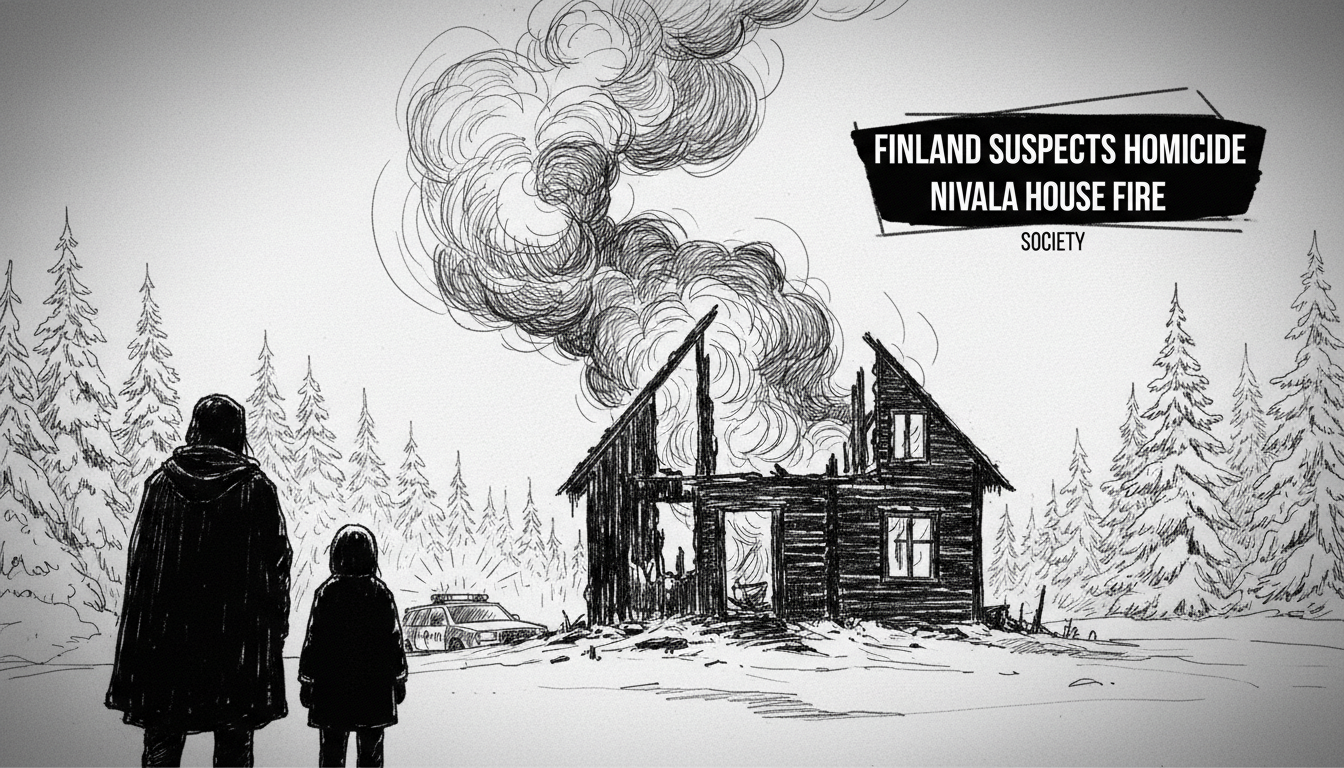
Finland’s typically low homicide rate, averaging 1.2 incidents per 100,000 people, has been jarred by a deadly fire in a small northern town. A residential building in Nivala was engulfed in flames last Friday afternoon, resulting in one fatality. By Sunday, the Oulu Police Department had shifted its investigation, arresting a man born in the 1960s on suspicion of manslaughter after determining there was cause to suspect a homicide.
From Fire Scene to Crime Scene
Emergency services arrived to find the structure already fully ablaze. The intensity of the fire complicated initial efforts, but a forensic examination over the weekend revealed evidence prompting the homicide inquiry. Police have not released the identities of the deceased or the suspect, nor the potential motive, citing the ongoing preliminary investigation. The arrest indicates investigators believe they have gathered sufficient cause to detain a specific individual in connection with the death.
‘The police have taken over the investigation and are currently interrogating the suspect,’ a police spokesperson said in a statement. The focus now turns to forensic science to pinpoint the fire's origin and the exact cause of death. This process is standard but critical in suspected arson-murder cases, where establishing intent and method is complex.
A Community in Shock
Nivala, a municipality of roughly 10,000 residents in the North Ostrobothnia region, is a tight-knit community where serious violent crime is rare. Incidents of this nature resonate deeply, disrupting the sense of security common in Finland's smaller towns. Local authorities have offered support services, acknowledging the traumatic impact on the community and those directly involved.
While police maintain a presence, the town grapples with the uncertainty surrounding the tragedy. The transformation of a domestic fire into a potential murder investigation adds a layer of shock, leaving residents awaiting answers from the meticulous judicial process.
The Statistical Context of Finnish Violence
This case stands out against Finland's broader crime landscape. The nation's homicide rate has declined significantly over recent decades, a trend credited to improved social and healthcare policies, as well as effective policing. Each incident undergoes intense scrutiny by the National Bureau of Investigation (KRP) if needed, and by local police forces.
Arson as a weapon in homicide is relatively uncommon in Finland. When it occurs, investigations require extensive expertise to distinguish between accident, intentional destruction of property, and a means of concealing a violent crime. The speed with which police announced the homicide suspicion suggests forensic pathologists or fire experts found clear indicators of foul play during the victim's autopsy or scene analysis.
A Rigorous Investigative Path Ahead
Finnish homicide investigations follow a strict protocol. The preliminary investigation, now underway by the Oulu police, involves evidence collection, technical analysis, and interviews. A key aspect will be determining the fire's point of ignition and whether accelerants were used.
Depending on the findings, the case may be escalated. ‘The threshold for arresting a suspect is high, requiring reasonable suspicion of a crime punishable by imprisonment,’ explains a legal scholar familiar with Finnish procedure. ‘The detention will be reviewed by a court within days to assess its continuation.’
If sufficient evidence is compiled, the prosecutor will formally charge the suspect, and the case will proceed to trial. This legal pathway is methodical and transparent, but can be lengthy, often taking over a year to reach district court.
Broader Implications for Rural Security
While isolated, this incident prompts reflection on social stability across rural Finland. Analysts often note that despite low overall crime, interpersonal violence in Finland can sometimes be linked to social isolation, substance abuse, or untreated mental health issues—factors not unique to any single nation.
Parliamentary committees have previously allocated funds for social and health services in rural areas to address root causes of conflict. This tragedy may renew discussions in Helsinki about the adequacy of those support networks, even as the police investigation remains purely criminal in nature.
There is no indication of broader threat to public safety. The police emphasize this appears to be a targeted incident, not a random act. The investigation remains contained to specific individuals and the circumstances of last Friday's fire.
Awaiting Answers in the North
For now, Nivala waits. The forensic investigation at the fire-ravaged property will continue, piece by piece. The suspect remains in custody, awaiting questioning and the prosecution's next move. The community mourns a lost member under deeply disturbing circumstances.
The case underscores a grim reality: even in nations with strong social fabrics and low crime statistics, violent tragedy can strike. The Finnish system's response, now under way, will be measured, thorough, and bound by the rule of law. Its findings will ultimately provide the clarity Nivala desperately needs. The question hanging over the town is not just 'what happened?' but 'why?'—an answer that may be the hardest to uncover.