
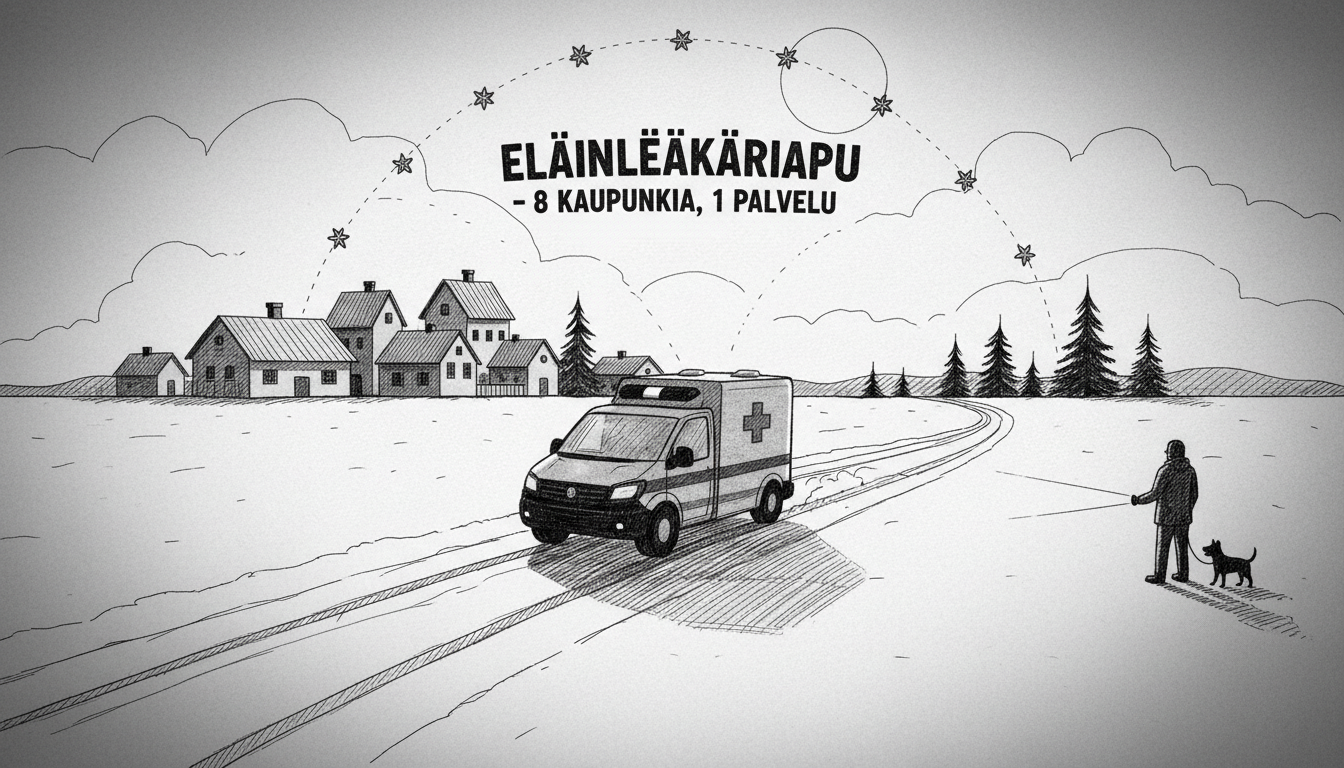
Finland's rural veterinary emergency network is consolidating, leaving eight municipalities in northern Central Finland to rely on a single on-call veterinarian starting this January. This significant restructuring merges two previous service zones and introduces a new, centralized phone number for large animal emergencies. For residents outside these core municipalities, the change also comes with a substantial increase in service costs, sparking debate about accessibility and the future of rural animal healthcare.
The newly formed joint emergency district spans a vast and sparsely populated area. It includes the northern towns of Pihtipudas, Viitasaari, and Kinnula, joined with the southern municipalities of Kivijärvi, Kannonkoski, Karstula, Kyyjärvi, and Saarijärvi. The administrative body behind the change, Pohjoisen Keski-Suomen ympäristöpalvelut, which oversees municipal vet services, formally joined the broader Central Finland regional emergency agreement at the start of the year. This integration means the on-duty vet could, in exceptional circumstances, be dispatched from elsewhere in the Central Finland region, not just the local area.
A Centralized System and Its Immediate Costs
The most immediate change for livestock farmers is a new, single point of contact. The dedicated emergency number for large animals is now 0600 14 600. Calls to this line are priced at 2.06 euros per minute, a direct cost transferred to the caller. For pet owners, the emergency service structure for companion animals is tied into this same consolidated on-call system. The fundamental shift is from a more localized model to a district-wide roster, where one professional covers the needs of thousands of animals across hundreds of square kilometers.
This move is not isolated. It reflects a broader national trend where Finnish municipalities, particularly in rural regions, are merging service provisions. The drivers are often financial pressures and chronic professional shortages. Finding veterinarians willing to take on demanding, round-the-clock emergency roles in remote areas has become increasingly difficult. By creating a larger joint district, the aim is to rationalize resources and make the on-call schedule more sustainable for the veterinarians involved.
The Balancing Act: Efficiency Versus Accessibility
Proponents of the consolidation argue it creates a more resilient and predictable service. 'A single, coordinated district prevents situations where a veterinarian in one zone is overwhelmed while a colleague nearby is idle,' explained a representative from a regional agricultural association. 'It standardizes the response protocol and can improve the work-life balance for vets, which is crucial for retention.' The model is designed to ensure that a qualified professional is always available, even if they must travel a greater distance.
However, this potential for increased travel is the core concern for many residents. Farmers in outlying villages now face the prospect of longer wait times during critical emergencies. For a dairy cow experiencing calving complications or acute colic, every minute counts. 'The math is simple,' said one concerned farmer from Kyyjärvi. 'If the only on-call vet is starting their shift from Pihtipudas, and I'm here, that's an extra 45 minutes of travel before they even arrive. For the animal, that can be the difference between life and death.' The anxiety is compounded for those living just outside the official municipal borders, who will now face significantly higher fees for the same service.
The Broader Context of Rural Service Delivery
This veterinary service restructuring is a microcosm of a larger challenge facing Finland: maintaining public services in an aging, sparsely populated countryside. Schools, healthcare clinics, and now veterinary emergency posts are being centralized to ensure their viability. The state and municipalities walk a tightrope between economic efficiency and the constitutional principle of equal service access across the country. For the agricultural sector, reliable veterinary care is not merely a convenience but a cornerstone of animal welfare, food safety, and economic livelihood.
The change in northern Central Finland is being watched closely by other regions. If deemed successful in maintaining service quality while easing staff burdens, similar consolidations are likely to follow elsewhere. Success metrics will include response time data, veterinarian recruitment, and feedback from the farming community. The Finnish Food Authority, which oversees animal health and welfare, generally supports models that guarantee professional coverage, but emphasizes that accessibility must remain a key consideration.
What the Future Holds for Animal Care
The transition to this new model will be closely monitored throughout the winter and spring. The coming months will test the system's practicality, especially during peak calving season or widespread illness outbreaks. Municipal officials have pledged to review the arrangement after its first year of operation. Key questions remain. Will the cost for external residents deter calls until an animal's condition becomes dire? Can a single veterinarian realistically cover the geographic and caseload demands of eight municipalities during a busy weekend?
Ultimately, this consolidation is a pragmatic response to systemic pressures. It highlights the difficult choices rural communities must make to preserve essential services. The hope is that a sustainable emergency roster ensures no call goes unanswered. The fear is that geographic and financial barriers could silently compromise animal welfare. The story of these eight municipalities will serve as a critical case study for the future of rural life in Finland, where the health of animals is inextricably linked to the health of the community itself.