
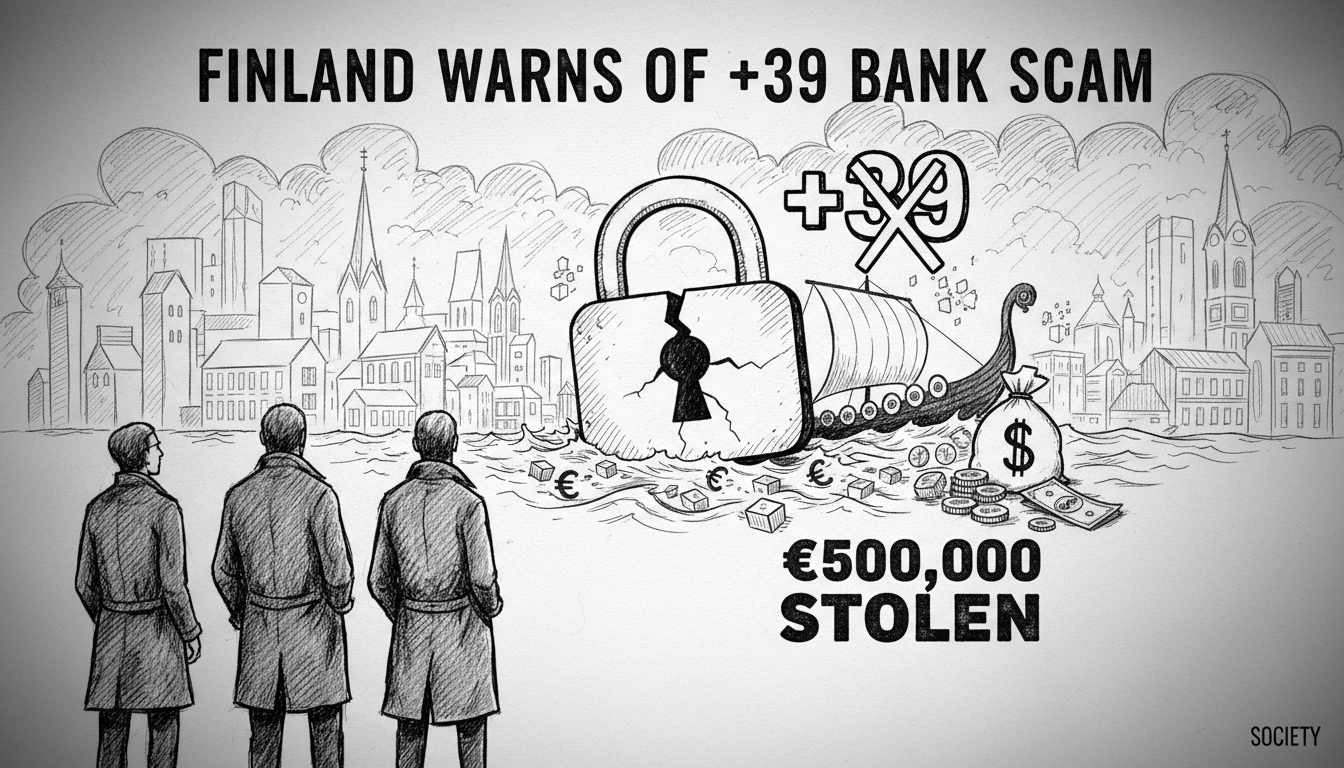
Finland's police are reporting victims have lost hundreds of thousands of euros to a sophisticated phone scam originating from foreign numbers. The National Police Board issued a stark warning after receiving multiple crime reports where fraudsters, posing as bank officials, have convinced Finns to hand over their online banking credentials. Losses already exceed half a million euros in a scheme authorities describe as both aggressive and convincing.
The scam uses a specific and deceptive script. Victims receive an automated call from a number beginning with the Italian country code +39. A recorded message instructs them to press '0' to connect to a customer service agent. A live fraudster then answers, impersonating an employee from a major Finnish bank like Nordea, OP, or Danske Bank.
The imposter informs the target that unauthorized transactions are occurring on their account. To 'secure' the funds or reverse the fake payments, the scammer urgently requests the victim's full online banking login codes. In a state of alarm, many compliant victims provide the information, granting criminals full access to their accounts and life savings.
The Mechanics of Deception
This fraud exploits two powerful human emotions: fear and trust. The initial call creates immediate panic with false claims of fraudulent activity. The scammer then presents themselves as the solution, leveraging the trusted reputation of the victim's own bank. The use of a foreign (+39) number is a deliberate tactic. It bypasses Finnish spam filters and adds a layer of plausible legitimacy, as banks sometimes use international call centers.
Once credentials are obtained, the criminals move with alarming speed. They log into the victim's account and initiate large transfers to accounts they control, often abroad. By the time the victim realizes the mistake, the money is usually irrecoverable. The police emphasize that no legitimate bank employee will ever ask a customer for their full login credentials or one-time passcodes over the phone.
A Persistent Threat in a Digital Society
Banking fraud is not new to Finland, but the methods grow more targeted. The country's high level of digital banking adoption and general trust in institutions makes it a fertile ground for social engineering attacks. Scammers research their targets, sometimes using data leaks to personalize their approach. This particular +39 scam represents an escalation in both boldness and technical execution.
Authorities note these criminal operations are often run by organized groups outside Finland's jurisdiction. The calls are made through internet-based phone systems (VoIP), making tracing difficult. The funds are quickly funneled through multiple accounts across borders, complicating recovery efforts for Finnish police and financial institutions.
Expert Analysis: Why These Scams Work
Cybersecurity experts point to the scam's psychological sophistication. "It's a classic pressure play," explains Marko Tikkanen, a fraud prevention specialist consulted for this article. "The scammer creates a crisis, then immediately offers to resolve it. This short-circuits logical thinking. The victim's primary goal becomes stopping the alleged theft, not verifying the caller's identity."
Tikkanen stresses that the technological aspect is secondary. "The tool is just a phone. The real vulnerability is the human instinct to trust and to act quickly under threat. These groups use scripts refined over thousands of calls to sound utterly convincing." He adds that the use of a brief automated recording before a 'live' agent makes the call feel more authentic, mimicking real customer service lines.
From an EU perspective, this cross-border fraud highlights the challenges of policing digital crime. While Europol facilitates cooperation, differences in national laws and banking regulations can hinder swift action. The scam's use of Italian-number spoofing demonstrates how criminals exploit the EU's open telecommunications landscape for illicit gain.
The Official Response and Public Guidance
The National Police Board has issued clear public guidance. Their first rule: hang up immediately if you receive such a call. Do not press any buttons. Their second instruction: never, under any circumstances, give your online banking codes, PINs, or passcards to anyone who calls you. If you are worried, end the call and contact your bank directly using the official number from their website or your bank card.
Banks themselves are reinforcing this message through customer alerts. They are reminding clients that their security departments never operate in this manner. Financial institutions are also enhancing transaction monitoring systems to flag and block suspicious overseas transfers initiated shortly after unusual login activity.
However, enforcement remains tough. The Eduskunta's Finance Committee has discussed strengthening legal tools for asset recovery in international fraud cases. Yet, legislative changes are slow, leaving prevention as the most effective weapon.
Protecting Yourself: Practical Steps
For the public, vigilance is the only absolute defense. Beyond hanging up on suspicious calls, citizens should enable all available security features in their online banking. This includes transaction notifications for every payment and setting daily transfer limits. Using strong, unique passwords for banking sites is essential.
Discussing these scams with older family members is crucial, as they are often specifically targeted. The simple act of sharing this police warning can build crucial awareness. If you have already given out information, you must contact your bank's fraud line and file a police report without delay. Every minute counts to freeze an account.
Finnish society's strength is its trust, but that is now its vulnerability. As these criminal enterprises refine their approach, the public's best defense is a healthy skepticism. The question remains: in an era of seamless digital convenience, how do we build systems that are both user-friendly and resilient to those who would exploit our trust? The answer will define the security of Finland's financial future.