
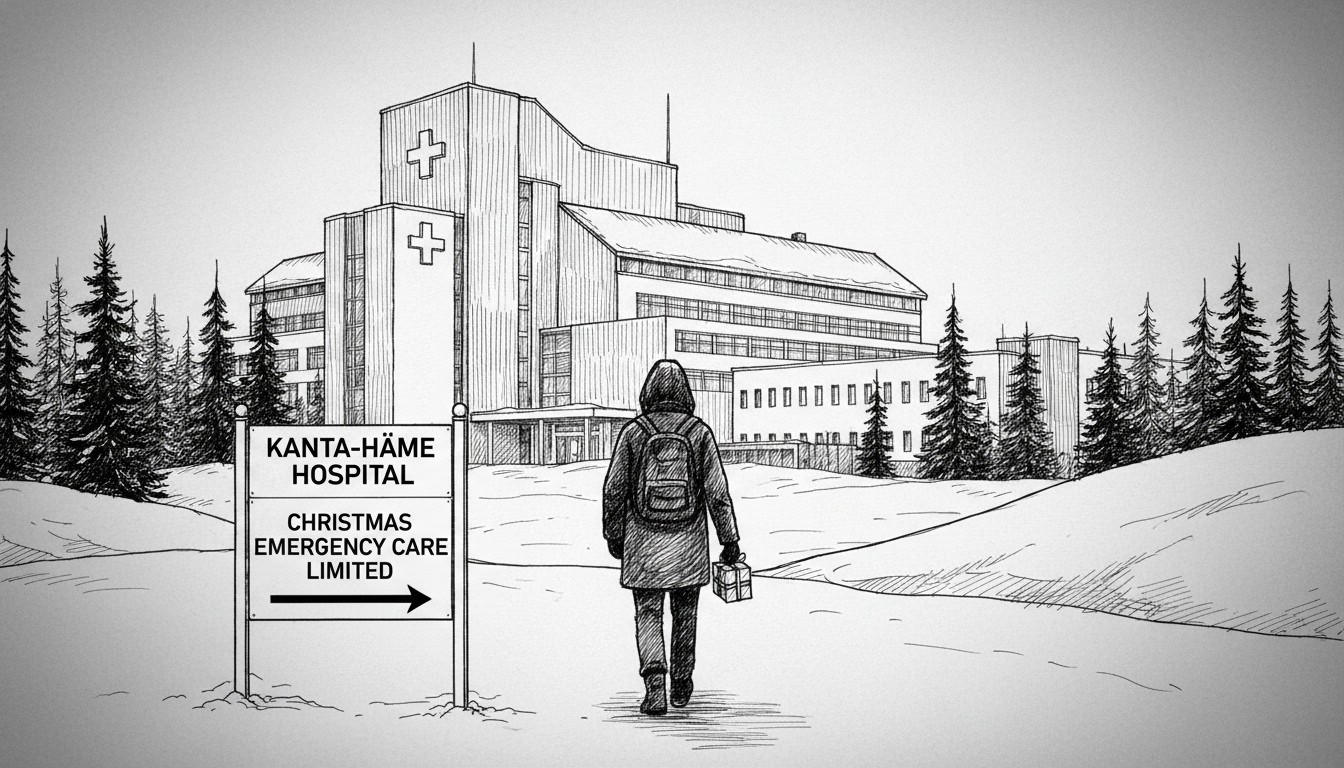
Finland's Kanta-Häme Central Hospital emergency department will treat only the most urgent cases during the Christmas holidays. The Oma Häme wellbeing services county announced the exceptional schedule, warning of high patient volumes and congestion expected during the festive period. This annual reduction in services highlights the persistent strain on Finland's public healthcare system during national holidays, forcing residents to seek alternatives for non-critical care.
A Seasonal Strain on Public Healthcare
From December 24th through the Christmas holidays, residents in the Kanta-Häme region must navigate significantly reduced healthcare access. Non-urgent services at the central hospital's emergency department will be suspended. Patients with less critical conditions are directed to contact their local health stations, use online health services, or wait until regular operations resume after the holiday period. This planned scaling back is a direct response to predictable seasonal pressures, including staff shortages due to holiday leave and a historical spike in patient visits.
"The decision is based on resource management to ensure we can handle genuine life-threatening emergencies," a spokesperson for Oma Häme said in a statement. "Our capacity is stretched thin during holidays, and we must prioritize those with the most acute needs." The move is not unprecedented but underscores a recurring challenge within Finland's decentralized healthcare model, now managed by 21 wellbeing services counties like Oma Häme.
Navigating the New Wellbeing Services County System
This Christmas marks the second holiday season under Finland's reformed social and healthcare structure. Since January 2023, responsibility has shifted from municipalities to these new regional entities. Oma Häme, the authority for the Kanta-Häme region, now faces the operational test of managing peak demand periods. The centralization aims to improve efficiency and equity, but holiday closures reveal how systemic vulnerabilities persist despite structural changes.
Experts point out that such service reductions are a pragmatic, if unfortunate, reality. "Holidays create a perfect storm: fewer staff, closed primary care centers, and people delaying health concerns until family gatherings," explains Dr. Liisa Aalto, a public health policy researcher at the University of Helsinki. "The system is designed for normal throughput. When you combine increased demand—often for non-urgent issues like minor infections or aches—with reduced staffing, emergency departments become bottlenecks. Limiting their scope to true emergencies is a triage necessity."
Public Guidance and Alternative Pathways
Oma Häme has actively publicized guidance for residents. The public is urged to use the 116117 number for non-urgent medical advice and to access digital health services through the Omaolo portal or their local health station's online booking system. For true emergencies, such as chest pain, severe shortness of breath, stroke symptoms, or major trauma, the emergency department at Kanta-Häme Central Hospital remains the correct destination. The key message from officials is public discernment: evaluating the actual urgency of a medical problem before traveling to the hospital.
This guidance is critical because congestion in emergency departments can lead to longer wait times for everyone and increase risks for the most severely ill patients. Finnish healthcare professionals have long advocated for a more informed use of emergency services. "A significant portion of holiday visits could be managed by a general practitioner the next day or through a telemedicine consultation," Dr. Aalto notes. "The challenge is cultural and habitual; many still see the hospital ER as the default point of care outside standard office hours."
A Broader Nordic Healthcare Challenge
Finland's situation is not unique in the Nordic region. Similar holiday service reductions occur in Sweden and Norway, where rural and regional hospitals often consolidate emergency services during summer and winter holidays. The common thread is the tension between providing comprehensive, accessible care and managing finite resources, particularly specialized human resources. Nurses and doctors also have the right to holiday leave, making it impossible to maintain full staffing levels.
The Finnish model, with its strong emphasis on public funding and universal access, faces particular scrutiny during these periods. Critics argue that planned reductions in service availability contradict the principle of equal access, disproportionately affecting those without the means or knowledge to navigate alternative care pathways. Proponents counter that it is a responsible and transparent way to ensure system resilience, preventing a complete collapse under holiday pressure.
Looking Beyond the Holiday Season
The annual Christmas service reduction acts as a stress test for the fledgling wellbeing services counties. Their performance during this period will be monitored by central government authorities, including the Ministry of Social Affairs and Health. Success is measured not only by managing critical emergencies but also by how effectively they direct public behavior toward appropriate care channels and communicate schedule changes.
Long-term solutions being discussed include bolstering primary care capacity right before and after major holidays, creating more robust on-call systems for health stations, and expanding the scope and public adoption of digital health services. The goal is to create a more flexible system that can absorb seasonal fluctuations without resorting to significant service restrictions.
For now, residents of Kanta-Häme and other Finnish regions must plan for a healthcare landscape that changes with the calendar. The Christmas lights may twinkle, but the reality for the public health system is one of hard choices and prioritized care. The enduring question for Finnish policymakers is whether this seasonal scaling down is a temporary necessity or a symptom of a system requiring deeper, year-round investment to meet its promised standard of care for all citizens, regardless of the date.