
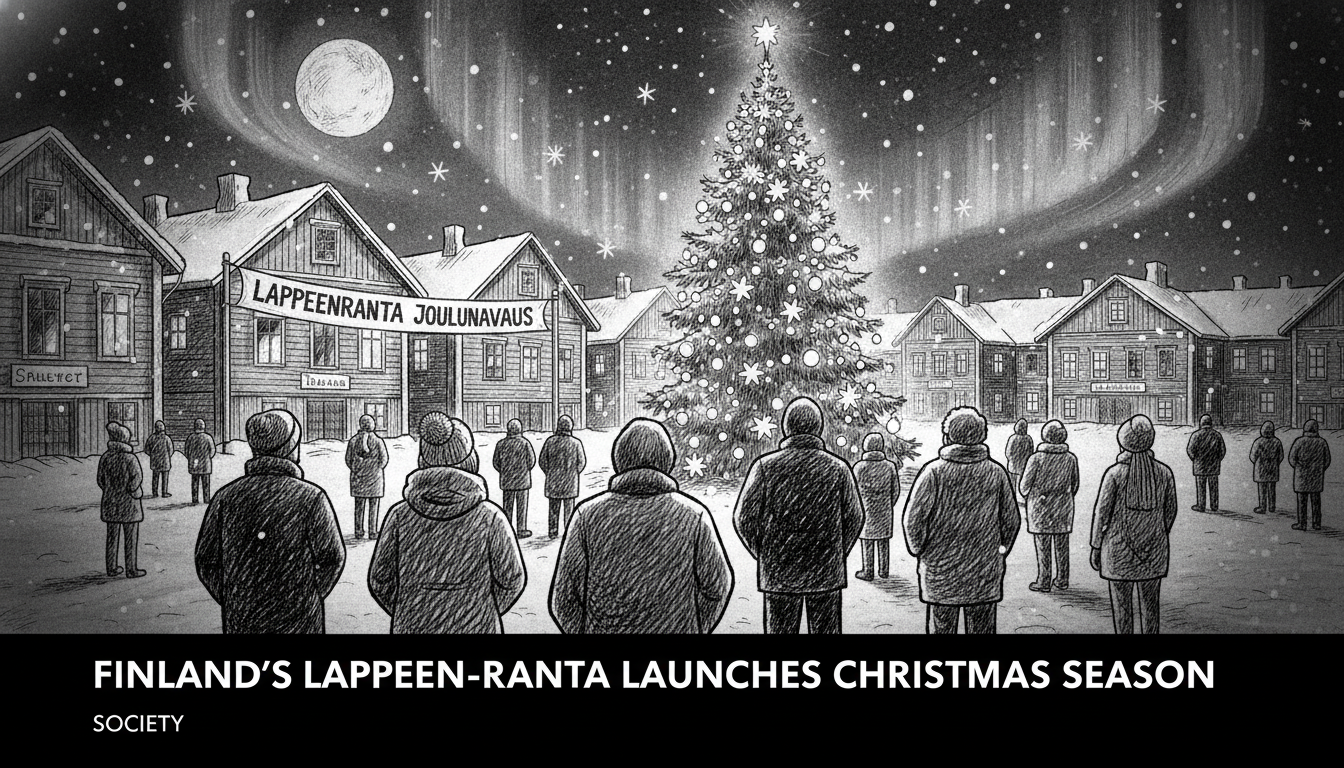
Lappeenranta's historic fortress welcomes over 70 local artisans this weekend for a traditional Christmas market that signals the official start of the festive season in southeastern Finland. The two-day event transforms the 18th-century Lappeenranta Fortress into a bustling hub of handicrafts, seasonal food, and family activities, drawing visitors from across the Saimaa region and beyond. This annual gathering is a cornerstone of local tradition, connecting modern celebrants with centuries of Finnish Yuletide customs while providing vital economic support to small-scale producers.
A Fortress Filled with Festive Spirit
The Lappeenranta Christmas market takes over the cobblestone streets of the fortress, a national landmark that once guarded the border between Sweden and Russia. Vendors set up stalls along Kristiinankatu street and Katariinantori square, offering handmade textiles, ceramics, woodwork, and traditional Christmas decorations. The scent of glögi (mulled wine), gingerbread, and grilled sausages fills the cold December air. For many Finnish families, a visit to this market is an unmissable ritual, combining holiday shopping with a tangible sense of history and community. The setting itself, within the well-preserved fortress walls, adds a layer of cultural depth that distinguishes it from commercial holiday pop-ups.
Local artisan Liisa Keto, a ceramicist attending for the eighth year, explains the market's significance. 'This is where we connect directly with our community,' she says while arranging her hand-painted Saimaa ringed seal ornaments. 'People come here seeking authenticity, gifts made with a story. For us, these two days can represent a substantial part of our annual income.' Her sentiment is echoed by other vendors, who rely on such events to reach customers who value locally produced goods over mass-market imports.
Family Activities and Cultural Performances
Beyond shopping, the market organizers provide a rich program of activities designed primarily for children, ensuring the event serves as a family destination. The classic Finnish Christmas experience includes a meeting with Joulupukki (Santa Claus), pony rides around the fortress grounds, and the chance to explore a fire truck—a perennial favorite. These elements create a multisensory experience that defines the Nordic holiday season. The programming reflects a conscious effort to balance commercial activity with cultural enrichment and simple, old-fashioned fun.
Performances are a key component of both days. On Saturday, audiences can watch 'Tiernapojat,' a traditional Finnish folk play performed by music class students, and a circus show by the Estradi Arts School. Sunday features folk dancers from the Rajan Nuoret group. Additionally, the Lappeenranta Dance Institute presents short performances throughout the weekend. These displays of local talent, often by young people, reinforce the market's role as a platform for cultural transmission. It is where children both watch traditions and participate in them, from performing plays to handing their Christmas wish list to Santa.
The Deep Roots of Finnish Christmas Markets
The concept of the Christmas market, or 'joulumarkkinat,' has deep historical roots across the Nordic region, adapted in Finland to reflect local customs and the harsh beauty of the winter landscape. Dr. Elina Vainio, a cultural historian at the University of Eastern Finland, notes that these markets serve a function far beyond commerce. 'In a dark and cold season, the Christmas market creates a point of warm, communal light,' she explains. 'Historically, they were vital for acquiring special supplies for the holiday. Today, they combat social isolation and reinforce regional identity. In a border city like Lappeenranta, maintaining these vivid traditions is especially poignant.'
The Lappeenranta event is a prime example of this tradition, anchored in a specific and historically significant location. The fortress itself, founded in 1649, has witnessed countless seasonal transitions. Using this space for celebration links contemporary life to the city's long narrative of trade, defense, and community resilience. The market's hours, from 9 a.m. to 3 p.m., are dictated by the limited December daylight, forcing a cozy, focused atmosphere where activity peaks under the subtle glow of midday twilight and artificial lights.
Economic Impact and Community Cohesion
Economically, events like the Lappeenranta Christmas market form a critical support system for the local creative economy. For small-scale food producers, bakers, and craftspeople, direct sales at such markets eliminate intermediary costs and build a loyal customer base. The city benefits from increased visitor traffic, which supports nearby cafes, restaurants, and shops. In regional cities, this annual influx can be a significant yearly boost, encouraging collaborative networks among artisans who often share resources and promotion.
The market also functions as a fundraiser and showcase for local associations and clubs, from sports teams to cultural societies. This interweaving of commerce, civic life, and charity is characteristic of the Finnish model, where such events are seen as collective projects. The atmosphere is one of mutual support; residents understand that by purchasing a handmade candle or a jar of cloudberry jam, they are investing directly in their neighbor's livelihood and the vitality of their city's cultural scene.
A Weekend Ritual in a Borderland City
As a city situated on the shore of Lake Saimaa and just 30 kilometers from the Russian border, Lappeenranta possesses a distinct identity shaped by its geography. The Christmas market, in its familiar fortress, offers a sense of continuity and comfort. It is a pre-Christmas ritual that prepares residents for the more private family celebrations of Christmas Eve. The weekend schedule creates a concentrated burst of festive spirit, a 'super weekend' that locals mark on their calendars year after year.
The success of this model—a compact, tradition-rich, community-oriented market—stands in contrast to larger, more commercialized month-long festivals seen in some European capitals. Its charm lies in its modesty and authenticity. It does not try to be the biggest, but rather aims to be the most meaningful for its community. As daylight fades early over the fortress walls and the last customers depart with their handcrafted treasures, the event leaves behind more than just economic transactions. It reinforces the social fabric, celebrates local skill, and honors a timeless way of marking the winter solstice. In doing so, the Lappeenranta Christmas market offers a blueprint for how communities can preserve warmth and light during the darkest time of the year.