
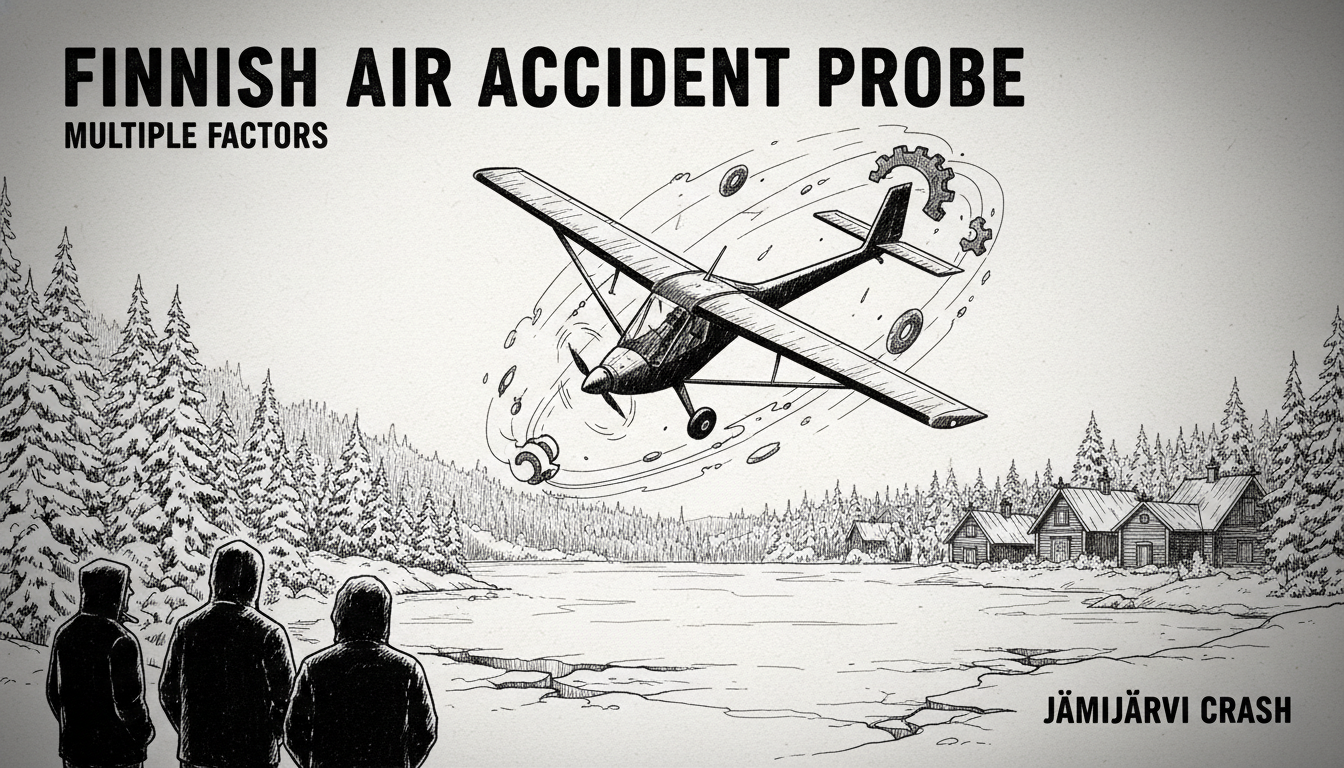
Finnish police have concluded their investigation into a fatal aircraft accident in Jämijärvi. Investigators found no single cause for the July crash that killed one person and seriously injured another.
The accident involved a Pegasus Quik ultralight aircraft. The plane took off from Jämijärvi airfield in western Finland for a short flight lasting about 15 minutes.
Police said the aircraft attempted to return to the airfield with its engine stopped. It was flying at high speed while descending steeply.
Witnesses reported the plane made an extremely steep turn during final approach. The wing tilted to nearly 90 degrees, putting the wing practically vertical.
This type of maneuver significantly increases the risk of rapidly losing altitude or control. The danger becomes particularly acute without engine power.
Investigators consider several factors likely contributed to the accident. The aircraft's engine showed signs of poor condition and may have failed unexpectedly.
The propeller remained intact after impact. This suggests the engine had stopped before the plane crashed into the forest.
The aircraft was also slightly overloaded. An overloaded plane performing steep maneuvers at low altitude without engine power can lead to unrecoverable loss of control.
Investigation leader Detective Superintendent Juho Rinne explained the findings. "The combined effect of these factors and their chain reaction most probably caused the crash," he said in a statement.
Weather conditions were good at the time of the accident. The pilot, a man around 60 years old, died in the crash. His passenger sustained serious injuries.
This investigation highlights how multiple minor issues can combine to create catastrophic outcomes in aviation. Proper maintenance and respecting aircraft limitations remain crucial for flight safety.