
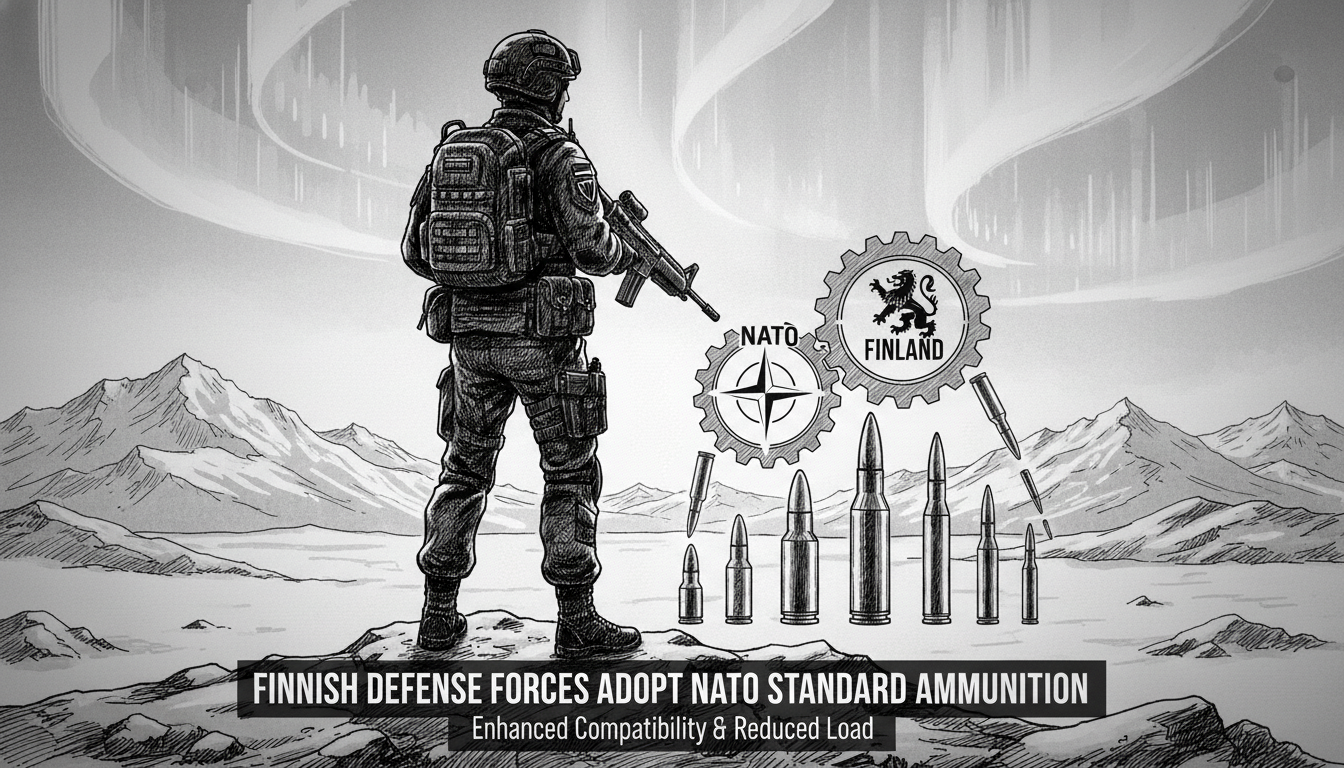
The Finnish military will transition to NATO-standard calibers for its new personal firearms. Officials announced the change today.
This shift improves soldier performance and interoperability with allied forces. It also enhances maintenance reliability.
Caliber refers to a firearm's internal barrel diameter. It determines cartridge size.
Soldiers' assault rifles will now use 5.56x45 mm ammunition. The military states this meets operational requirements in modern threat environments.
Crew-served weapons gain two new calibers: 7.62x51 mm and 12.7x99 mm. The 9x19 mm pistol ammunition remains unchanged as it already meets NATO standards.
The transition will occur gradually as weapons are replaced through the 2030s. Older caliber weapons will remain in service but won't receive further purchases.
Army Operations Chief Brigadier General Sami-Antti Takamaa explained the decision considered multiple factors. Performance requirements, soldier load, and compatibility with allies all influenced the choice.
He noted ammunition availability and domestic production capacity were crucial considerations. The Ukraine conflict demonstrated the importance of sustainable ammunition supplies during prolonged conflicts.
The new assault rifle will be significantly lighter than current models. Current rifle and ammunition weigh 8.9 kilograms. The lighter system could reduce load by up to 3.5 kilograms.
This weight reduction improves soldier mobility and allows carrying more ammunition. Despite being lighter, the new caliber offers better performance.
The faster bullet velocity and flatter trajectory increase hit probability. This proves particularly useful against moving targets or at unknown distances.
In Finnish terrain, most engagements occur within 200 meters. The new ammunition penetrates materials better at these typical combat ranges.
The smaller, lighter ammunition also costs less to produce and requires fewer raw materials. It stores more compactly than current cartridges.
Common caliber with allies enables shared ammunition use during training and emergencies. The update affects assault rifles, machine guns, and precision rifles.
This strategic move strengthens Finland's military integration with NATO partners while modernizing its combat capabilities.
Commentary: The timing aligns with Finland's recent NATO membership, though officials frame it as a practical modernization. The weight reduction directly addresses longstanding concerns about soldier fatigue during extended operations in Finland's challenging terrain.