
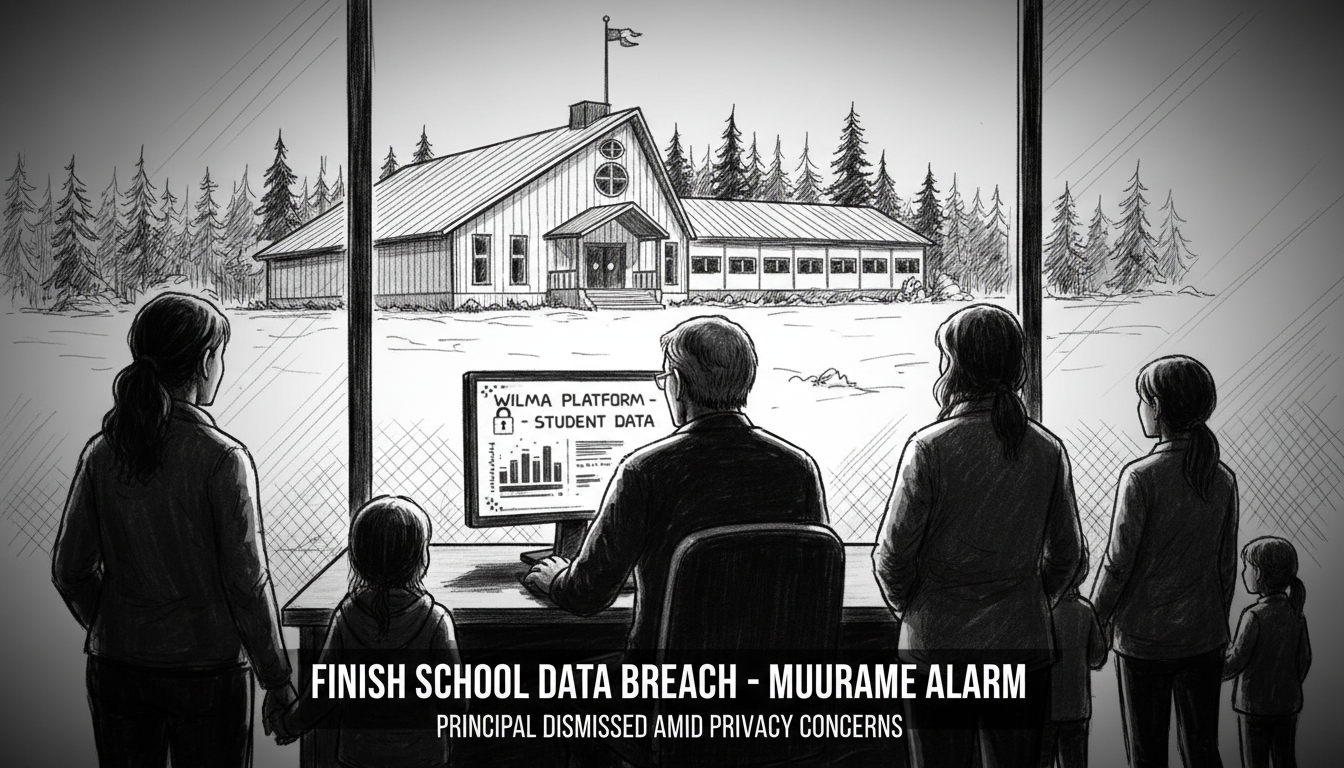
A school principal in the Finnish municipality of Muurame has been dismissed from their position for accessing student records without a proper legal basis. The decision to terminate the principal of Mäkelänmäki School was made by the municipal authority in early December. The official accessed confidential student information within the Wilma digital platform, a system widely used across Finland for school-home communication and managing grades, schedules, and absences. The incident has left parents with significant questions about the reasons behind the data access and the adequacy of the information provided by local officials.
Parents in the community report receiving only sparse details about the breach. One parent, interviewed by local media, stated they were notified via email roughly two weeks prior. The family involved has chosen to remain anonymous to protect the privacy of their underage child. The identity of the child whose data was accessed is known to the reporting journalists. This case highlights the tension between administrative oversight and the strict privacy protections afforded to minors under Finnish and European Union law.
The Wilma platform is integral to the Finnish education system, serving as a primary conduit between teachers and parents. Its data is protected under Finland's stringent data protection laws, which are aligned with the EU's General Data Protection Regulation (GDPR). Unauthorized access by a school official, a person in a position of trust, constitutes a serious breach of professional ethics and legal standards. The principal was dismissed acting in their capacity as a municipal officeholder, a process governed by Finnish public employment law.
This incident raises broader questions about data security protocols within Finnish municipalities and the training provided to educational staff. Finland consistently ranks high in digital readiness, but this event serves as a reminder that systemic trust requires rigorous internal controls. The municipality's handling of the communication with parents will likely be scrutinized, as transparency in such breaches is crucial for maintaining public confidence. Similar past incidents in other Nordic countries have led to reviews of access logs and permission structures within public sector IT systems.
For international observers, this case illustrates the high standard of data privacy expected in Finland. The swift dismissal indicates a low tolerance for violations, especially concerning children's data. The story is not just about a personnel matter but about the operational integrity of Finland's much-admired education infrastructure. The next steps will involve a potential data protection audit and possible reporting to the national data protection ombudsman. The local council must now restore trust while ensuring such a breach does not recur, a challenge facing many administrations in an increasingly digital public sector.