
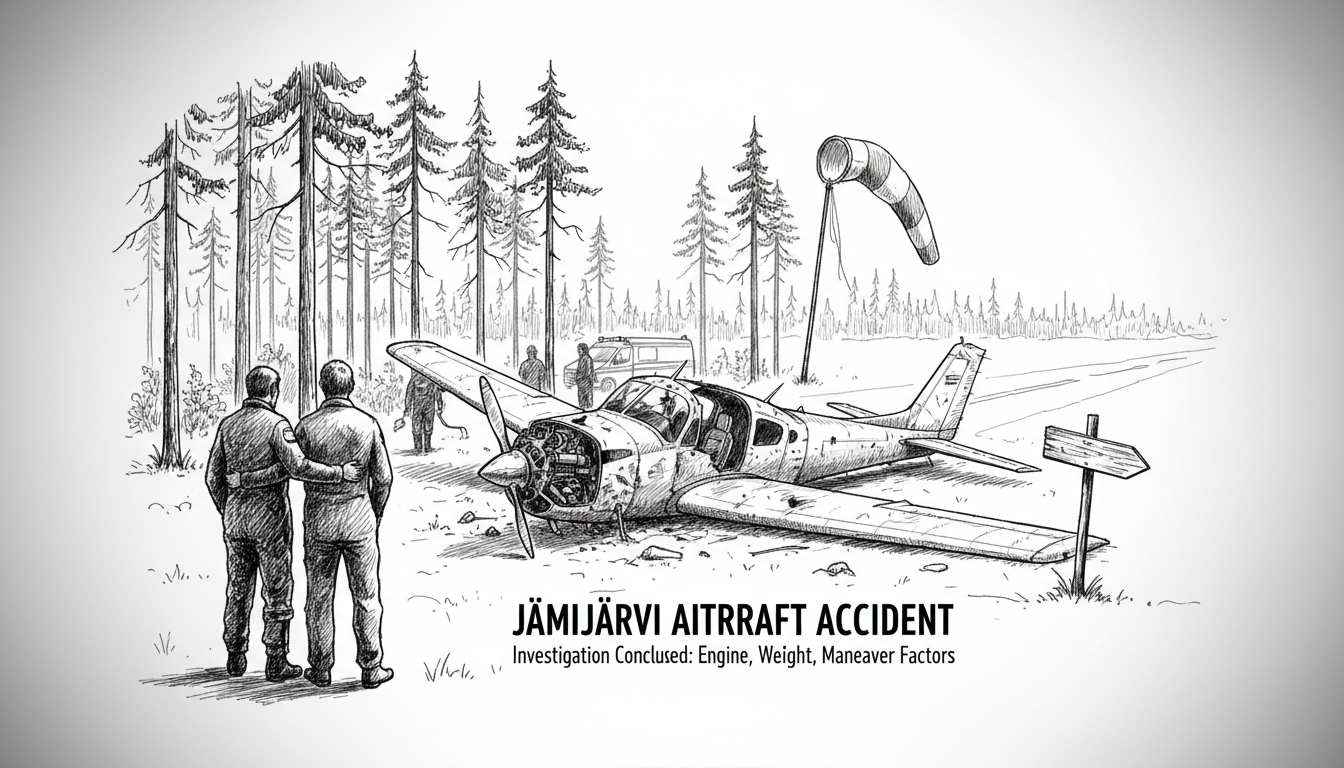
Police in Western Finland have completed their investigation into July's aircraft accident in Jämijärvi. A 62-year-old pilot died when the two-seat light aircraft crashed, while his 75-year-old passenger sustained serious injuries.
The accident likely resulted from multiple factors, according to investigators. The aircraft owner had previously certified the glider as airworthy before its July 19 morning departure.
Investigation leader Juho Rinne stated the motorized glider returned to the airfield after approximately 15 minutes of flight. The aircraft approached at high speed with its engine stopped, making a steep descent toward Jämijärvi Airfield.
During final approach, the glider executed a tight low-altitude turn before drifting sideways from the runway and crashing into forest. The pilot died immediately upon impact.
The aircraft was identified as a Trike-model Pegasus Quik light motorized plane controlled by weight shifting.
Examination revealed critically deteriorated carburetor mounting rubbers and an improperly small fuel intake diameter compared to manual specifications.
The propeller remained intact after ground impact, confirming the engine had stopped before crash. Investigators concluded poor engine condition, malfunction and involuntary shutdown during flight were the most probable contributing causes.
The light aircraft also carried a slightly heavier load than permitted, which may have influenced the accident. Investigators couldn't rule out potential pilot incapacitation during flight.
Witnesses reported the aircraft made an extremely steep, nearly 90-degree bank during final approach, with wings practically vertical.
This sharp steering maneuver may represent another potential partial cause of the accident, officials noted. Weather conditions were clear at the time, and both men aboard were experienced pilots.
This tragic incident highlights how multiple technical and operational factors can combine with devastating consequences in aviation safety.