
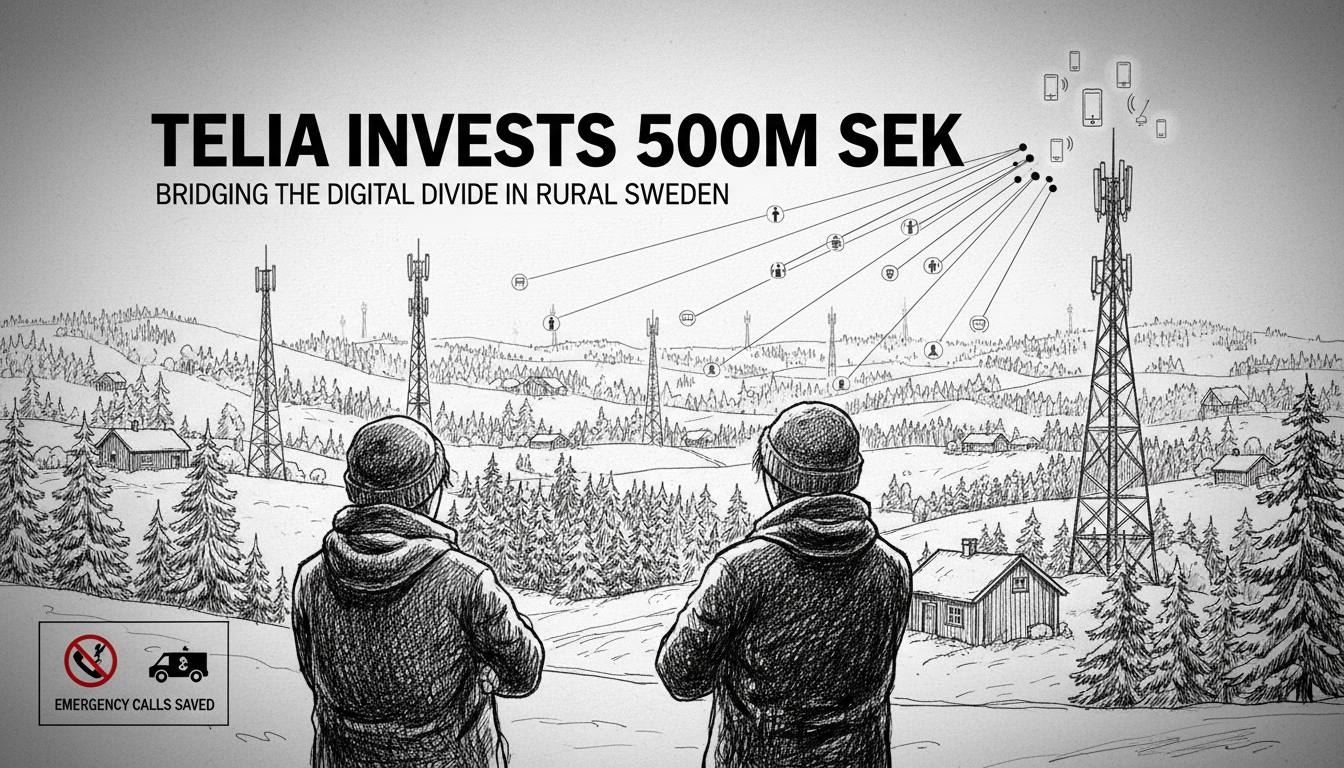
A vast, quiet landscape stretches across northern Sweden. In places like Ammarnäs, a village in Sorsele municipality, the silence can sometimes be a sign of disconnection. For years, residents have grappled with unreliable mobile service, a problem that turned tragic last summer when a man died after relatives could not call an ambulance due to a network failure. This incident underscores a critical gap in Sweden's otherwise advanced digital society.
Now, telecom giant Telia is launching a major infrastructure project to address this. The company plans to build new mobile base stations across at least 17,000 square kilometers. The initiative spans 16 counties and 71 municipalities, with a total investment of half a billion kronor. The work will continue through the end of the decade.
Staffan Åkesson, Telia's technical chief, calls it a societally critical effort. He says it will strengthen and secure the connected everyday life for people in these areas. In Västerbotten County, the focus includes Sorsele, Åsele, Lycksele, and Skellefteå, among others. William Fröding, a press officer for Telia, confirmed Sorsele is a priority area within the county for this investment.
This push for better rural connectivity reflects a broader Swedish society trend. As more people move to cities like Stockholm, Gothenburg, and Malmö, maintaining services in the countryside becomes a persistent challenge. It touches on themes of equality, safety, and the right to a modern life regardless of postcode. The Swedish model often aims to bridge this urban-rural divide through public and private investment.
Yet, questions remain about the specifics. Telia cannot yet confirm if the new investments will directly secure network access in Ammarnäs, where repeated fiber cable cuts have caused outages. Fröding notes that exact mast placements are still in the planning phase. They depend on need and close cooperation with regional authorities. He adds that while more masts strengthen coverage, a damaged fiber cable serving multiple masts would still cause a service disruption.
This honest assessment points to the complex reality of infrastructure. Building towers is one thing, but securing the vulnerable fiber backhaul is another. For international observers, this story is a nuanced look at Sweden beyond the glossy image of Stockholm's tech hubs. It shows a nation grappling with the practical costs of its vast geography and its commitment to a connected society. The success of this investment will be measured not just in bars of signal strength, but in the safety and opportunities it brings to remote communities. It is a test of whether digital inclusion can truly reach every corner of the country.