
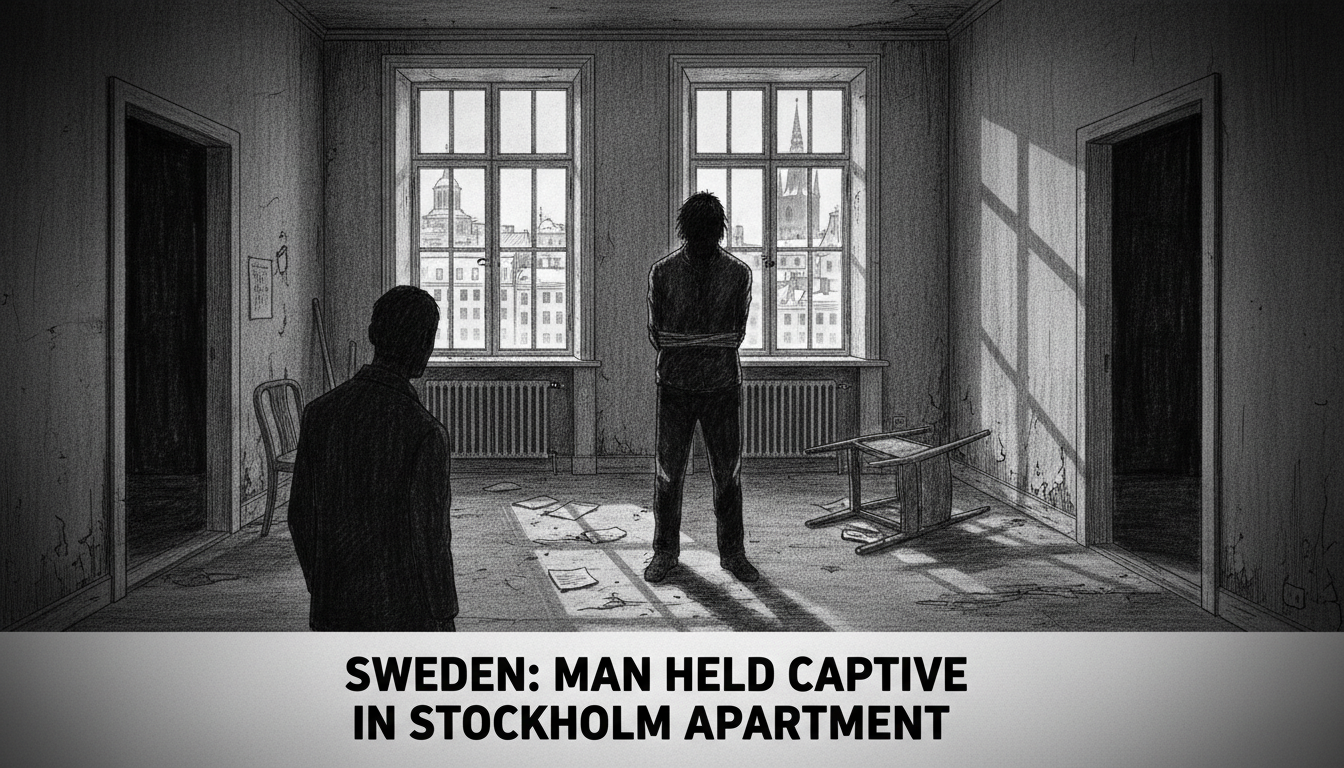
Swedish police discovered a man in his 40s held captive and assaulted in a Stockholm apartment. A 30-year-old man was arrested at the scene and is now suspected of unlawful deprivation of liberty. The case has shocked a city more accustomed to stories of fika and lagom than violent personal confinement.
"The three people know each other," said prosecutor Joel Malmkvist. This detail transforms the story from a random act of violence into a more complex, personal tragedy. It happened behind an ordinary apartment door, in a neighborhood where life typically follows a predictable, peaceful rhythm.
The victim had allegedly been held since at least Saturday. He required hospital treatment for his injuries. The motive remains unclear, though initial information suggests drugs may be involved. "It remains to be seen exactly how," Malmkvist added, emphasizing the ongoing investigation.
A Crime Against Personal Freedom
Unlawful deprivation of liberty, or 'olovligt frihetsberövande', is a serious crime in Sweden. The legal system places a high value on individual autonomy and personal security. This case involves not just an assault, but a fundamental violation of a person's right to move freely. The suspect, already known to police with prior convictions, now faces severe legal consequences. He must be formally charged by Thursday if prosecutors seek to keep him in custody.
Police spent Monday conducting initial interviews and processing the apartment. "We have examined the apartment but are not quite finished with that work, so we are still on site," Malmkvist stated. The forensic work is meticulous, piecing together what happened in those rooms over several days. For neighbors, the police presence is a jarring disruption. It reveals a hidden layer of conflict in a community built on trust and social harmony.
The Stockholm Context: Peace Interrupted
Stockholm is a city defined by its water, its design, and its generally high quality of life. Crime stories here often focus on gang-related violence in specific suburbs or cybercrime. A case of alleged kidnapping and captivity in a private apartment feels different. It speaks to interpersonal conflicts that spiral into extreme violence, hidden from public view. It challenges the image of Swedish society as one where disputes are resolved through dialogue and social systems.
The possible drug connection mentioned by the prosecutor is a recurring theme in similar cases. Experts note that unlawful detention often stems from debts, disputes over deals, or conflicts within circles involved with narcotics. It is rarely a random act. The fact that the individuals knew each other supports this analysis. This was likely a conflict that escalated far beyond any initial disagreement, trapping the victim in a terrifying situation.
Understanding 'Olovligt Frihetsberövande'
In Swedish law, the crime covers a range of actions where a person's freedom is taken away without legal authority. It can be as severe as a classic kidnapping or a situation where someone is prevented from leaving a room or building. The penalty depends on the duration, methods used, and any accompanying violence. The addition of assault charges in this case indicates a particularly severe incident. The victim's need for hospital care underscores the physical brutality involved.
The legal process now moves quickly. The suspect will be formally questioned. Prosecutors will build their case based on forensic evidence, the victim's testimony, and any witness accounts. The priority is ensuring the victim's safety and well-being while securing justice. Cases like this receive significant attention from authorities precisely because they strike at the core of the legal principle of personal liberty.
A Society Grappling with Complex Realities
This incident, while isolated, feeds into broader conversations in Swedish society. There is an ongoing examination of crime, its roots, and how the welfare state addresses deep-seated social problems. The suspect's existing criminal record raises questions about rehabilitation and recidivism. The potential drug angle touches on the nation's struggle with narcotics, which persists despite a reputation for progressive drug policies.
For the average Stockholmer, the news is unsettling. It is a reminder that no society is immune to dark, personal crimes. It happens in the vibrant district of Södermalm, the quiet suburbs of Bromma, or the bustling center of Norrmalm. The Swedish concept of 'trygghet' – a deep sense of security and safety – is momentarily punctured. People lock their doors a little more carefully, wondering about the stories unfolding in adjacent apartments.
The Human Cost Behind the Headlines
Beyond the legal definitions and police statements, there is a human story. A man spent days in fear and pain. He now faces a long physical and psychological recovery. The trauma of captivity leaves deep scars. The relationships between the three individuals are likely shattered, creating ripple effects of pain and distrust through their families and friends.
Sweden has strong support systems for victims of crime, including counseling and legal aid. The victim will need to draw on all these resources. The path from victim to survivor is long. It requires rebuilding a sense of safety that was violently stolen in a place he likely once considered secure.
Looking Ahead: Justice and Reflection
The investigation continues this week. More interviews are planned. The forensic team will complete its work in the apartment, collecting every piece of evidence. The prosecutor will decide on formal charges. The courts will eventually weigh the evidence in a process designed to be transparent and fair.
This case is more than a crime report. It is a stark narrative about conflict, broken trust, and the fragility of personal freedom. It asks uncomfortable questions about what happens when social contracts break down behind closed doors. As Stockholm enjoys the late summer light, this story sits as a somber counterpoint – a reminder that the pursuit of a perfect society is always complicated by human nature itself. Can a system built on trust fully protect against the violence that sometimes simmers beneath the surface? The coming trial may offer some answers, but the deeper unease may linger longer.