
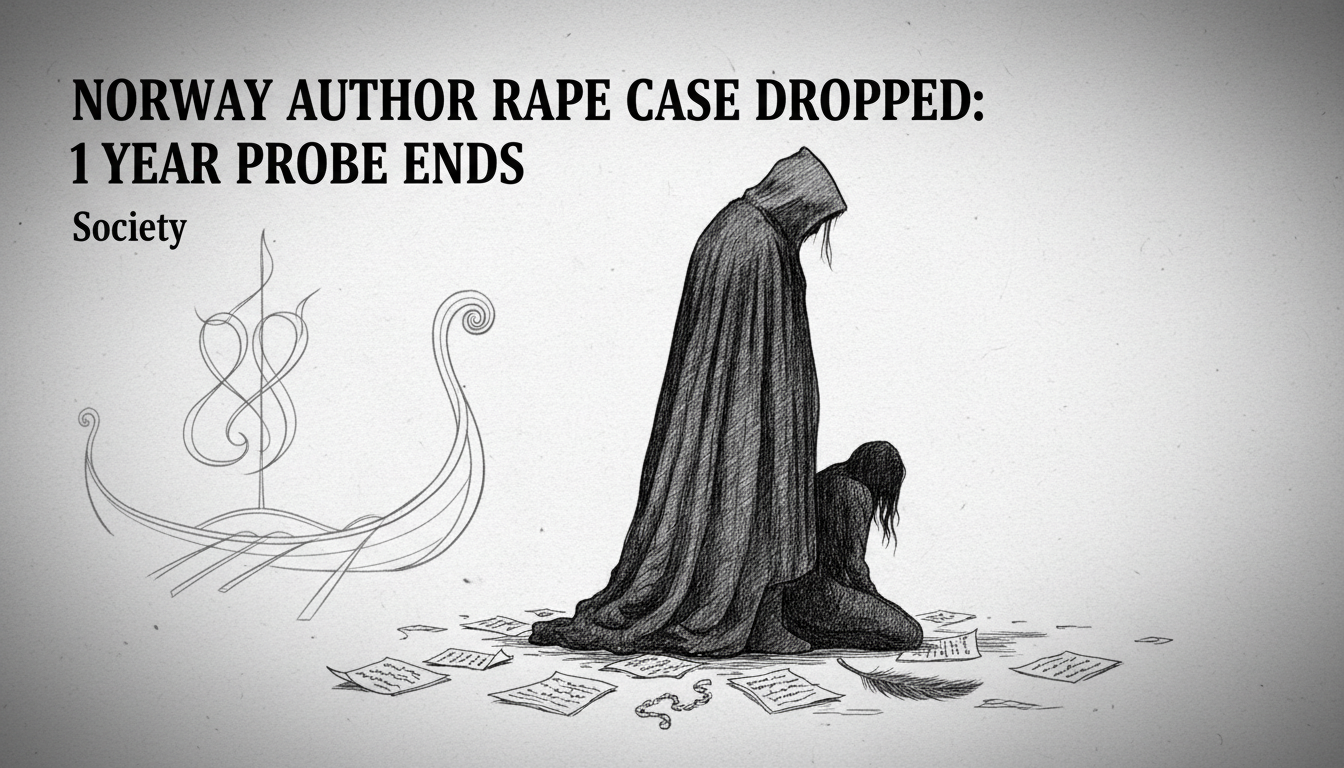
Norway's justice system has concluded a high-profile investigation into a prominent Norwegian author, dismissing a rape allegation due to insufficient evidence after nearly a year. The case, which led to the author's arrest in January 2024, was closed by Oslo police, leaving both the accused and the accuser expressing deep frustration with the protracted legal process.
"It is a correct and necessary decision," said the author's defense lawyer, Inger Zadig. "After an unusually thorough investigation, the police have concluded that the overall body of evidence corresponds with my client's explanation and does not support the injured party's explanation." In a statement provided by his lawyer, the author maintained the complaint had always been false, calling the experience a "significant burden."
A Case of Conflicting Accounts
The alleged incident occurred during the Christmas holiday period in 2024. Police questioned the man about accusations of sexual assault against a woman allegedly incapable of resisting. The author described the encounter as "mutual and voluntary." He was arrested, gave a statement, and was subsequently released. The complainant reported the incident shortly after it allegedly happened, triggering an investigation at Oslo's Sentrum police station.
For the woman involved, the past year has been intensely difficult. "It has been a very demanding process for her, and she is disappointed with both the investigation and the dismissal," said her legal counsel, Tonje Lilaas Larsen. Larsen criticized the police work, stating, "Several investigative steps were carried out late or not at all, and she experiences that important information was lost early in the investigation." The woman did express gratitude for the support received from the assault care center at Oslo's emergency clinic.
The Legal Threshold in Norwegian Rape Cases
This dismissal highlights a recurring and contentious issue within Norway's legal framework: the high bar for proving rape. Norwegian law requires guilt to be established beyond a reasonable doubt, a standard particularly challenging in sexual assault cases where evidence often relies heavily on witness testimony and forensic evidence that may be ambiguous.
Legal experts point to the central difficulty of proving the absence of consent, especially in situations without independent witnesses. The author's defense centered on this precise point, arguing the interaction was consensual. The police, after a lengthy review of communications, medical reports, and multiple interviews, determined they could not meet the stringent burden of proof required for prosecution.
A Glimpse into Norway's Rape Case Statistics
The outcome, while devastating for the complainant, is not an anomaly in national statistics. According to data from Statistics Norway, the clearance rate for reported rape cases remains low. A significant proportion of cases are dropped annually due to insufficient evidence, with only a minority progressing to trial and resulting in conviction. These figures are a constant source of debate, with victim advocacy groups arguing the system fails survivors, while legal purists emphasize the fundamental necessity of protecting the presumption of innocence.
This case sits at the heart of that tension. The defense lawyer praised the investigation's thoroughness, suggesting it validated the principle of innocent until proven guilty. Conversely, the complainant's lawyer cited procedural delays and lost information, raising questions about whether the evidence collection was as robust as it could have been. This divergence of perspective reflects a broader national conversation about how sexual violence is investigated and adjudicated.
The Human Cost of a Protracted Process
Beyond the legal arguments, both parties articulated the profound personal toll of the year-long investigation. The author described living under suspicion as "demanding, regardless of the outcome." His lawyer previously called the arrest a "shock-like experience" and a "nightmare." For the accused, the dismissal brings legal exoneration but not necessarily reputational restoration, as the allegation remains a matter of public record.
For the woman, the dismissal represents a different kind of trauma. Her lawyer's statements indicate a feeling that the system did not deliver a complete or timely exploration of her account. Her thanks to the assault care center underscores the critical role such support services play for victims navigating a often grueling and impersonal legal process, even when cases do not end in court.
Navigating Justice After the Dismissal
With the police investigation closed, the formal legal path for this specific allegation has ended. The case file will be archived. For the author, the threat of criminal charges is lifted. For the complainant, avenues for appeal against a police dismissal are extremely limited, often requiring presentation of fundamentally new evidence.
The case leaves unresolved questions about the night in question, answered definitively only by the two individuals involved. It serves as a stark example of the complexities inherent in sexual assault allegations: the imperative to believe and thoroughly investigate victims, and the equally imperative requirement for concrete evidence to secure a criminal conviction. The Norwegian system, in this instance, determined that the latter standard was not met.
As both individuals attempt to move forward, the public discussion continues. Can the investigation process be improved to better preserve evidence and support complainants without compromising the rights of the accused? How does society address the aftermath for both parties when the legal system reaches an inconclusive end? This case provides no easy answers, only a clear view of the difficult terrain where personal tragedy meets the rigid demands of criminal law.