
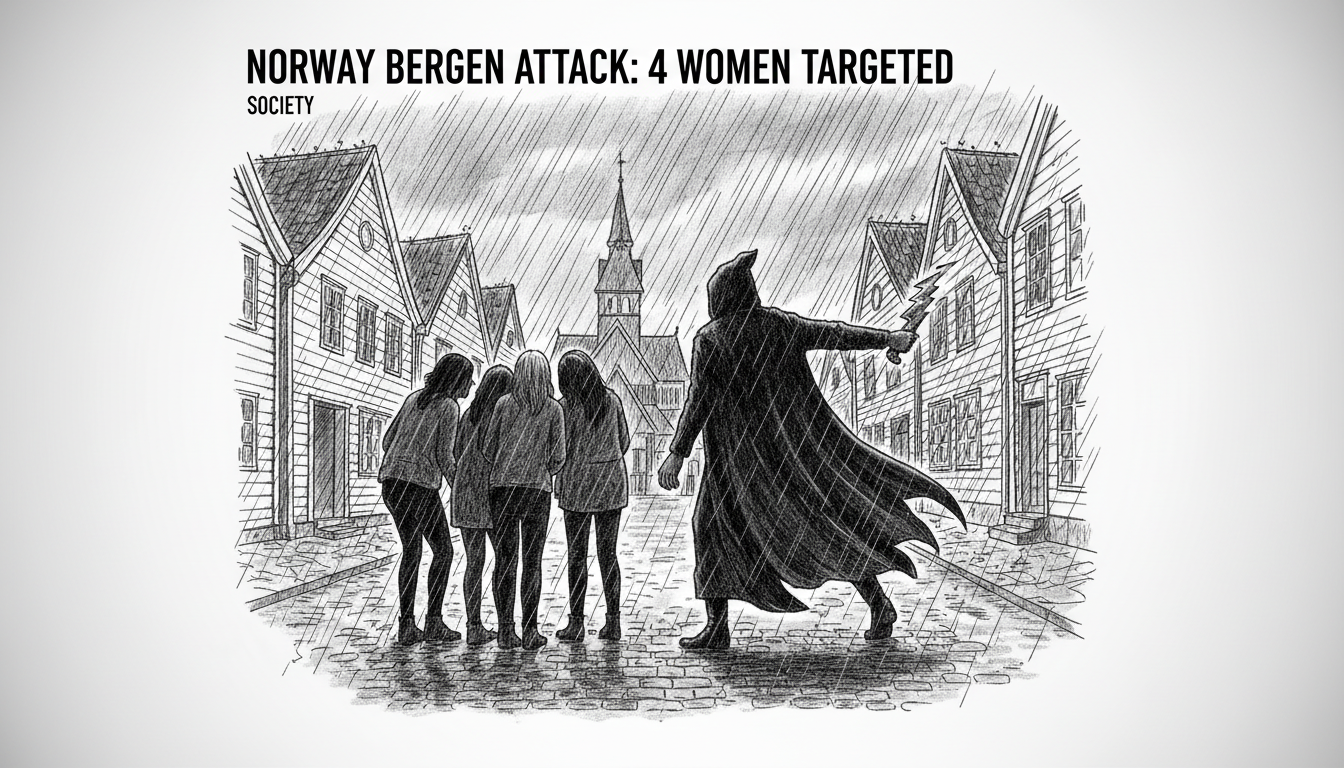
Norway's low-crime reputation was shattered by a violent attack in Bergen, where a man assaulted four random women in Øvstunvegen. One victim required hospital treatment for non-life-threatening injuries. Police confirmed the perpetrator, known to authorities, has been admitted to a psychiatric institution after kicking, punching, and choking victims while attempting to drag one from a car.
A Quiet Afternoon Shattered
The attack unfolded during a weekday afternoon in a residential area of Norway's second-largest city. Witnesses described a scene of sudden, unprovoked violence that left the community shaken. Police responded rapidly, securing the area and apprehending the suspect. The swift admission to psychiatric care indicates authorities had prior knowledge of the individual's condition and potential for violence.
This incident forces a difficult conversation about public safety in one of Europe's safest nations. Norway consistently ranks among countries with the world's lowest homicide rates, with approximately 0.5 incidents per 100,000 inhabitants. Violent random attacks against strangers remain exceptionally rare, making this event particularly alarming for residents accustomed to walking city streets without fear.
The Mental Health System Under Scrutiny
Authorities confirmed the attacker was "known to the police" and immediately placed in psychiatric care. This detail points directly to Norway's publicly funded mental health system, which faces the universal challenge of balancing patient rights with community protection. The system operates on principles of voluntary care where possible, with compulsory admission requiring specific legal thresholds of immediate danger.
"When someone known to services commits such an act, we must examine every point of contact," said a clinical psychologist specializing in risk assessment, who requested anonymity due to the ongoing investigation. "The question becomes: were there signs, and were adequate resources available to intervene earlier? Norway has good frameworks, but like everywhere, resources are finite."
Norwegian mental health care is administered through four regional health authorities, with treatment free at point of use after a small annual deductible. While praised for its accessibility, professionals have noted strains. A 2023 report from the Norwegian Board of Health Supervision highlighted waiting times for certain specialist treatments and variations in service quality across municipalities.
Bergen's Community Reaction
In the aftermath, local residents expressed shock mixed with concern for the victims. The random nature of the attacks—targeting women unknown to the assailant—creates a unique psychological impact, undermining the sense of security that defines Norwegian public life. Community leaders have called for calm while acknowledging the legitimate anxiety such events generate.
"We trust our systems, but today they did not protect these women," said a local council member from the area. "Our thoughts are with the victims. Now we must support them and review what happened without panic, but with determination."
Bergen police have increased patrols in the vicinity as a precautionary measure. They emphasized this appears to be an isolated incident linked to an individual's mental health crisis, not indicative of a broader threat or pattern of violence. All four women are receiving support from victim assistance services.
Balancing Safety and Compassion
The case presents a classic societal dilemma: how to protect citizens from individuals experiencing severe psychiatric crises while upholding compassionate, rights-based care. Norway's legal framework for compulsory mental health care is strict, requiring that a person poses a "clear and serious" risk to themselves or others. Predicting such risk with precision remains an imperfect science.
Experts note that most people with mental illness are not violent, and are far more likely to be victims of crime than perpetrators. However, high-profile incidents inevitably increase pressure on systems to enhance risk assessment protocols and crisis intervention capabilities. The challenge lies in directing additional resources without stigmatizing the vast majority who seek treatment without ever harming anyone.
"We must avoid a knee-jerk reaction that criminalizes mental illness," the psychologist stated. "The goal is smarter, more connected care—better communication between GPs, municipal services, and specialist clinics. It's about catching people earlier, not just managing crises."
Looking Ahead: Policy and Prevention
This attack will likely prompt reviews at multiple levels. Local health authorities will examine the specific patient's history and care pathway. Nationally, politicians may debate funding for community mental health teams and early intervention programs, which have shown promise in other Scandinavian countries.
Prevention focuses on strengthening the chain of care—from school health services identifying young people at risk, to GPs having better access to psychiatric consultation, to ensuring adequate crisis resolution and home treatment teams exist as alternatives to hospitalization. Investment in these areas is often less visible than building new facilities, but crucial for systemic resilience.
Norway's deep-seated values of solidarity and a strong welfare state will shape the response. The conversation will likely center on improving what exists—more resources, better coordination, earlier support—rather than punitive measures. The victims' recovery, both physical and psychological, remains the immediate priority.
As Bergen returns to its normal rhythm, the unanswered questions linger. Can a society built on trust maintain its openness while addressing unavoidable risks? How does a nation with already-advanced social services close the remaining gaps? The attack in Øvstunvegen provides no simple answers, only a stark reminder that safety is a fragile construct, requiring constant vigilance and compassion in equal measure.